For weeks, progressive lawmakers in Congress have been threatening to sink the bipartisan infrastructure bill if they were not given certain guarantees about a larger social spending bill. And for weeks, many of their colleagues thought they were bluffing.
They weren’t. And now the fate of President Joe Biden’s agenda hangs in the balance.
Progressives claimed victory Thursday night after a planned infrastructure vote was delayed following their united front to oppose the $1 trillion bill without assurances about the fate of the accompanying Democratic spending plan. The move highlighted the growing power of leftwing Democrats, and sent a strong message to the rest of their party: You can’t get one bill without the other.
[time-brightcove not-tgx=”true”]
“The progressive movement has not had this type of power in Washington since the 1960s,” says Joseph Geevarghese, Executive Director of Our Revolution, a political group that grew out of Vermont Sen. Bernie Sanders’ first presidential campaign.
But the victory may be short-lived. The House plans to attempt another vote on infrastructure as early as Friday, creating another opportunity to make a deal on the Build Back Better plan.That plan, which forms the core of Biden’s domestic policy agenda, includes ambitious spending on universal pre-K, childcare funding, tuition-free community college, home health care, and climate change prevention. Democrats had planned to pass both bills in tandem, but intra-party squabbling over the size and scope of the social spending bill prevented that from happening. Thursday’s delay signaled the future of both bills will remain closely intertwined, just as progressives wanted.
The move illuminated how the newly powerful progressive movement can shape the way Biden’s agenda moves through Congress, with the power to delay or even block some moderate priorities. The progressive movement has been building in influence and organizing capacity since 2016, whenSanders’ insurgent presidential campaign breathed new life into the grassroots left. The progressive caucus has frequently threatened to withhold votes over ideological differences with more moderate Democrats, but usually failed to actually stop a major agenda item. Now, the once-fledgling progressive wing of the Democratic party has become a political force strong enough to resist the will of moderates and its own party’s leaders.
Despite Democratic leadership’s attempts to push through the infrastructure bill alone, the Congressional Progressive Caucus (CPC) vowed to withhold their votes unless they got assurances about the larger spending bill. Aides and lawmakers within the group were keeping tabs on their members’ positions to secure their ability to sink the infrastructure bill as leverage. By 9 p.m. Thursday evening, as the caucus gathered on a call to discuss the state of play, it was clear progressives had the upper hand. Less than two hours later, House Majority Leader Steny Hoyer officially announced there would not be a vote on Thursday, and the House would reconvene Friday morning.
The CPC is larger and stronger than ever before, emboldened by an organized network of leftwing organizations like Our Revolution that have been creating outside pressure on all lawmakers in the party. But CPC members were also in sync with the President, who supported the goal to pass the Build Back Better plan alongside the infrastructure bill. Aides to influential progressives said they had not been pressured by either House leadership or the White House to support infrastructure without the spending bill.
The fact that the progressive position is in line with Biden’s agenda strengthened the caucus’s resolve. That unity comes after a concerted effort by both sides during the 2020 Democratic primary to bridge the party’s internal divisions: Biden moved to the left on some issues like climate and childcare, while progressives accepted that he would never support Medicare for All. That hard-won alignment, progressives say, is why they’re fighting so hard to protect the President’s Build Back Better Plan, which includes ambitious spending on many of their longstanding policy goals.
“This is not a progressive agenda. We are fighting for the ‘build back better’ agenda, which is the President’s agenda,” Rep. Ilhan Omar, the whip of the CPC, told reporters on Thursday.
The White House and Congressional leadership have been working furiously to reach a framework that could satisfy both the progressives and moderates.“A great deal of progress has been made this week, and we are closer to an agreement than ever. But we are not there yet, and so we will need some additional time to finish the work, starting tomorrow morning first thing,” White House Press Secretary Jen Psaki said in a statement Thursday evening.
Even before the vote was delayed, incensed moderate lawmakers slammed the progressives for continuing to fuel the notion that Washington is dysfunctional. “We have to demonstrate to the American people that we can still govern in this very partisan time,” Rep. Stephanie Murphy, a moderate lawmaker supporting the infrastructure vote, told reporters on Thursday. “This bipartisan bill has a lot of good things for the American people, and so it’s well past time that Congress delivers.”
While progressive activist groups immediately circulated exuberant press releases after the delay, it’s still too early to say whether the lawmakers will continue to hold the line.But they insist that they are not holding up the infrastructure bill infinitely, just until they get enough assurances to move forward.
“Usually [progressives] take a stand and then they get bullied into submission,” says progressive strategist Rebecca Katz. “I think it’s the dawn of a new day. Because they’ve never done this, and they’ve had a hard time coalescing and standing firm in the past, and if they do it once they can do it again.”
WASHINGTON — With only hours to spare, President Joe Biden on Thursday evening signed legislation to avoid a partial federal shutdown and keep the government funded through Dec. 3. Congress had passed the bill earlier Thursday.
The back-to-back votes by the Senate and then the House averted one crisis, but delays on another continue as the political parties dig in on a dispute over how to raise the government’s borrowing cap before the United States risks a potentially catastrophic default.
The House approved the short-term funding measure by a 254-175 vote not long after Senate passage in a 65-35 vote. A large majority of Republicans in both chambers voted against it. The legislation was needed to keep the government running once the current budget year ended at midnight Thursday. Passage will buy lawmakers more time to craft the spending measures that will fund federal agencies and the programs they administer.
[time-brightcove not-tgx=”true”]
“There’s so much more to do,” Biden said in a statement after the signing. “But the passage of this bill reminds us that bipartisan work is possible and it gives us time to pass longer-term funding to keep our government running and delivering for the American people.”
The work to keep the government open and running served as the backdrop during a chaotic day for Democrats as they struggled to get Biden’s top domestic priorities over the finish line, including a bipartisan $1 trillion infrastructure bill at risk of stalling in the House.
“It is a glimmer of hope as we go through many, many other activities,” said Senate Majority Leader Chuck Schumer, D-N.Y.
With their energy focused on Biden’s agenda, Democrats backed down from a showdown over the debt limit in the government funding bill, deciding to uncouple the borrowing ceiling at the insistence of Republicans. If that cap is not raised by Oct. 18, the U.S. probably will face a financial crisis and economic recession, Treasury Secretary Janet Yellen said.
Republicans say Democrats have the votes to raise the debt limit on their own, and Republican leader Mitch McConnell of Kentucky is insisting they do so.
The short-term spending legislation will also provide about $28.6 billion in disaster relief for those recovering from Hurricane Ida and other natural disasters. Some $10 billion of that money will help farmers cover crop losses from drought, wildfires and hurricanes. An additional $6.3 billion will help support the resettlement of Afghanistan evacuees from the 20-year war between the U.S. and the Taliban.
“This is a good outcome, one I’m happy we are getting done,” Schumer said. “With so many things to take care of in Washington, the last thing the American people need is for the government to grind to a halt.”
Once the government is funded, albeit temporarily, Democrats will turn their full attention to the need to raise the limit on federal borrowing, which now stands at $28.4 trillion.
The U.S. has never defaulted on its debts in the modern era and historically, both parties have voted to raise the limit. Democrats joined the Republican Senate majority in doing so three times during Donald Trump’s presidency. This time Democrats wanted to take care of both priorities in one bill, but Senate Republicans blocked that effort Monday.
Raising or suspending the debt limit allows the federal government to pay obligations already incurred. It does not authorize new spending. McConnell has argued that Democrats should pass a debt limit extension with the same budgetary tools they are using to try to pass a $3.5 trillion effort to expand social safety net programs and tackle climate change. He reiterated that warning as the Senate opened on Thursday, even as Democrats have labeled that option a “nonstarter.”
“We’re able to fund the government today because the majority accepted reality. The same thing will need to happen on the debt limit next week,” McConnell said.
House Democrats pushed through a stand-alone bill late Wednesday that would suspend the debt limit until December 2022. Schumer said he would bring the measure to the Senate floor, but the bill is almost certain to be blocked by a Republican filibuster.
The arguments made in both chambers about the debt ceiling have followed similar themes.
“You are more interested in punishing Democrats than preserving our credit and that is something I’m having a real tough time getting my head around,” House Rules Committee Chairman Jim McGovern, D-Mass., told Republicans. “The idea of not paying bills just because we don’t like (Biden’s) policies is the wrong way to go.”
Undaunted, Republicans argued that Democrats have chosen to ram through their political priorities on their own and thus are responsible for raising the debt limit on their own.
“So long as the Democratic majority continues to insist on spending money hand over fist, Republicans will refuse to help them lift the debt ceiling,” said Rep. Tom Cole, R-Okla.
The Treasury has taken steps to preserve cash, but once it runs out, it will be forced to rely on incoming revenue to pay its obligations. That would likely mean delays in payments to Social Security recipients, veterans and government workers, including military personnel. The Bipartisan Policy Center, a think tank, projects that the federal government would be unable to meet about 40% of payments due in the several weeks that follow.
___
Associated Press writer Brian Slodysko contributed to this report.
As Democrats spar over a sweeping bipartisan infrastructure bill and an even bigger budget reconciliation package that includes funding for everything from universal pre-k to free community college, the fate of a historic investment in America’s housing policy hangs in the balance.
Earlier this month, the House Financial Services Committee advanced $322 billion in federal spending recommendations on housing investments, including $75 billion in new funds for Housing Choice Vouchers. If that passed, it would mark the most significant investment in housing aid since the Housing Choice Voucher program, the nation’s largest source of rental assistance, was created in 1974. It would result in roughly 750,000 more federal vouchers that low-income Americans can use to underwrite the cost of affordable rental units, and eventually help roughly 1.7 million more people once fully phased in—increasing the number of Americans served by roughly one-third, according to a new analysis by the left-leaning Center on Budget and Policy Priorities (CBPP).
[time-brightcove not-tgx=”true”]
“This would be the biggest thing that policymakers have done in decades to reduce homeless and to help low-income people in this country afford housing,” says Will Fischer, senior director for housing policy and research at CBPP. “There’s not many programs out there where there’s a stronger evidence base showing that they work.”
Rep. Maxine Waters, chair of the House Financial Services Committee, which provides recommendations to Congress on housing policy, calls the proposed outlay “unprecedented.” “It has gotten to the point where it is very difficult for ordinary citizens working everyday to be able to have what it takes to get a decent rental unit,” she says, adding that this funding would help address the problem.
But it’s unclear if Democrats will pass a reconciliation bill at all—and if they do, whether it will include significant funding for affordable housing assistance.
Senate Democrats could, in theory, pass the bill without any Republican support due to a legislative loophole allowing them to advance budgetary issues with a simple majority. But garnering support from all 50 Democratic Senators depends in large part on the votes of the two most moderate Senate Democrats, Joe Manchin of West Virginia and Kyrsten Sinema of Arizona, both of whom have said that the $3.5 trillion spending framework is too high. Politico reported on Thursday that Manchin told Senate Majority Leader Chuck Schumer this summer he wouldn’t support a reconciliation bill exceeding $1.5 trillion—news that could mean that Democrats have to shave roughly $2 trillion in spending from the existing package.
Some progressive Democrats have said they will withhold their votes for the $550 billion bipartisan infrastructure package until Manchin and Sinema publicly promise to back a subsequent reconciliation package with a sufficient price tag. It’s not yet clear what they define as sufficient.
Neither is it clear how much of the $322 billion in housing investments might remain in a slimmed-down bill. Waters, a member of the Congressional Progressive Caucus, thinks most Democratic lawmakers see federal spending on housing as a priority. “I’ve convinced my caucus that we need to pay attention to housing,” she says.
But she stopped short of saying that she would recommend voting against the final bipartisan infrastructure bill if she didn’t get assurance her housing measures would be included in the reconciliation one. “I don’t work that way…I don’t threaten, and I don’t try to leverage,” she tells TIME, adding, “We don’t know what’s going to happen in reconciliation. We don’t know what the cuts are going to be.”
The current Housing Choice Voucher program provides 2.3 million households with vouchers that can be used to offset the rent on affordable, private market units. But many more Americans are in need: only one in four people who qualify for federal housing assistance currently receive it, according to the CBPP.
Rep. Emanuel Cleaver, a Missouri Democrat and Chair of the Subcommittee on Housing, Community Development, and Insurance says he plans to fight for the level of funding that his committee recommended earlier this summer. As a former public housing beneficiary, he says, he cares “passionately about making sure that Americans live in decent conditions and will fight for every penny as the process continues.”
When Beck Bennett walked out onto theSaturday Night Livestage in May in a Vin Diesel skull cap, he knew it might be his last time there as a cast member. Bennett was there to anchor the season’s last skit: a spoof of Diesel’s recent AMC commercial, in which he listed an increasingly outlandish list of reasons to go to the movies in a husky growl (“The music … the heavy doors … the pre-show video where you’re on a rollercoaster”). As Bennett delivered his lines to raucous laughter, he saw his wife sitting in the front row and SNL creator Lorne Michaels grinning next to the cue cards—a moment that he says felt prescient.
[time-brightcove not-tgx=”true”]
“It really felt like the universe was telling me, ‘This is in fact time for you to leave. You’re not gonna do better than this,’” Bennett tells TIME in a phone interview on Wednesday.
Earlier this week, SNL announced that Bennett would not be a part of the cast of its47th season, which begins on Saturday. Bennett, who was on the show for eight seasons, is now living in Los Angeles, where he says he plans to stay full time to focus on new projects and be near his wife and friends. “It’s been eight years of basically long distance with my wife, and if we are going to start a family at any point, I think we have to start that at some point soon,” he says.
In his near-decade on SNL, Bennett became an integral member of the ensemble, a glue guy tasked with playing straight men and raging idiots alike. His characters have ranged from Vladimir Putin to Mitch McConnell to theSalt Bae; last season, he had the most screentime out of anyone in the cast,according to Vulture. Ahead of the show’s 47th season, Bennett spoke with TIME about some of his favorite SNL sketches and characters, and reminisced about how they came together.These are excerpts from the conversation.
Office Boss
A staple of Bennett’s early tenure on the show was his “Office Boss” character, a high-powered CEO with the body of a baby. He shared scenes with Louis C.K., Drake and Cameron Diaz, flailing his arms, spitting up on himself, and sitting in giant booster chairs.
Bennett: Right before mySNLshowcase in L.A., I was on a plane, and there was a guy with a baby in his lap sitting next to me. The baby kept putting his headphone cord into his mouth, unplugging it and throwing it on the ground, then getting upset and crying that he didn’t have it anymore. I was like, ‘Oh, man, it would be fun to create like a fully functioning person like that.’
I must have watched a couple baby videos early on when I was developing the character. Really, it came down to the act of grabbing something, shaking it, getting overwhelmed by the shaking, shoving it in my mouth, throwing it away and finding it again. After that, I would watch baby videos for how they react to eating a lemon, or somebody shaking keys, or how they put their feet in their mouths.
With Cameron Diaz, I think we did a spit-kiss type thing that was absolutely disgusting—and she was fully game. And the giant chair was actually fun. I was like, ‘This is great. Why don’t people do this?’
Brothers
“Brothers” is one of the manySNLsketches that Bennett shared with Kyle Mooney. The pair went to the University of Southern California together and were in the same sketch group, Good Neighbor; both were hired onSNLat the same time.
Bennett: From the moment we left our childhood homes, Kyle and I have been doing sketch comedy together. It kind of clicked right away—we always wrote together and had fun performing. For “Brothers,” we did a version of those characters in college in our sketch comedy group at USC. We were these brothers who were just wrestling, and their parents finally interrupt them and tell them that they’re getting divorced. It was not as well written as the one we ended up doing.
It’s rare for a sketch to do well at the table and during blocking, and there’s nothing that gets in the way. Especially because in this one, there are so many physical things that could have gone wrong. We’re getting sprayed, going through walls, breaking plates. It felt like a classicSNLsketch, like Chris Farley or Molly Shannon breaking things, falling through things—the things I watched and wanted to do onSNLif I ever got there.
But you learn that it’s really hard to do that because of the cue cards, the camera blocking. There’s so many restrictions to doing live sketch comedy on stage like that. So that experience was kind of a dream. The other people in the scene were having trouble not breaking, and it was so fun to do. It was like my best performing experience at the show, also because I got to do it with Kyle.
Take Me Back
In this pre-taped sketch, Bennett spoofs the climactic scene of a rom-com with Ego Nwodim.
Bennett: Manchildren, idiots: it’s what I love to do. I think it’s something about my instrument: My voice, my looks—it’s just what comes out, the idiot. It’s an extension of who I am, and is also what I saw around me growing up and wanted to make fun of. People who are confidently dumb are just really funny to me.
And being atSNL, I think writers are able to see something in you that you may not even fully see, and help bring that out of you. Over time, it was like, “Oh, people are writing me in this way.” And onSNL, where it’s very competitive and difficult to find your niche, you kind of go towards what works.
I also think some of the parts I play can be more nuanced on film as opposed to live: some of the angry idiots, or the out of control people freaking out, can be captured in a more disarming and funny way on film. When I got toSNL, I realized some of the things I found funny or wanted to write were maybe a little too not fun—a little too intense and scary.
In my second to last year, I did thissketch with Idris Elbawhere I was a competitive actor who was jealous of him. It was really big and over the top, and it did well enough to get on the show. But I look back at a similar one I did in my first year that never made it to air: it was like, much smaller and darker and intense and not fun. Film sketches can make some of those characters succeed a little bit more than in person.
Jules Who Sees Things A Little Differently
Bennett appeared several times on Weekend Update as the pig-headed contrarian Jules.
Bennett:There are some people out there in the world that Jules is based on. This is definitely an L.A. guy, although he definitely exists in New York, too. I think you see a lot of it on social media: someone on the internet thinking they have something to say, and trying to put a twist on it, but they actually aren’t saying anything at all. I sat down in Colin Jost’s office one night, like many nights, and would tell him stuff, and usually nothing would come of it. But he was always very good about finding something funny in what I’d pitched him, compile a bunch of stuff, and turn it into something a little different.
AMC Theatres Commercial
Bennett: It’s so fun to mimic Vin Diesel because he takes himself so seriously. He’s so tough, such aguyand has an incredible voice. It’s fun to step in those shoes: “I’m so cool, masculine, badass, anything I say is amazing.” I love playing confident characters, and those are often awful people. I’m not saying Vin Diesel is—but confidence is a very fun thing to play.
That sketch was written by Steven Castillo and Dan Bulla. It was something they came up with three in the morning on Wednesday, so I didn’t find out about it until right before the table read. That’s what happens a lot: it’s not an impression that you’re working on for weeks. It’s something that people hand you right before the table read.
That was one of my favorite things to perform onSNL, and it was the last thing I was in. That sketch should not have gone as well as it did, and almost should not have gotten onto air: the worry is that a long, rambling list would get old and the audience would stop laughing after a minute. But they found ways to keep it creative and interesting.
One of the reasons it was so fun is because I was the front of the audience; it was really fun and comfortable. And as soon as it ended, the band started playing the good night music, and I knew that was likely going to be my last sketch and show.
I just felt happy, relieved, grateful. With the ‘goodbye sketches,’ I don’t think it happens that often, and I’m not really one to want that. There are so many people that have been there so long and you never know who’s leaving. So it was nice to have what almost felt like a goodbye sketch.
There’s a telling moment in an early episode of The Problem With Jon Stewart. During a lively discussion on contemporary authoritarianism, Francisco Marquez, a Venezuelan activist and former political prisoner, mentions an event from the host’s Daily Showdays. “I remember your march,” he says, referring to Stewart and Stephen Colbert’s jokey Rally to Restore Sanity and/or Fear, held on the National Mall in 2010. “I think it was against insanity or something along those lines.” In the perfect sarcastic deadpan that is his trademark, Stewart cracks: “Yeah, we won.”
It’s a throwaway exchange, but one that captures Jon Stewart’s uncertain place in the culture, six years after leaving a role in which he helped launch so many still-thriving comedy careers and reshape late-night talk shows and political satire for the 21st century. At this point, the pleas for common sense and critical thinking—from politicians, the media and the public at large—that he issued nightly from his Comedy Central desk would sound hopelessly naive. Also: who is the audience for his funny, scathing rants these days? Conservatives who didn’t exactly welcome his tough love in the George W. Bush era have now shifted even further to the right. And today’s version of the young, liberal audience Stewart teased for being stoners might not be quite so enthusiastic at the prospect of a straight, white guy in his 50s yelling at them about injustice.
[time-brightcove not-tgx=”true”]
So it’s something of a relief that the initially uneven but potential-packed The Problem, which premiered Sept. 30 on Apple TV+ and will release new episodes every other Thursday, is not trying to be another Daily Show (which has established a considerably less shouty, more bemused tone under Trevor Noah). Episodes are twice as long, looser in structure and, though there are plenty of jokes, more earnest in their efforts to provide information and analysis.
Like Daily Show alum John Oliver’s acclaimed HBO series Last Week Tonight, The Problem addresses a single issue in each installment. While the premiere focuses on veterans who suffered grave illnesses following exposure to burn pits in the Middle East, an additional episode sent for review takes on the slippery concept of freedom. And like Bill Maher without the smug, trollish tone, Stewart opens with a monologue before moderating a panel discussion. What’s refreshing is that, instead of celebrities, pundits or authors with books to promote, the show enlists relevant experts and people who have firsthand experience to contribute. In the burn-pit episode, that means conversations with ailing veterans who’ve unsuccessfully sought help from a VA that claims it’s still investigating why so many vets who slept next to mounds of burning, toxic trash went on to receive life-threatening diagnoses. Along with Marquez, the discussion of authoritarianism and freedom includes the dissident Egyptian comedian (and Stewart pal) Bassem Youssef and the heroic Filipino-American journalist Maria Ressa, who joined virtually because her ongoing “cyber libel” case prohibits her from leaving the Philippines.
These panels might sound dutiful on paper. In fact, the participants are so knowledgeable and articulate, and Stewart so determined not to dumb down their messages, that these might turn out to be the most consistently engaging segments of the show. “The new propaganda is a behavior modification system,” says Ressa, in explaining how oppressive regimes can manipulate social media. “A lie told a million times becomes a fact.” Stewart could be a pretty indifferent interviewer when forced to make small talk with celebs on The Daily Show (a fact he actually alludes to in The Problem), but he brings the full force of his curiosity and frustration to these conversations, and it’s clear that he’s in his element.
After just two episodes, it’s hard to get a sense of how mutable The Problem’s format will be. As is, the places where commercials would be in a linear TV show are filled with quick, forgettable sketches of and mostly dull behind-the-scenes segments that show Stewart talking through each episode with his staff. (Considering that The Daily Show faced high-profile criticism for its “woman problem” as far back as 2010, the latter clips might also serve as subtle ways of highlighting how many women and other non-white-guys Stewart has hired this time around, and how well he gets along with those staffers.) While the panel consumes the back two-thirds of “Freedom,” the burn pit episode ends with a satisfyingly, if also somewhat performatively, confrontational one-on-one interview in which Stewart pushes VA secretary Denis McDonough to simply state what kind of proof the government will need in order to start paying vets’ claims.
The show’s success will ultimately depend on its specificity and timeliness. Despite its broad title, “War,” the burn-pit episode works because it tackles a particular, relatively manageable issue that will be new to many viewers. And instead of just screeching to the choir, so to speak, as he did on The Daily Show, Stewart channels his outrage into an interview with the person who has more power than anyone else to solve the problem in question.
“Freedom” is kind of a mess, though, at least until it gets to the panel portion. In his monologue, Stewart uses the partisan split over masks and vaccines to frame his hand-wringing about how competing ideas of what it means to be free are tearing apart the U.S. It’s an apt metaphor, but also one that’s been reiterated to a pulp over the course of this 18-month pandemic. This time last year, it might’ve felt cathartic to watch Stewart respond to a montage of people declaring that they won’t get the vaccine with the exclamation “What the f-ck?!” Now? It makes you want to ask where he’s been all this time. A mock game called “What’s More Hitler?” that spoofs anti-vaxxers’ propensity to compare public health rules to totalitarianism falls completely flat.
Stewart is a polarizing figure, and one whose cranky, sarcastic grandstanding worked much better with his original, Gen X audience than it does today. But, at its best, The Problem isn’t just about self-righteous yelling; like many of Stewart’s post-Daily Show projects, it’s about using his fame to effect change, or at least raise the level of mainstream political discourse. It has a long way to go to achieve that objective. More episodes like “War” and fewer like “Freedom” would be a good start.
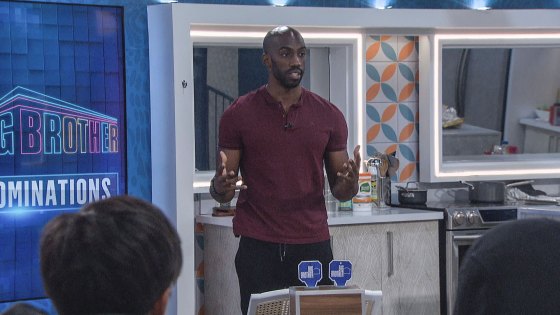
Fifty-six days into season 23 ofBig Brother, six houseguests held a secret meeting in the bathroom. Secret alliances are nothing new in the CBS reality TV competition, but this one was different. The Cookout was the first major alliance composed solely of Black contestants; the group could never accomplish their mission—to ensure the show’s first-ever Black winner, whichever of the six of them that would turn out to be—if other houseguests were onto them. Hence, the clandestine water closet conference.
This scene was just one of many in an unprecedented season ofBig Brother, which ended on Sept. 29 with The Cookout’s mission accomplished: Xavier Prather, a Black man, emerged victorious on finale night, taking home $750,000 and making history in a show that has long struggled with racism in its casting, production and interpersonal relationships.
[time-brightcove not-tgx=”true”]
CBSXavier Prather, who would go on to become the first Black winner of the long-running CBS reality show
Big Brotheris one of America’s longest-running reality shows, which sees a group of “houseguests” sequestered together—and competing against each other—over a period of multiple months in competitions and interpersonal conflicts. Its format forces contestants to make (and break) alliances with their fellow players; each week, one (or more) is “evicted” thanks to a vote from their peers.For viewers it’s a choose-your-own-adventure show, with levels of involvement ranging from “casuals” who watch CBS’s edited show three times a week to “superfans” who watch the “live feeds” on Paramount+ for a 24-7, front-row-seat to everything. (Yes, that even includes when houseguests sleep or use the restroom).
The show’s casting has long relied on familiararchetypes—the surfer dude, the jock, the Southern belle—and whitewashed patterns.Prior to this year,Big Brotherhad consistently cast only a handful of minorities each season. Over 20 years and across 22 seasons, there had never been a Black winner, and only one of its last 11 seasons included even a single Black person among its final six contestants. This season diverged in large part because of both top-down casting adjustments mandated by the network and the subsequent game strategy of its diverse cast. And the impact of the season’s outcome has significance far beyond who went home with that big check.
“We generally write reality television off as a guilty pleasure or trash television, but I think that it really does reflect and refract society’s issues around diversity, inclusion and discrimination,” says Brandy Monk-Payton, a professor of media and black cultural studies at Fordham University. “A show likeBig Brotherhas a real impact on American culture.”
Both fans and critics ofBig Brotherhave long flagged its problems with racism and bias, whether in regard to its casting and production, its curation of an edited TV narrative (which has often traded in stereotypes) and in the behavior of its individual houseguests themselves. And in recent years, former players have also begun speaking out too—Kemi Fakunle, a houseguest on Big Brother 21, has said in interviews that she felt she was targeted because of her race. (Big Brother 21 featured six non-white players, four of whom—including Fakunle—were eliminated in the show’s first three weeks.)
Many of the most memorable incidents of racism took place in 2013 during the show’s fifteenth season, which took the then-rare step of including problematic behavior caught on the show’s live feeds in its TV edit. A number of white contestants made racially motivated comments and were widely judged as bullying the sole Black woman who had been cast that year;at one pointhouseguest GinaMarie Zimmerman said of the woman, “[she’s] on the dark side, but she’s already dark.” Houseguest Aaryn Gries then replied, “Be careful what you say in the dark, might not get to see the bitch.” In separate incidents, Gries and others made anti-Asian remarks about the Korean-American contestant in the cast.
During season 4, a decade earlier, producers had included an anti-Korean slur from Erika Landin in a diary room session, during which contestants provide thoughts and emotions regarding the events taking place in the house. The winner of that season ended up being Jun Song, who is Korean American; Landin’s slur was directed, in fact, at Song’s ex-boyfriend. (The season featured a casting “twist” described as the “Ex-Factor,” and saw contestants like Song competing alongside former partners.) Song’s victory made her the first person of color to claim the winner’s title; it would be another 14 years before the next person of color was crowned when Josh Martinez, who identifies as Latino, won season 19. “I think I was naive thinking it would happen sooner. I didn’t think it was going to take that long,” Song tells TIME. (Prior to Prather’s victory, there had been three non-white winners total: Song, Martinez and Season 20’s Kaycee Clark, who identifies as Southeast Asian. Tamar Braxton, who is Black, had also won a special celebrity edition of the show.)
Song acknowledges that, within the minority groups of the house, Black contestants have historically gotten the short end of the stick. (In her season, the sole Black houseguest was voted out first.) Danielle Reyes, a Black woman known as the “greatest winner to never win,” lost the third season after her eliminated houseguests returned on finale night to “bitterly” cast their vote for the less-strategic final-two choice after getting to see Reyes’ ruthless gameplay and confessionals from home. Viewers speculate show producers knew Reyes, who dominated the season, deserved the win, as they created the jury for subsequent seasons, in which eliminated houseguests starting on week six are sent to a different sequestered house for the remainder of the season. Song credits the formation of the jury, due to Reyes’ infamous loss, as one of the main reasons she was able to win.
Da’Vonne Rogers, a fan-favorite houseguest (and superfan herself), was unapologetically vocal about the history of Black houseguests becoming early targets in the game. After participating in Season 17 and being sent home pre-Jury, Rogers returned for Season 18 and a highly-anticipated All-Stars season in 2020. Five weeks into her third appearance on the game, houseguest Christmas Abbott would nominate Rogers for eviction alongside her “Black Girl Magic” partner, Bayleigh Dayton. When tensions rose, Rogers had to not only consider how her responses would be perceived by the majority-white houseguests who held her game’s fate in their hands, but to viewers at home.
“I hate this game,” Rogers said on live feeds. “Why does she [Abbott] get to talk to me like that, but if I respond everybody’s gonna look at me crazy?”Black contestants feeling pressure to avoid falling into various tropes like the “angry Black woman or man” is a dilemma many in the reality space face, according to Monk-Payton. “It’s a very real concern that contestants of color have on these different programs. They have to be attentive to how audiences might perceive them while navigating within the gameplay itself,” she says of Black contestants’ double consciousness.
On eviction night during the All Stars season, Rogers had an opportunity to make a plea for her fellow houseguests to keep her on another week. Instead, she used her air time to send a larger message to millions of viewers at home: “[I’m] still screaming [for] justice for Breonna Taylor and every other Black life that has been taken unjustly and unfairly simply because of the color of their skin,” she said on live television. “All lives can’t matter until Black lives matter, and that includes Black trans lives as well.” Moments like this helped generate momentum for an alliance like The Cookout to eventually form, with several houseguests this season referencing Rogers as a driving force for their mission.
CBSClaire Rehfuss and Tiffany Mitchell embrace when Mitchell has to send home her non-Cookout alliance member
The most successful alliance in the show’s history
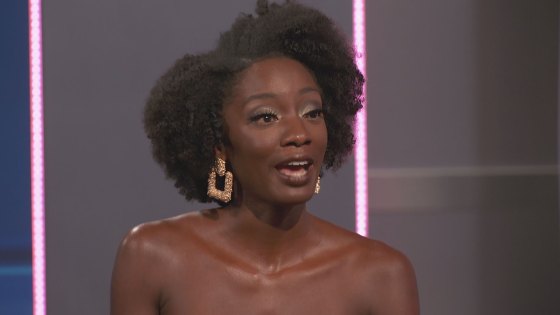
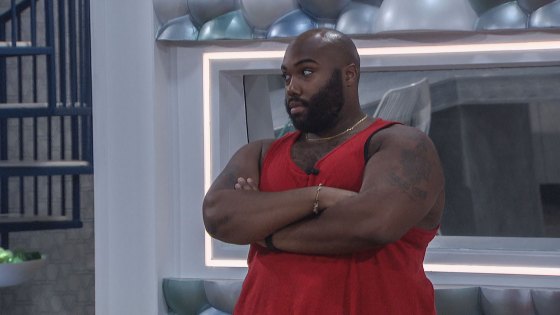
Iconic duos and large alliances have steamrolled the game before—think The Brigade in season 12 or The Hitmen in season 16, both of which were made up of primarily white men—but none have come close to the effectiveness of The Cookout. Formed in week one of the game, the alliance consisted of the six Black houseguests: Azah Awasum, Derek Frazier, Hannah Chaddha, Kyland Young, Tiffany Mitchell and eventual winner Prather. Their group had a mission “for the culture” that went beyond merely securing the cash prize: securing the show’s historic first Black winner. (This in turn meant many of the group prioritized their collective goal over their individual gameplay—even when they did not seeeye to eye or even get along.)
While the group had its sights set on the finale, they’d already made history in Week 9 of the 12-week game when they became the show’s first alliance to get all of its members to the end. “I feel like most people can agree that The Cookout has become the best alliance in the history of the show,” says Taran Armstrong, live feeds correspondent forRob Has a Podcast, who has watched every season since he was 9. “I don’t think there’s really much of a debate.”
CBSAzah Awasum, one of the Cookout members, on the finale of Big Brother
But getting all six there unscathed was no small feat. In a house filled with people with nothing but time to strategize, their success required keeping their alliance a secret to avoid becoming a target. Making sure others in the house didn’t connect the dots also meant falsely pairing themselves with others outside the alliance and avoiding meeting as a group at all, instead opting to strategize with a weeks-long game of telephone with one another—a visibility factor that many powerful alliances in the past did not have to be as concerned about because they skewed white in a house that was largely white to begin with.
Christian Birkenberger, a Big Brother 23 houseguest who was evicted during week four, admits he had no idea about the alliance while in the house. “I’d never seen them collectively communicate with each other so I was just absolutely shocked when I found out that they were working together,” he says. “I had about four alliances blow up in my face and we all met every single day, so the fact that they did it with such little communication and they were on the same page was incredibly impressive.” It wasn’t until Day 56 —nearly three quarters of the way through the game—that the group would sneak into the house’s bathroom at 3 a.m.to meet collectively for the first time.
When the group reached the final six, a new chapter of the game began. Now the remaining three women and three men would need to start competing with one another to be crownedBig Brother’s first Black winner. It was ultimately Mitchell, who masterminded the alliance’s strategy, who would be the first to get evicted—a consequence, perhaps, of the sacrifices she chose to make for the success of the broader alliance. Many fans took to social media to voice their frustrations about what has come to be a pattern of strong female strategists on the show not getting the win. “It’s so disheartening that a season that finally addressed the racism that has run rampant on this show from the beginning is being marred by blatant misogyny in the end game,”tweetedlong-time fan Lisa Bee. Nearly 70% of the show’s winners have been male, and it wasn’t until 2018 that the jury voted for a woman to beat a man in the final two chairs for the first time.
The dynamic of this season’s cast and the relationships that ensued prompted several other complex conversations regarding identity. Dialogue ranged from whether Chaddha, who is biracial, should be included in the all-Black alliance, to Mitchell asking Asian-American houseguest Derek Xiao what race he considered himself, to Latina houseguest Alyssa Lopez questioning where she stood on the chopping block as someone who was not Black, but identified as a minority. While many of these conversations took place during live feeds as opposed to broadcasted episodes, they marked a major increase in the frankness with which race was addressed on the show.
Big Brother has been running under the leadership of executive producers Allison Grodner and Rich Meehan since its seasons in the early 2000s. But this season’s victory can’t be discussed without acknowledging major changes inBig Brother’s casting process. Robyn Kass, who cast every season for the last 20 years, was recently replaced by casting director Jesse Tennenbaum after departing the show for what she described on Twitter as “some big opportunities.” Last November, CBS announcedan initiativethat would require their network’s reality TV programs, includingBig Brother,SurvivorandLove Island, to have 50% of their casts identify as Black, Indigenous or People of Color (BIPOC).
Outside of casting, there have also been frustrations around the show’s confessional “diary room.” Viewers have suspected producers of intervening, causing the entries to appear less natural. Fakunle, of Season 21, said on live feeds that she was encouraged to use a stereotypical Black accent by a producer for a diary room soundbite. And while live feeds offer superfans an unfiltered look at the houseguests’ gameplay and interactions, in the end, the majority of viewers see storylines that have been filtered and shaped in an editing room at the discretion of producers. This fact has long been a point of contention across reality TV: who is getting the “villain edit,” who is selectively made to appeal to viewers, and how do these decisions, consciously or subconsciously, align with the race of contestants?
CBSDerek Frazier, another of the Cookout alliance members who made it to the season’s final six
Song says a lot of her fellow show alumni over the years have been afraid of being vocally critical for fear of not being invited back to participate in future cameos or All Stars seasons. “A lot of theBig Brotheralum[s] have chosen to turn a blind eye and to play Switzerland,” says Song. “The silence is really deafening when it comes to matters of diversity and inclusion in reality television and in the workforce.” She also points to the show’s consistent viewership numbers and interest from advertisers as reasons why there has long been a lack of urgency to address the house’s diversity issues any sooner.
Not everyone was happy about the outcome of this season, with many of the show’s audience members alleging reverse racism of The Cookout’s strategy. “It speaks to the audience demographics of these programs and how fans themselves have had a very critical role to play in the popularity of these programs,” Monk-Payton says. “I think it’s easy for some fans to say Black contestants were segregating and colluding with one another without seeing the flip side of contestants of color being consistently marginalized in the franchise and that the [Cookout] alliance was a means of empowerment to ensure equity in the competition.”
For many BIPOC viewers who saw themselves represented in this year’s cast for the first time, this season was a step forward, but also a call for the industry, and other popular reality shows likeThe Bachelorfranchise, to do better when it comes to including and recognizing people of color among their casts. “I’ve talked to fans of the show who were literally in tears talking about how much this season meant to them,” says Armstrong. Now future houseguests and viewers will anticipate what this unprecedented season could mean for next season’s casting, house dynamics and gameplay strategy—and how it might even help change the landscape for reality television.
In a remote corner of eastern Africa, behind tiers of razor wire and concrete blast walls, it’s possible to get a glimpse of America’s unending war on terrorism. Camp Lemonnier, a 550-acre military base, houses U.S. special-operations teams tasked with fighting the world’s most powerful al-Qaeda affiliates. Unfolding over miles of sun-scorched desert and volcanic rock inside the tiny country of Djibouti, the base looks—the troops stationed here will tell you—like a sand-colored prison fortress.
Inside, two subcamps sit behind opaque 20-ft. fences ringed with yet more razor wire. The commando teams emerge anonymously from behind the gates and board lumbering cargo planes to fly across Djibouti’s southern border with Somalia for what they call “episodic engagements” with local forces fighting al-Shabab, al-Qaeda’s largest offshoot. General Stephen Townsend, commander of military operations in Africa, describes it as “commuting to work.” The Pentagon has dubbed the mission Operation Octave Quartz.
[time-brightcove not-tgx=”true”]
The operation may be a sign of things to come. Despite President Joe Biden’s pledges to end America’s “forever wars,” he doesn’t plan a retreat from global counterterrorism missions. One month after his chaotic Afghan pullout, Biden is continuing the work his predecessors began, drawing down high-profile military missions abroad while keeping heavily armed, highly engaged counterterrorism task forces in place in trouble spots. The President plans to fight terrorism from “over the horizon,” he says, parachuting in special operators, using drones and intercepted intelligence, and training partner foreign forces.
Some 1,500 miles northeast of Lemonnier, about 2,500 U.S. forces operate from bases across Iraq, where they routinely come under rocket and mortar attack. An additional 900 forces are on the ground in Syria within striking distance of ISIS and al-Qaeda. In a June 8 letter to Congress, Biden listed a dozen nations, from Niger to the Philippines, where U.S. troops were on counterterrorism operations. These missions are undertaken by 50,000 men and women on the front lines of an active, under-the-radar conflict mainly waged in the Middle East and Africa.
Just how deeply Biden should invest in what used to be called the Global War on Terror has been the subject of live debate inside the Administration. His national-security team is finishing a new counterterrorism strategy that will in turn decide how big a global deployment of forces the U.S. makes. Biden has already halted most lethal drone strikes, ordering commanders to consult the White House on decisions to strike, and has initiated a review of when such lethal force should be used. At home, he’s increased counterterrorism investigations of domestic violent extremists, which, after the Jan. 6 attempted insurrection at the Capitol, the FBI rates as the single biggest threat to the homeland today.
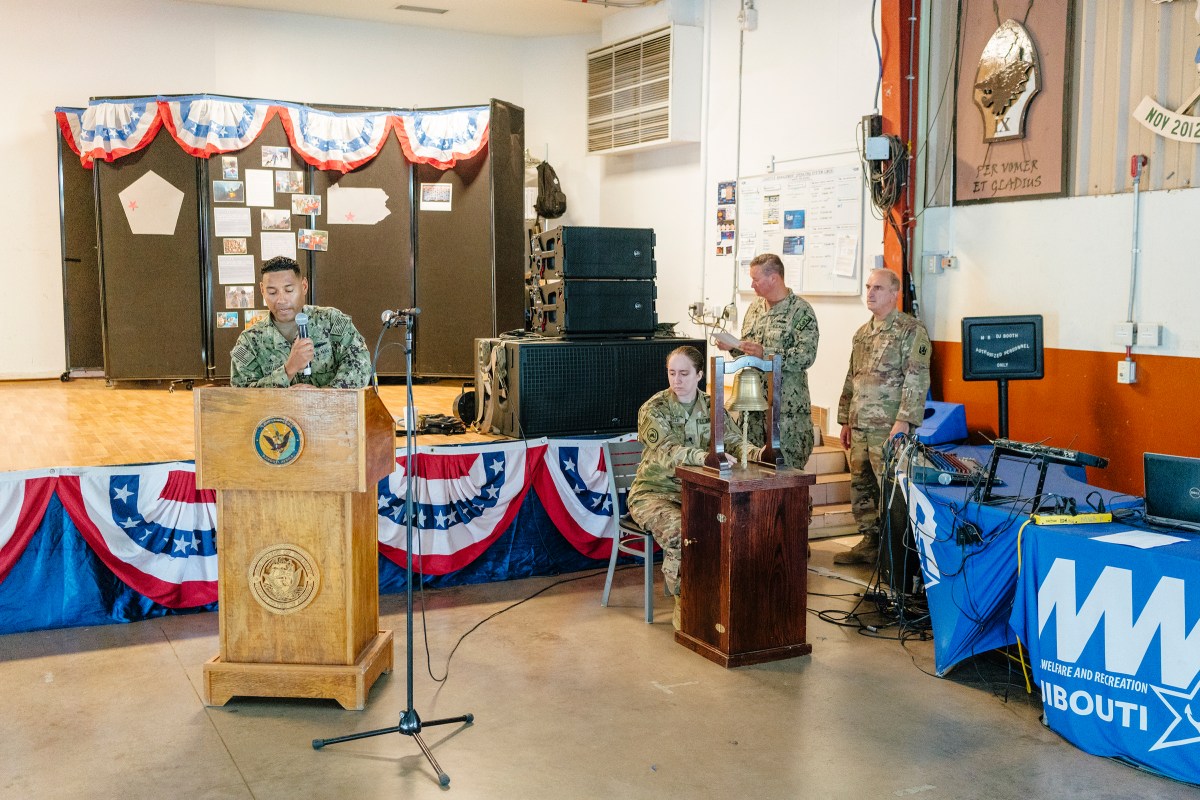
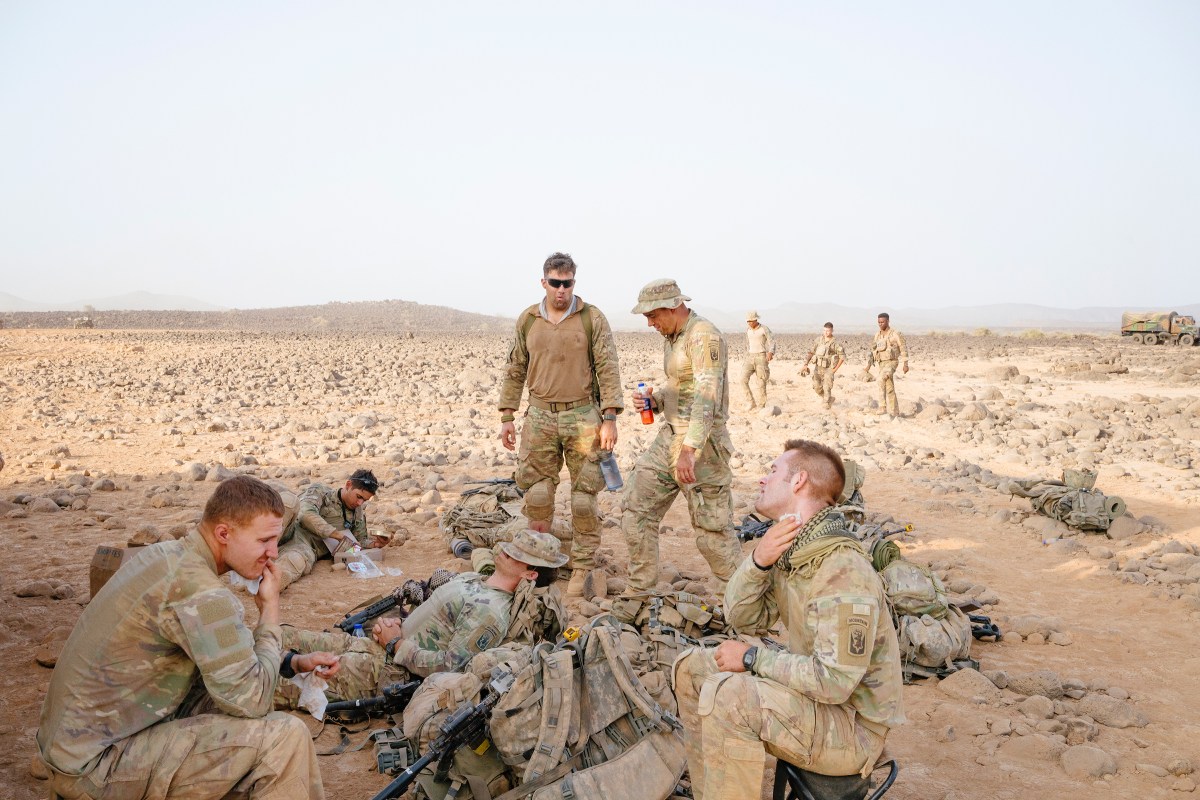
Emanuele Satolli for TIMEOn Sept. 11, U.S. forces at Camp Lemonnier read out the names of each of the 2,977 people killed in the 2001 attacks.Emanuele Satolli for TIMEA view inside the 550-acre military base.Emanuele Satolli for TIMEA white board indicates the start time of an exercise. (TIME blurred several lines due to security concerns.)
The evolving U.S. approach represents a turning point for America and the world. Critics of U.S. military engagement abroad say the country should stop fighting shadow wars altogether, arguing that they can never be won, and that the ensuing civilian casualties and other costs create a self-sustaining global conflict. But full withdrawal would be dangerous. The U.S. military’s leaders worry their chaotic pullout from Afghanistan, and a new, diminished approach to fighting terrorism worldwide, could endanger Americans and their allies. “A reconstituted al-Qaeda or ISIS with aspirations to attack the U.S. is a very real possibility,” the Chairman of the Joint Chiefs of Staff, General Mark Milley, told Congress on Sept. 28. “Strategic decisions have strategic consequences.”
Biden is banking that a low-profile globe-spanning battle, and whatever collateral damage comes with it, will be politically palatable enough for Congress to keep funding, and effective enough to keep existing and emerging militant groups from threatening America. At Camp Lemonnier, the U.S. military’s only permanent base on the African continent, the approach is already being put to the test every day.
Emanuele Satolli for TIMESoldiers take a break during desert training.
In the brightening dawn of Aug. 24, a truck loaded with goats and sheep pulled up to a Somali military camp near the central town of Cammaara. Suddenly the road erupted into a fireball. The explosion was the beginning of a multipronged al-Shabab attack that left four Somali soldiers dead and several others wounded.
As the chaos unfolded on the ground, American special operators deployed as part of Operation Octave Quartz were watching through the high-powered cameras of a drone flying overhead. The U.S. forces were sitting far from the combat in a makeshift operations center elsewhere in Somalia, where they attempted to remotely advise their Somali partners, called the Danab Brigade, via encrypted radio. With their allies under serious threat, they ordered up an airstrike on the militants’ positions.
The U.S. bombing run ultimately turned the fight in Danab’s favor. The Somalis gained back control of Cammaara, which lies on a coastal smuggling route that is valuable to al-Shabab. U.S. Africa Command (AFRICOM), which oversees all American military operations on the continent, characterized the airstrike as a “collective self-defense strike” in its public announcement, a description that allowed commanders to stay in line with the Biden Administration’s mandate that airstrikes in Somalia be approved by the White House unless they’re taken in self-defense.
Emanuele Satolli for TIMEU.S. pilots control a C-130 plane during an emergency exercise above Djibouti.
Targeted drone strikes may help U.S. partners win individual battles, but they are unlikely to win a war against an entrenched enemy like al-Shabab. The group, whose name in Arabic means “the youth,” has waged an insurgency against Somalia’s fragile U.N.-backed government since 2007. Al-Shabab has received less attention than other terrorist organizations, but at 10,000 fighters it is al-Qaeda’s largest affiliate, controlling vast swaths of rural, south-central Somalia. Like the Taliban in Afghanistan, it runs a shadow government that extorts business owners and imposes its own harsh form of Shari‘a, or Islamic law, with punishments such as public flogging, stoning and amputation. The group earns as much as $15 million per month in taxes, according to an October 2020 study from the Hiraal Institute, a Somalia-based think tank, revenue on par with that of the Somali government itself.
Al-Shabab strikes in the capital of Mogadishu at will. On Sept. 25, an explosive-laden car detonated near the presidential palace, killing at least seven people. Eleven days earlier, a suicide bomber walked into a tea shop and detonated an explosive vest, killing at least 11. Al-Shabab is responsible for the deaths of more than 4,400 civilians since 2010, according to the Armed Conflict Location and Event Data Project.
The group has occasionally carried out high-profile attacks beyond Somalia, including the assault on Kenya’s upscale Westgate shopping mall in 2013 that killed 67. The militants also launched the January 2020 attack on a Kenyan military base in Manda Bay, where U.S. troops were training local forces. An American soldier, Specialist Henry Mayfield Jr., and two U.S. civilian contractors were killed.
For years, the U.S. has been satisfied with containing al-Shabab. But the Taliban’s conquest in Kabul has stoked new fears that something similar may befall the frail government of Somalia. Al-Shabab has praised the takeover of Afghanistan on social media channels and repeated its desire to strike America and its allies. Unlike with the Taliban, whose sheltering of al-Qaeda paved the way for 9/11, it’s unclear what kind of damage an al-Shabab takeover could inflict on the U.S. A Pentagon inspector general report from November noted the group’s threats to kidnap or kill Americans in neighboring Kenya. “Al-Shabab retains freedom of movement in many parts of southern Somalia and has demonstrated an ability and intent to attack outside of the country, including targeting U.S. interests,” the report said.
Emanuele Satolli for TIMEKenyan Lieut. Colonel Irene Machangoh, who coordinates military planning and operations between the U.S. and Kenya.Emanuele Satolli for TIMEU.S. soldiers during an exercise as part of the French Desert Commando Course.Emanuele Satolli for TIME“We don’t want to own all the problems in the region, but we do want to be part of the solution,” the task force’s commander, Major General William Zana, tells TIME.
The efforts to help stabilize Somalia have had some successes, like when Kenyan troops as part of the African Union Mission in Somalia (AMISOM) drove al-Shabab out of Mogadishu and the port town of Kismayo in 2011. But AMISOM has been unsuccessfully trying to hand over the fight to the Somali government ever since. “We know we cannot stay forever, but we do not want to see all the gains reversed,” says Kenyan Lieut. Colonel Irene Machangoh. “They can strike at any time.” The fractious Somali government, plagued by corruption and complacency, depends on foreign funding and training to support its military, and “Al-Shabab is not degraded to the point where Somali security forces can contain its threat independently,” the inspector general report found.
The U.S. has a checkered history of deployments to Somalia. It mostly pulled out after the infamous “Black Hawk Down” incident in 1993, when 18 American soldiers were killed and two helicopters were shot down over Mogadishu. After 9/11, contingents of U.S. special-ops forces started to rotate through the anarchic nation. Those missions targeting al-Shabab continued for years until President Donald Trump’s final days in office. Citing his own desire to end America’s “forever wars,” Trump ordered a full withdrawal from Somalia by Jan. 15, 2021, days before Biden was sworn in.
The U.S. had Camp Lemonnier nearby to which it could withdraw many of its forces. The Marines had first come to the base, a former French Foreign Legion garrison, in 2002 because of its strategic location. Near the choke point where the Red Sea meets the Gulf of Aden, it is on a sea-lane that’s critical to commercial shipping, but also to ensuring military supplies reach the Persian Gulf. Djibouti, a French colony until independence in 1977, is a politically stable nation that was willing to lease the U.S. a scrap of land sandwiched between an airport and a harbor.
From the start, the base served as a launching pad for U.S. operations against al-Qaeda in the region. Now, it’s at the forefront of Biden’s “over the horizon” approach. At nearby Chabelley airfield, drones take off on missions bound for Yemen, where they fight al-Qaeda in the Arabian Peninsula (AQAP), or for Somalia, just 10 miles south. The official name of the mission is Combined Joint Task Force–Horn of Africa—but the military, in its passion for acronyms, calls it CJTF-HOA. “We don’t want to own all the problems in the region, but we do want to be part of the solution,” the task force’s commander, Major General William Zana, tells TIME. “The U.S. presence in the region is a modest insurance policy to help achieve greater stability in the Horn.”
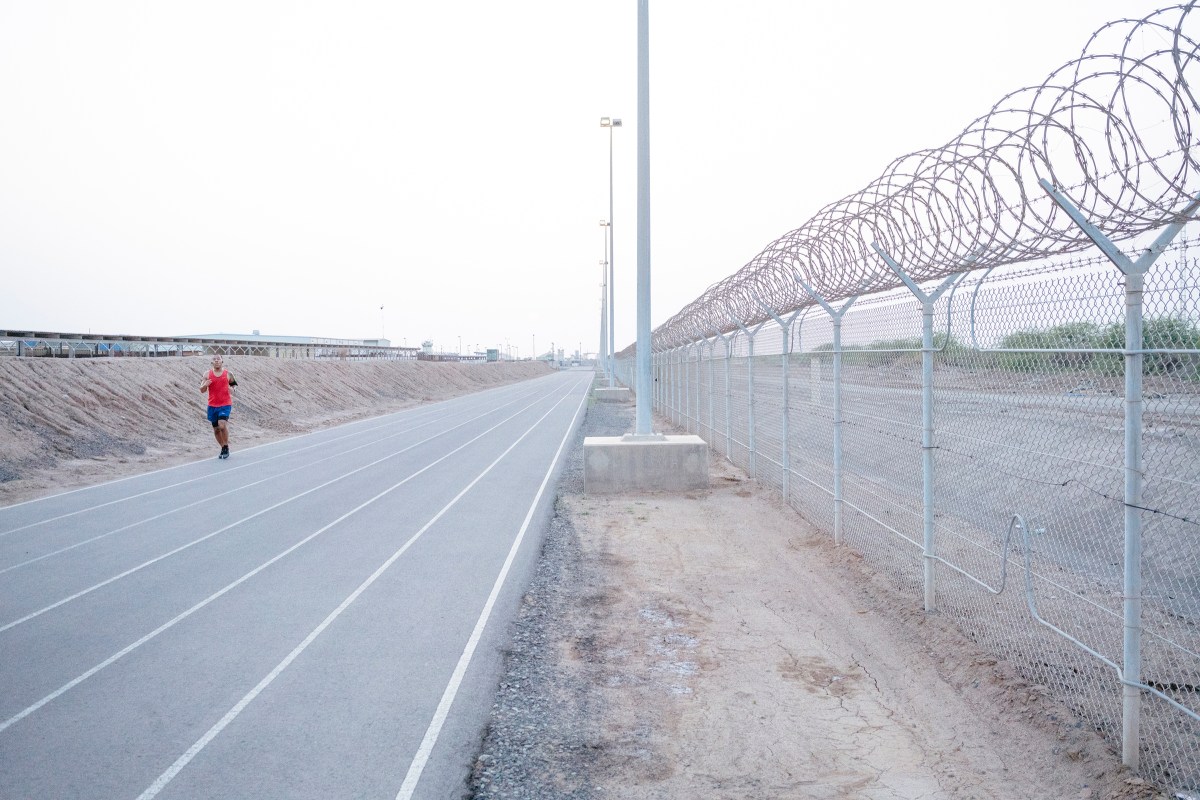
Emanuele Satolli for TIMEA soldier runs inside Camp Lemonnier.Emanuele Satolli for TIMELunch at the base’s mess hall.Emanuele Satolli for TIMEA morning exercise session at the base.
The deployment at Lemonnier may be modest, but it’s effective. What began as an 88-acre Marine Corps outpost is now a vast combat hub, home to around 5,000 U.S. troops, civilians and contractors who train regional militaries, collect intelligence and deploy to combat zones. The command building bristles with antennas and satellite dishes, while an on-site forensics lab helps specialists hack into suspected terrorists’ phones and laptops, feeding future missions across the continent. The war these troops are fighting doesn’t turn on breaking the enemies’ defensive lines or sacking their seat of power. They grind along, ensuring an amorphous threat doesn’t grow into something more.
Commuting to Somalia, though difficult, may serve as a model for fighting terrorist groups from the distance Biden wants. Already, this mission is similar to the one the U.S. now carries out in Afghanistan and other nations: developing intelligence on suspected terrorist activity, largely from airborne surveillance, captured communications chatter and images captured by drones circling overhead, then launching strikes.
But it has its own costs. During the Trump Administration, the U.S. military was handed more authority to target al-Shabab leaders, bomb-makers and operatives. There were 203 U.S. airstrikes on Somalia during Trump’s tenure, far more than were carried out under George W. Bush or Barack Obama. Trump’s willingness to use airpower led to rising claims of civilian casualties. Airwars, a London-based nonprofit, has received more than 100 allegations that innocent Somalis were killed under Trump. Those deaths are a big reason Biden launched a review into counter-terrorism policy, officials say. So far, only four strikes have been carried out under Biden, all in self-defense, according to the military. But with fewer troops on the ground, the U.S. military will likely become increasingly dependent on airpower in helping the Danab, Somalia’s special forces.
Emanuele Satolli for TIMESpecialists at Camp Lemonnier’s Joint Theater Forensic Analysis Center examine militants’ electronics, guns and improvised bombs collected on the battlefield.
It’s not clear that remote war will work. Lawmakers, terrorism analysts and current and former government officials say that no technology can substitute for troops on the ground. Troops can’t develop strong personal relationships or understand local dynamics from afar. “We can remotely advise anybody,” one U.S. official says, “but it’s just more efficient when you’re there one-on-one.”
The U.S. military is prepared to continue the Somalia mission from afar, though it prefers to operate alongside its Somali partner force, the Danab. “The reposition of forces outside Somalia has introduced new layers of complexity and risk,” AFRICOM commander Townsend told U.S. lawmakers in April. “Our understanding of what’s happening in Somalia is less now than it was when we were there.”
Humanitarian groups, for their part, have repeatedly alleged that “over the horizon” strikes have killed or injured civilians in AFRICOM’s area of operations, as they have in other parts of the world where unmanned drones launch attacks. The true toll of civilian deaths is significantly higher than the handful AFRICOM has admitted, says Chris Woods, director of Airwars. “U.S. military commands so routinely ignore reports of tragedies from affected communities,” he says. U.S. Africa Command says it researches each allegation it receives and refines tactics to avoid civilian deaths.
Biden’s critics, like Human Rights Watch, say his strategy will result in a never-ending battle, and point to the Afghan army’s spectacular collapse after 20 years of funding and training as evidence his approach is flawed. The U.S. military argues that by training local forces and joining them on operations, the U.S. can keep an eye on the evolving militant threat, and justify airstrikes if partner forces come under fire—a kind of trip wire for targeting terrorists.
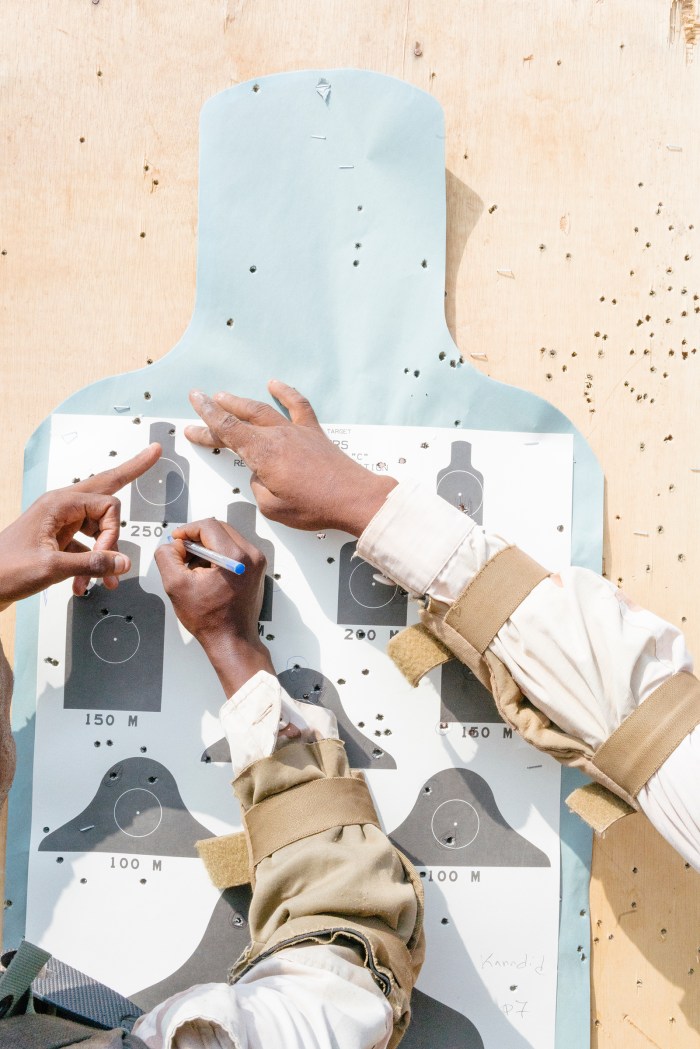
Emanuele Satolli for TIMEDjiboutian troops inspect the target used during a live-fire training exercise with U.S. soldiers.
About 10 miles off base from Camp Lemonnier, the U.S. Army’s 2nd Security Force Assistance Brigade trains a group of recruits from a Djiboutian infantry unit, which may one day join the AMISOM mission. Marksmanship training takes place on a windy Saturday at the foot of Mount Gubad. The young men lay on their bellies in dirt the color of dried blood, firing their M4 rifles at paper targets roughly 50 yards away. The snap of gunfire resounds for miles. Sergeant First Class Jonathan Mills, 41, paces back and forth behind a dozen of the soldiers. “Hold your lead hand tight, and keep your eyes on the target,” Mills shouts, before an interpreter translates into French.
Aside from a 2014 attack that killed two at the La Chaumière restaurant in Djibouti City, the country hasn’t suffered much from al-Shabab’s violent campaigns. The nation has, however, capitalized on its strategic position, hosting bases for France, the U.S. and China—Beijing’s first overseas military facility. The bases, and foreign investment in local infrastructure, ensure some economic benefit from the regional counterterrorism campaigns.
Many of the Djiboutian troops come from parts of the impoverished country where quarrels are often settled with fists, rocks or shards of glass, and some have the scars to prove it. Now they wear the high-and-tight hairstyles of their American instructors, dress in similar camouflage uniforms and fire the same weapons. While they have not fought in Somalia, their commander, Lieut. Colonel Mohamed Mahamoud Assoweh, did throughout 2016 and 2017. “The fighting was very difficult,” he says, walking among volcanic rocks the size of beach balls. “Now that [al-Shabab] see what happens in Afghanistan, maybe they think they can wait us out.” Wearing a red beret and wraparound sunglasses, Assoweh says he’s pleased with his troops’ progress. He’s also happy with his arsenal of American-made M4s, .50-caliber Browning machine guns, encrypted radio systems and 54 humvees, even if it’s nearly impossible for his men to maintain. “This is what we need to fight,” Assoweh says of the al-Shabab threat.
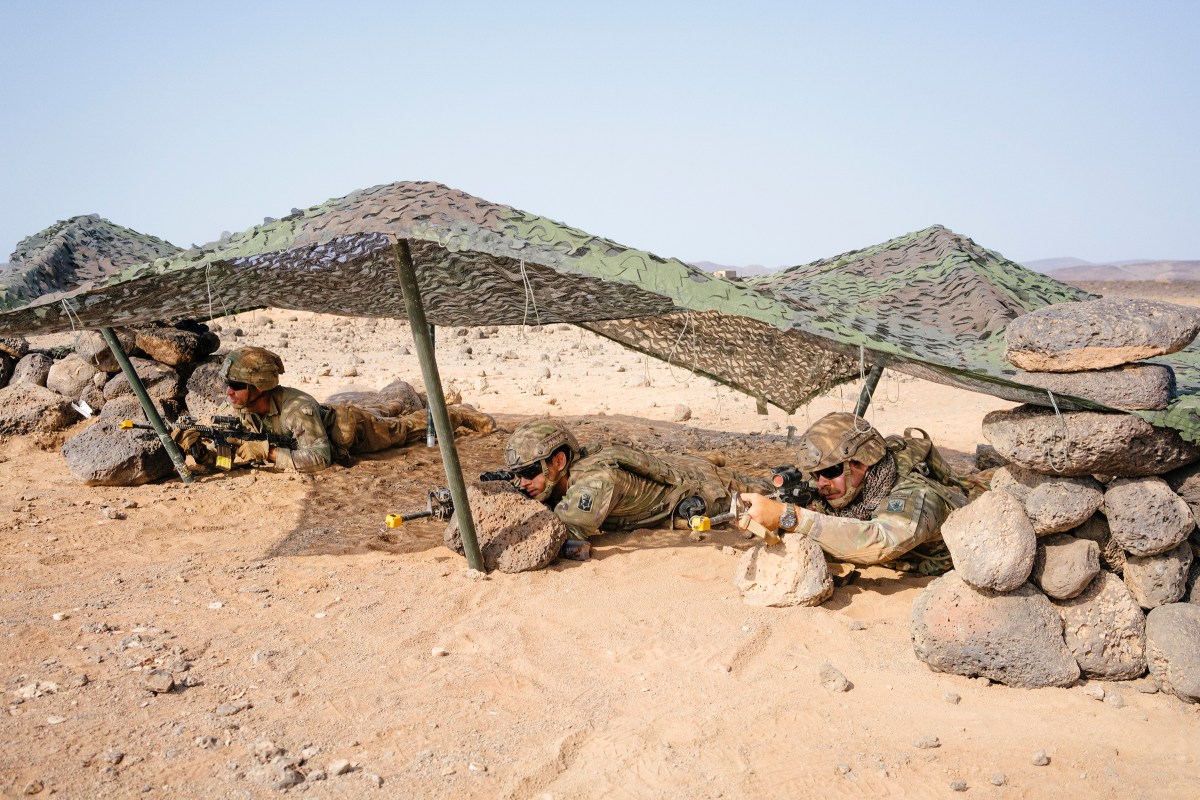
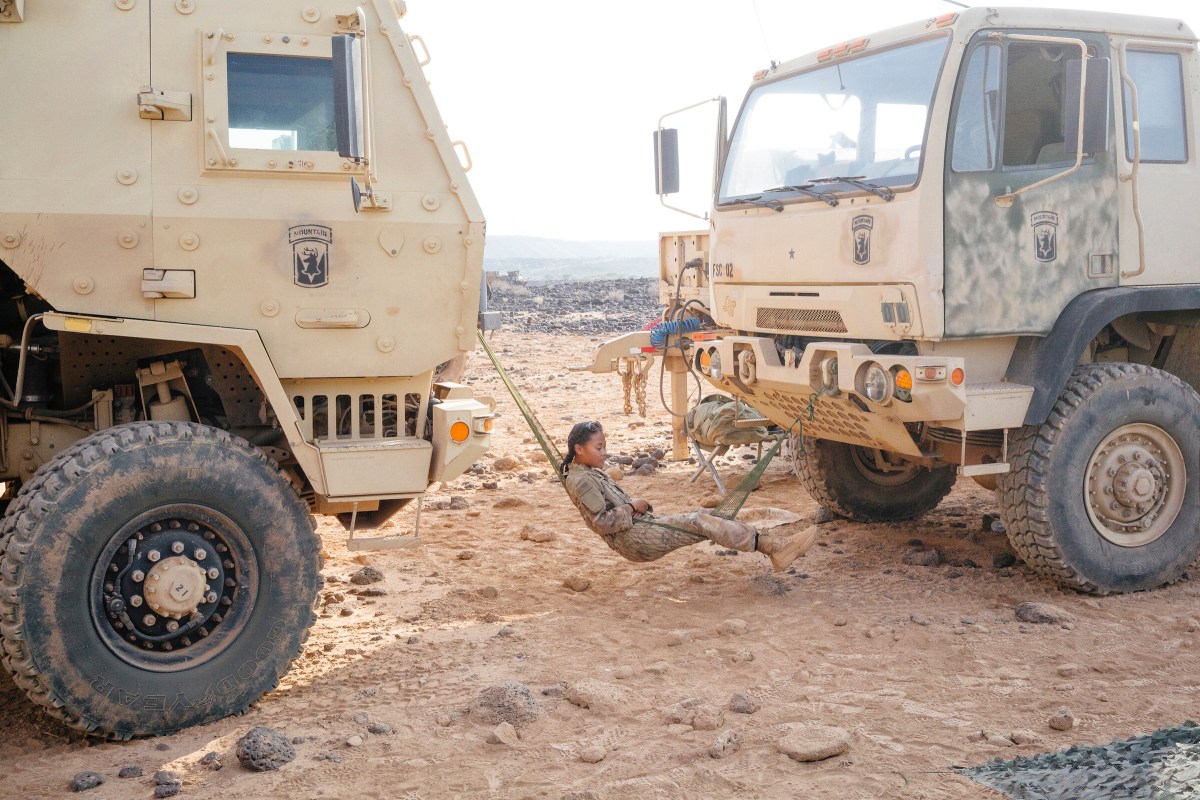
Emanuele Satolli for TIMEThe 9/11 remembrance ceremony at Camp Lemonnier on the 20th anniversary of the attacks.Emanuele Satolli for TIMERifles at a Djiboutian military base near Camp Lemonnier.Emanuele Satolli for TIMEA U.S. soldier in Djibouti rests in the triple-digit heat during a joint exercise with French forces.
And so the war on terrorism continues, marking grim anniversaries year after year, despite the talk of withdrawals and homecomings. At Camp Lemonnier, on Sept. 11, 2021, hundreds of troops stood in the windless heat in commemoration of the 9/11 attacks. It wasn’t yet 9 a.m., but the temperature had already soared past 104°. Rings of sweat began to appear upon the bands of the troops’ camouflage caps.
Twenty years ago, many of these service members were toddlers. Some weren’t born. But the attacks led them to a country that few could have found on a map before they received their deployment orders. “Things changed remarkably and irreparably after the attacks,” Major General Zana tells the service members. “None of us would be here. The street, this building, the planes that flew overhead, the relationships we formed, none of this would be here.” The troops uniformly salute an American flag as it’s pulled, inch by inch, to half-staff. An Army specialist steps into the silence, wets his lips and lifts his trumpet to play the distinctive 24 notes of taps—G, G, C, G, C, E. —With reporting by Nik Popli/Washington and Simmone Shah/New York