TORONTO — Prime Minister Justin Trudeau said Monday it ’s not an isolated incident that over 200 children were found buried at a former Indigenous residential school.
Trudeau’s comments come as Indigenous leaders are calling for an examination of every former residential school site — institutions that held children taken from families across the nation.
Chief Rosanne Casimir of the Tk’emlups te Secwepemc First Nation in British Columbia said the remains of 215 children, some as young as 3 years old, were confirmed this month with the help of ground-penetrating radar. She described the discovery as “an unthinkable loss that was spoken about but never documented” at the Kamloops Indian Residential School, the largest such school in the country.
[time-brightcove not-tgx=”true”]
“As prime minister, I am appalled by the shameful policy that stole Indigenous children from their communities,” Trudeau said.
“Sadly, this is not an exception or an isolated incident,” he said. ‘’We’re not going to hide from that. We have to acknowledge the truth. Residential schools were a reality — a tragedy that existed here, in our country, and we have to own up to it. Kids were taken from their families, returned damaged or not returned at all.”
From the 19th century until the 1970s, more than 150,000 First Nations children were required to attend state-funded Christian schools as part of a program to assimilate them into Canadian society. They were forced to convert to Christianity and not allowed to speak their native languages. Many were beaten and verbally abused, and up to 6,000 are said to have died.
The Canadian government apologized in Parliament in 2008 and admitted that physical and sexual abuse in the schools was rampant. Many students recalled being beaten for speaking their native languages. They also lost touch with their parents and customs.
Indigenous leaders have cited that legacy of abuse and isolation as the root cause of epidemic rates of alcoholism and drug addiction on reservations.
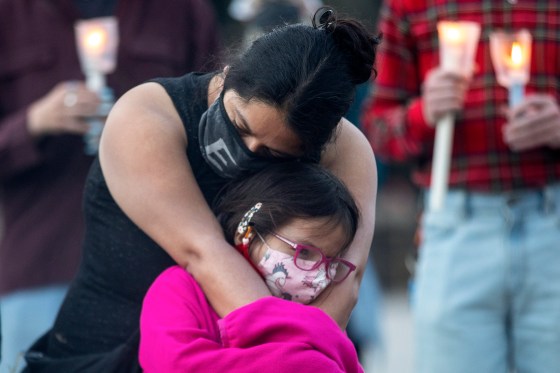
Chris Young/The Canadian Press via APA mother hugs her daughter during a vigil in Toronto on Sunday May 30, 2021, for the 215 Indigenous children, whose remains were uncovered on the grounds of a former residential school near Kamloops, British Columbia.
Plans are underway to bring in forensics experts to identify and repatriate the remains of the children found buried on the Kamloops site.
Trudeau said he’ll be talking to his ministers about further things his government needs to do to support survivors and the community. Flags at all federal buildings are at half-staff.
Opposition New Democrat leader Jagmeet Singh called Monday afor an emergency debate in Parliament.
“This is not a surprise. This is a reality of residential schools,” Singh said.
“215 Indigenous kids were found in an unmarked mass grave,” he said. ‘’Anytime we think about unmarked mass graves, we think about a distant country where a genocide has happened. This is not a distant country.”
The Kamloops school operated between 1890 and 1969, when the federal government took over operations from the Catholic Church and operated it as a day school until it closed in 1978.
Richard Gagnon, archbishop of Winnipeg and president of the Canadian Conference of Catholic Bishops, said he wanted to express “our deepest sorrow for the heartrending loss of the children at the former Kamloops Indian Residential School.”
The National Truth and Reconciliation Commission has records of at least 51 children dying at the school between 1915 and 1963. The Commission identified about 3,200 confirmed deaths at schools but noted the schools did not record the cause of death in almost half of them. Some died of tuberculosis. The Commission said the practice was not to send the bodies of the students who died at the schools to their communities. The Commission also said the government wanted to keep costs down so adequate regulations were never established.
“This discovery is a stain on our country. It is one that needs to be rectified,” Opposition Conservative lawmaker Michelle Rempel Garner said.
Empty pairs of children’s shoes have been placed at memorials throughout the country.
Perry Bellegarde, chief of the Assembly of First Nations, has said while it is not new to find graves at former residential schools, it’s always crushing to have that chapter’s wounds exposed.
The Federation of Sovereign Indigenous Nations and the Saskatchewan government said they want Ottawa to help research undocumented deaths and burials at residential schools in the province.
Federation Chief Bobby Cameron said finding the children’s remains and giving them proper burials is important to help First Nations communities and families find closure. The federation has compiled a list of initial sites where it hopes to complete radar ground searches.
Sol Mamakwa, an opposition lawmaker with the New Democrat party in Ontario, also called on the government to search the grounds of other former residential schools.
“It is a great open secret that our children lie on the properties of former schools. It is an open secret that Canadians can no longer look away from,” he said.
For Itzel Schnaas, a 31-year-old professional ballet dancer in Mexico City, going public was her insurance policy. If the plan worked, she believed a world-famous public intellectual, with ties to Mexico’s government and major media conglomerates, would be exposed as a sex offender, and she could be protected from him and his powerful friends. They couldn’t go after her if the world was watching, especially if other women came forward too. On Feb. 15, she posted a nearly seven-minute YouTubevideoexcoriating the man: “It turns out that I had barely been born when you started violating women and sowing fear to obtain their silence, you miserable a–hole,” she says in Spanish. “You ought to be scared of us. Because I am certain that many other women are going to add their accusations to this one.”
[time-brightcove not-tgx=”true”]
They did.
Since then, 36 womenhave publicly accusedAndrés Roemer, leveling charges of sexual harassment, abuse and rape on social media and in the press. At least six have formally accused the 57-year-old before the Mexico City prosecutor’s office, Mexico City’s attorney general confirmed on May 24. In February, UNESCO stripped him of his Goodwill Ambassador title, and Columbia University, where he was a visiting scholar, cut ties with him. On May 5, amid reports that Roemer was in Israel, a Mexico City judge issued a warrant for his arrest for rape. His assets were frozen the same day. On May 21, Mexico City’s attorney general announced that a second warrant for Roemer’s arrest had been issued and that her office was preparing an extradition request from Israel. Roemer has denied the accusations. “I have never raped, assaulted, threatened or used any type of violence against any woman,” he said in a statement to Radio Formula on May 6. Roemer’s assistant did not make him available for comment for this story.
“Itzel Schnaas’ video changed everything,” says María Scherer, a journalist who started investigating rumors about abuse by Roemer years ago when, she says, it was still an open secret. Roemer’s alleged crimes are comparable in scope and style to those of Harvey Weinstein. Like the former film producer, Roemer’s power and status—cemented by friendships with the likes of former Mexican President Vicente Fox and billionaire Ricardo Salinas Pliego, both witnesses at his 2018 wedding—helped ensure his alleged victims’ silence. He also benefited from a legal system that practically guarantees impunity: according to onestudy, only 5% of sexual abuse or rape cases in Mexico end in a sentence. “It’s very hard to get proof like a video, medical evidence or something that proves the aggression,”saysViridiana Valgañón, a lawyer with Mexican women’s-rights organization Equis.“You come face to face with the machinery of patriarchal justice, because your word, as a female victim, is doubted at every turn.”
For years, Roemer’s accusers chipped away at the wall of silence that protects men, and especially powerful men, in a country where neither feminism nor the movement against gender violence had yet gone mainstream. When Schnaas roared her accusation, it was amplified by their efforts, and taken up on social media and WhatsApp to create a community of previously siloed victims. Now, an open secret hasbecome an international political scandal.
For Roemer, the beginning of the endstarted with his flagship project.La Ciudad de las Ideas—known in English as the Festival of Brilliant Minds, a conference similar to TED Talks, has been held nearly every November since 2008 in Puebla, in east-central Mexico. (The 2020 festival was pushed to December by COVID-19.) For four days, some of the world’s most innovative thinkers, including Michio Kaku, Christopher Hitchens, Werner Herzog and Alain de Botton, would debate ideas before an audience of thousands. It’s become a cultural touchstone, into which the state of Puebla has injectedat least $17 millionsince 2007. Roemer, the festival’s founder and curator, is constantly on the move, dashing across the whale-shaped dome that hosts the event to moderate a panel, introduce a speaker or emcee. He is the literal face of the festival: in a three-minute 2020 promotionalvideo, Roemer appears at least 17 times.
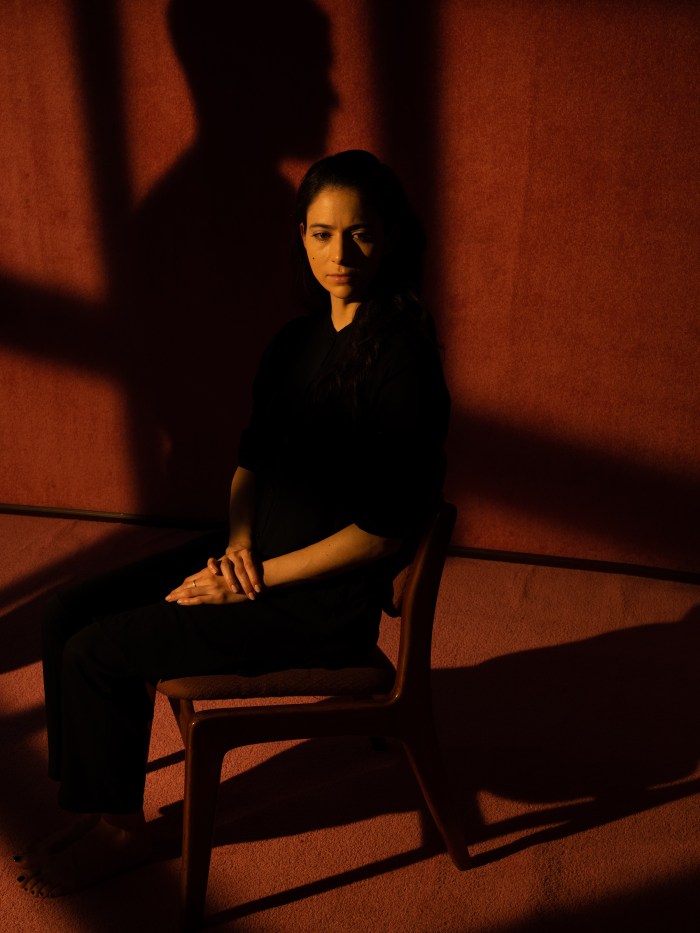
Tania Franco Klein for TIMEItzel Schnass photographed in Mexico City on May 24.
In her own video, and in interviews with TIME, Schnaas set out her account of her dealings with Roemer—one sharply disputed by Roemer himself. As Schnaas describes it, they first met in 2019 backstage at the festival, where Mexico’s upper crust, including billionaire Salinas, Roemer’s friend and the owner of media conglomerate Grupo Salinas that sponsors the festival, milled about eating canapés and drinking wine proffered by waiters in formal attire. Schnaas’ father is an architect and a judge for the Mexican Sailing Federation, an elite club whose members include some of Mexico’s wealthiest citizens. This was a familiar world to her, albeit one she regards with a degree of ironic detachment. (At 18, as a rising star in Mexican ballet, she had tossed her tiaras and tutus aside in favor of contemporary dance and a philosophy degree.) At the urging of mutual acquaintances, Schnaas and Roemer exchanged numbers to discuss a potential artistic collaboration for the following year’s festival. They set a date to meet later that month.
<b>“It was clear to me. …I didn’t know what I was going to do yet, but I knew I was going to do it.”</b>According to Schnaas, that’s when Roemer started acting strangely. He changed their meeting’s location at the last minute from a restaurant to a place he did not disclose as his home. After Schnaas arrived at a large stone house in the Mexico City neighborhood of Roma, a domestic worker ushered her into a room whose function seemed to fall somewhere between library, movie theater and lounge. When Roemer entered, what Schnaas had expected to be a professional meeting then soon devolved into farce. Roemer incessantly interrupted her to comment on her physique, how sexy he thought dancers were and how much he wished he’d married one. She says she felt a combination of shock and repulsion when, she says, he stroked her legs and masturbated, finally pulling out a wad of cash and instructing her to buy an expensive dress “for the next time.”
When he let her out of the house, Schnaas says she tore away on her motorcycle in a fury.She was well versed in handling and deflecting men’s unwanted advances. “I was a girl who grew up in a world of dance where, when you were 10 or 15 years old, choreographers would tell you that until you had a certain amount of sexual experience, you wouldn’t be an artist,” she says. But something about Roemer’s brazenness—and a strong suspicion she was not the first, nor the worst treated—compelled her to take action.“It was clear to me. I knew he was a f-cking rapist. I didn’t know what I was going to do yet, but I knew I was going to do it,” she says.
Since Grupo Salinas sponsored the Festival of Brilliant Minds and Roemer hosted his own show on the company’s network, it made sense to strike there. She told a friend of her father’s who worked there what had happened, and asked for his help getting the word out. But when the coronavirus pandemic hit Mexico in March 2020, her grievance took a backseat. She persisted until finally, in November 2020, Schnaas says the company’s Gender Unit—an office created a year earlier to address reports of sexual harassment and violence—agreed to open a case. Schnaas says that during an in-person meeting in December 2020, the director of the unit described Roemer as a “serial aggressor,” but said that since Schnaas was not an employee at Grupo Salinas, they could not take legal steps. The director of the Gender Unit declined to comment to TIME. The director of editorial strategy at Grupo Salinas said that though the Gender Unit was made aware of Schnaas’ case, no investigation was carried out.
So Schnaas looked outside the company. She turned to a feminist collective, the United Mexican Journalists (PUM), which had spearheaded a #MeToo campaign in Mexican media in March 2019. She had been feeling discouraged and starting to doubt whether her experience even warranted her efforts, but her resolve returned when the collective informed her that they’d named Roemer in accusations published on Twitter. They were only three among 242 total #MeToo accusations PUM had posted at the time, and did not include the names of the accusers, but reading them, Schnaas could hardly believe how close they hewed to her own experience: business meetings meant to take place in a public setting and then, at the last minute, moved to Roemer’s home. His promises to jump-start their careers. She was heartbroken byone in particular, in which a young woman claimed Roemer had raped her after pulling the same moves in 2017. “If I hadn’t read the previous #MeToo accusations and seen that the exact same thing had happened before, I would have probably minimized or discredited my own story,” she says. PUM suggested Schnaas pen a fourth accusation. She wanted to film a video instead. And she wanted to publish it in February. “I wanted this to be a f-cking bomb for March 8,” she says.
The 2020 International Women’s Day in Mexico City—mere weeks before lockdown measures halted public life—had been epic, one of the largest protests globally that day, and the largest protest of any kind in Mexico in recent memory. In the last few years, the women’s-rights movement, centering around demands to address a skyrocketing femicide epidemic in the face of the state’s inaction, had rapidly bloomed in Mexico, and Schnaas wanted to capitalize on the momentum.
On Feb. 9, she took to Facebook, posting: “Last year I denounced Dr. Roemer, Andrés Isaac Roemer Slomianski is an abuser.” Two days later, Schnaas received a WhatsApp message from a woman named Lidia Camacho. She was a friend of Roemer’s, and wanted to talk. They met for coffee, and over the course of several other meetings over the next few days, Camacho pleaded Roemer’s case and asked Schnaas to meet with him to talk it out.
On the morning of Feb. 14, Schnaas and Roemer met in a café with witnesses in tow: Camacho and Javier Contreras, Schnaas’ friend and achoreographer at Mexico’s National Institute of Fine Arts and Literature.Schnaas read Roemer the script she planned to read in the video she was planning to make soon. She wore the same pale blue collared dress she’d worn two years earlier, the first time they’d met—she liked the symmetry.Contreras, Schnaas’ witness, says Roemer pleaded with her not to post the video, and attempted to dissuade her by arguing that “different kinds of narratives may exist for the same event,” citing as an example the 1950 filmRashomon,which, through multiple narratives, questions the notion of a single truth. Roemer then gave Schnaas a set of books, includingThe Secret Lives of Men and Women—a compilation of postcards containing racy musings such as, “I sit in meetings and imagine who likes it rough.”
Roemer’s account of his dealings with Schnaas is quite different. In a later tweet, he wrote he “seriously” denied the abuse allegation and said he and Schnaas talked it out during their Feb. 14 meeting.
For Schnaas, nothing was resolved. Meeting over, she says she raced to the home of her longtime friend and fellow dancer Ricardo Encinas, and told him to grab his camera and start rolling. In a furious but steady voice, she read the same text she had just delivered to Roemer. She says it felt like she was still reading to him. She posted the video the next day, and the messages started pouring in.
Women across Mexico and as far as San Francisco and New York got in touch with Schnaas via Facebook and Instagram, most with stories of misconduct concerning Roemer. They’d exchange numbers and call. “I’m talking about two-hour-long calls late at night, crying, total catharsis,” Schnaas says. Over a month and a half, Schnaas says she fielded about 80 calls. Most simply wanted to talk and weren’t sure about going public with their stories. But a few, like Talia Margolis, were ready.
Margolis, a 32-year-old communications manager, says she met Roemer in 2009. She was a volunteer at a Jewish community center and was working on a project to award scholarships to teens to attend the Brilliant Minds festival. A few weeks after seeing him give a talk at his office, she was out walking with a friend when she spotted him seated at a café and approached to say hello. After briefly chatting, Roemer proposed that she drop by his house to interview for a position with the festival. Margolis thought this was a golden opportunity and accepted. Meeting in his home did not strike her as a concern. He was a trusted member of the Jewish community and she felt safe. On the appointed day, she sat in the entertainment room as Roemer asked about her studies and described the festival. Then—out of the blue, as she recalls it—he complimented her on her breasts, and later asked if she was clean-shaven in her pubic area. She cut the meeting short and left, feeling utterly humiliated. She never heard back about the job.
In 2019, when #MeToo hit, Margolis says she decided to publicly share her experience and got in touch with journalistMaríaScherer who was investigating Roemer for a podcast on his alleged behavior. She sat for an interview, but Scherer had to drop the project after other women backed out, and Margolis was left without an outlet until shesaw Schnaas’ video on Feb. 15.She reached out to Schnaas, and they talked about what they should do next. “I told myself, ‘This can’t end here,’” Margolis says. On Feb. 18, when she had PUM publish her ownstatement,Margolisbecame the fifth person to publicly accuse Roemer, after Schnaas and the three anonymous women from 2019. That same day, Monserrat Ortiz came forward.
<b>“She described things that were so similar to what happened to me. I told myself, ‘Now is the time.'”</b>Ortiz, a 27-year-old journalist, met Roemer in 2017. She had been working for TV Azteca, Grupo Salinas’ flagship media company, as a TV reporter for six months when she was assigned to interview Roemer about the festival. After finding her on Facebook a few days afterward, Roemer messaged with a work proposal involving some translation and writing and suggested he make a reservation somewhere for them to discuss it. Ortiz was dying to write—that was the reason she’d gotten into journalism in the first place—and she figured the gig might open doors. Besides, she could use the money. She accepted. But on the day of the meeting, she says Roemer sent her a message with a change of plans. He sent a chauffeur to drive her to a new location, which ended up being his house. After being ushered into the entertainment room, she says Roemer locked the door behind them. Then, while insistently staring at her legs, she says he came out with a completely different job proposal from the one he’d originally pitched: a game-show hostess. She replied that she wasn’t interested; she was a journalist. She tried to steer the conversation back to the original offer. But without warning, she says, he started masturbating in front of her, and then raped her. When he was done, she says he pulled out some cash and told her to buy an expensive dress for their next meeting. She also says he told her that if she uttered a word about that evening, he would make sure she never got hired in media again. Afraid Roemer would make good on his threat, Ortiz kept quiet about the incident. (Roemer told El País he denies Ortiz’s rape allegation and said he does not know her.)
In March 2019, when PUM started publishing#MeToo accusations on Twitter, Ortizwrote astatementabout the alleged assault and asked the collective to post it anonymously. (She was still working for TV Azteca.) It was the statement that, nearly two years later, convinced Schnaas to make the video. Ortiz spotted it while scrolling through her social media feeds on Feb. 18.“She described things that were so similar to what happened to me. I told myself, ‘Now is the time,'” she says, and wrote another, more detailedstatementand asked PUM to publish it,this time with her name. Then she wrote Schnaas.
Suddenly headline news across Mexico, Margolis, Schnaas and Ortiz created a WhatsApp group to be in touch through the media storm, and to collectively manage the flood of messages they were now all receiving from other women claiming to have been abused by Roemer. Most were still afraid to come out publicly. But they ended up getting a push from an unlikely place.
On Feb. 20, Roemer posted his ownvideo. Sitting before a bookshelf, he introduced himself and claimed to have information that would clear up his and Schnaas’ now public dispute. He then aired a four-minute clip of a recording he took during their Feb. 14 meeting. In it, Schnaas could be heard telling Roemer that when she approached Grupo Salinas in November 2019, she defended him before two of her father’s friends who worked there, who had it out for him. (Schnaas later explained to me that what she meant was her issue with Roemer was separate from their internal political feuds.) “As you can see, behind this accusation are the interests of two people who do not belong to the women’s-rights movement,” Roemer concludes.
But far from deflecting the issue, Roemer’s video backfired. “To me, that’s when he dug his own grave,” says Diana Murrieta, the president and founder of Nosotras Para Ellas, an NGO providing free legal counsel and psychological assistance to victims of gender-based violence. “It created a collective fury.” Murrietta says a handful of Roemer’s alleged victims had reached out to her organization after Schnaas’ video, but that those numbers soared after Roemer posted his own.
On Twitter, PUM started publishing daily, sometimes twice daily, statements by women accusing Roemer of sexual misconduct. Mariana Flores, a 33-year-old contractor who also says Roemer lured her to his house under the guise of a work offer in 2011, then touched and kissed against her will, was one of the women pushed over the edge by Roemer’s denial. She sent PUM her statement on Feb. 20 and asked them topublishit with her name.“I had two options. Either I resigned myself to the fact that this was going to be my life, that I was going to have to endure this kind of behavior, or I joined this group of women who said we could build a different world. I told myself, I’m with them,” Flores says now.
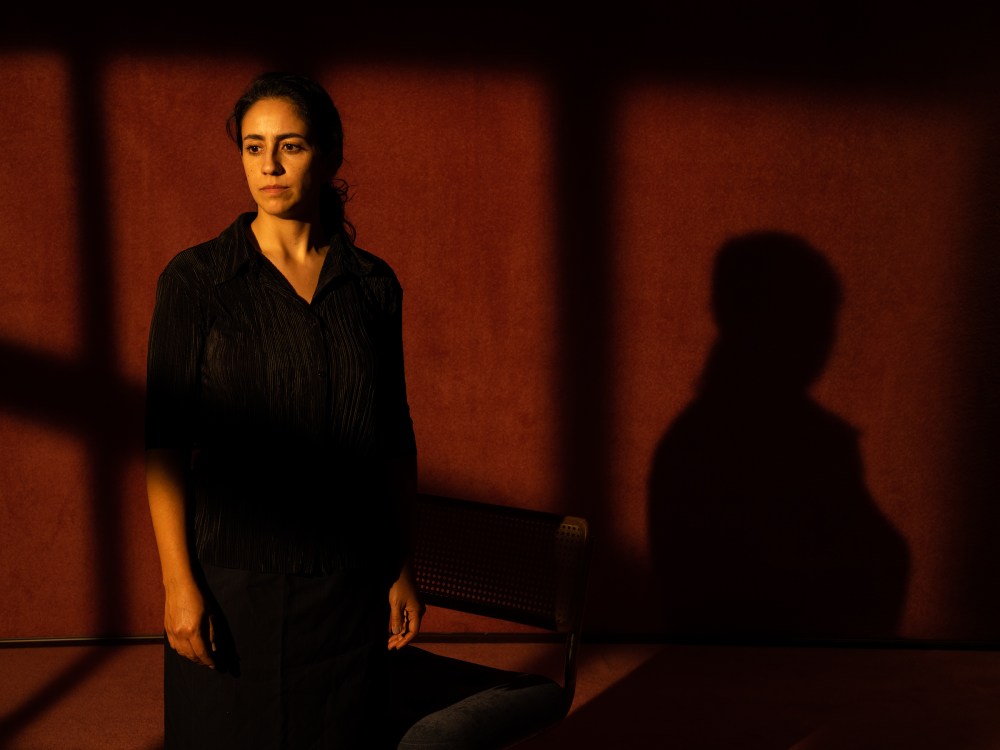
Tania Franco Klein for TIMEMariana Flores photographed in Mexico City on May 24.
Soon the WhatsApp group included over a dozen women. It was a refuge where they could feel a sense of camaraderie, and ease each other’s anxieties. And soon their boldness paid off:On Feb. 23, 2021, in an extremely rare move,the Mexico City prosecutor’s office opened an investigation ex officio into Roemer, based on the news reports of his alleged crimes. Finally, a legal path was open for the women to pursue Roemer. The next day, he deleted his Twitter account.
“Two or three years ago, when women accused Roemer of these crimes, the authorities did not open a case. But this time, they did,” says Ximena Ugarte, a lawyer with the Mexican Human Rights and Democracy Institute representing a group of women accusing Roemer. The Mexico City prosecutor’s office did not respond to requests for comment. Ugarte attributes the change to new policy that’s helped facilitate sex crime investigations in the capital, notably a 2019 “Gender-Based Violence Alert,” but also to Mexico’s feminist movement. “This is a fight that women have been waging for a long time,” she says.
<b>“We’re creating a monster against this man.”</b>It’s also a fight that has been waged on multiple fronts. Emails shared with TIME show that in 2019, Roemer was reported for sexual harassment to the UNESCO Director-General, but that requests for an investigation were ignored. UNESCO declined to comment on the emails.
The number of Roemer’s accusers kept growing, bringing actors, writers, academics, public servants and hotel maids to a common front. On March 2, some finally met for the first time when they recorded Scherer’s podcast.In the days leading up to March 8, Roemer barricaded his house: large black boards covered the first and second stories. They didn’t stop women who, as Schnaas had hoped and predicted, gathered before Roemer’s house on International Women’s Day, tore down one of the boards to scale the second floor and—in pink and purple spray paint—write “rapist” and “abuser” next to a large French window.
“We’re creating a monster against this man,” Ortiz says.
The pursuit is now international. On May 7, several survivors of Roemer’s alleged abuse wrote aletterto the Israeli ambassador in Mexico, asking for cooperation in Roemer’s extradition. “We want to make sure no more women suffer the horrors we live with,” they wrote.
The original WhatsApp group eventually splintered. Some of the women opted out of accusing him before the prosecutor’s office, fearing possible fallout on their families or careers. Others formed smaller groups around the different lawyers they chose to represent them.
All of that is understandable to the women who first pushed the case into the public square. Margolis says, “If I’m scared, and he only sexually harassed me, I can’t even imagine how the women who were assaulted must feel.”
Schnaas says some days she wakes up feeling certain more women will join them in formally accusing Roemer. Other days feel so taxing she can’t believe anyone else would put themselves through it. She reminds herself that the united front they created outed him to the world. “We’re already a huge case,” she says.
While they wait for justice, the support of the sisterhood has fortified some of the first accusers. Flores finally found the courage to talk with her therapist about her experience with Roemer, which she says she had not done in five years of therapy.Ortiz overcame the panic attacks she’d been suffering for weeks. Now, she’s focusing on her work: writing about gender-based violence.
BEIJING — China’s ruling Communist Party will ease birth limits to allow all couples to have three children instead of two to cope with the rapid rise in the average age of its population, a state news agency said Monday.
The ruling party has enforced birth limits since 1980 to restrain population growth but worries the number of working-age people is falling too fast while the share over age 65 is rising, adding to strains on the economy and society.
A meeting Monday of the party’s Politburo decided “China will introduce major policies and measures to actively deal with the aging population,” the Xinhua News Agency said.
[time-brightcove not-tgx=”true”]
Party leaders “pointed out that further optimizing the fertility policy, implementing the policy of one couple can have three children and supporting measures are conducive to improving China’s population structure,” the report said.
It gave no details on when or how the change would be carried out.
China’s population of 1.4 billion already was expected to peak later this decade and start to decline. Census data released May 11 suggest that is happening faster than expected, straining underfunded pension and health systems and cutting the number of future workers available to support a growing retiree group.
Restrictions that limited most couples to one child were eased in 2015 to allow all to have two. But after a brief rise the next year, births declined. Couples say they are put off by the cost of having children, disruption to jobs and the need to look after their own parents.
The share of working-age people 15 to 59 in the population fell to 63.3% last year from 70.1% a decade earlier, according to the census data. The group aged 65 and older grew to 13.5% from 8.9%.
The 12 million births reported last year was down nearly one-fifth from 2019.
About 40% were second children, down from 50% in 2017, according to Ning Jizhe, a statistics official who announced the data on May 11.
CAIRO — Egypt and Israel held high-level talks in both countries Sunday to shore up a fragile truce between Israel and the Hamas militant group and rebuild the Gaza Strip after a punishing 11-day war that left parts of the seaside enclave in ruins.
Egyptian Foreign Minister Sameh Shukry received his Israeli counterpart, Gabi Ashkenazi, in Cairo. The meeting is part of an effort to build on an Israel-Hamas cease-fire reached May 21 and to revive Israeli-Palestinian negotiations, which have been dormant for more than a decade, Shukry’s office said. Egypt has not said how it would be able to restart talks.
[time-brightcove not-tgx=”true”]
The hours-long visit was the first public one by an Israeli foreign minister to Egypt since 2008, according to the Israeli Embassy in Cairo.
Spokesman Ahmed Hafez said Shukry called for establishing an atmosphere to relaunch “serious and constructive” negotiations between the two sides. He also urged both sides to refrain from “any measures” that could hamper efforts to revive peace talks.
They also discussed the release of Israeli soldiers and citizens being held by Hamas, Israel’s top diplomat said.
“We all need to act to prevent strengthening extremist elements that threaten regional stability, and to ensure the return home of the missing persons and prisoners held by Hamas,” Ashkenazi said.
He also criticized the Palestinian Authority over its moves at the International Criminal Court and the U.N. Human Rights Council, saying such activity damages the chances of future cooperation.
Ashkenazi alleged that Palestinian war crimes complaints against Israel —filed over its military conduct since a 2014 war with Hamas and ongoing settlement construction — are an obstacle to political dialogue. The ICC is investigating both Israel and Hamas for possible war crimes. Hamas is under investigation for random rocket fire toward Israeli communities.
Despite cease-fire talks, Hamas and the smaller militant group Islamic Jihad have staged weapons parades in a show of force. On Sunday, thousands attended a Hamas rally in the northern Gaza town of Beit Lahiya, where masked militants displayed rockets, launchers and drones.
Hamas is holding the remains of two Israeli soldiers killed in a 2014 war. It also is holding two Israeli civilians who were captured after entering Gaza.
As part of the cease-fire efforts, Israeli Prime Minister Benjamin Netanyahu hosted Abbas Kamel, Egypt’s intelligence chief, in Jerusalem. Netanyahu said he had raised the issue of returning the remains of soldiers and the two civilians as well as Israeli demands to prevent Hamas from gaining strength or diverting resources meant for the civilian population.
An Egyptian official said Kamel would also meet with Palestinian officials in the West Bank before heading to Gaza for talks with Hamas leaders. The intelligence agency, which is Egypt’s equivalent of the CIA, usually handles Egypt’s ties with Hamas and other Palestinian militant groups in Gaza.
Egypt’s state-run MENA news agency said Kamel would convey a message from el-Sissi to Palestinian President Mahmoud Abbas, affirming “Egypt’s full support to the Palestinian people.”
It said Cairo would host talks among Palestinian factions to achieve unity between those in Gaza and the Israeli-occupied areas of the West Bank. The report did not provide further details.
During a visit to the region last week, Secretary of State Antony Blinken said he was seeking to bolster Abbas and weaken Hamas as part of the cease-fire efforts.
Hamas seized control of the Gaza Strip from Abbas’ forces in 2007, leaving the internationally recognized Palestinian Authority in charge of administering autonomous zones in some 40% of the Israeli-occupied West Bank. Hamas, which refuses to recognize Israel’s right to exist, is branded a terrorist group by Israel, the U.S. and other Western countries.
Discussions with Israeli officials have touched on a set of measures that would allow materials, electricity and fuel into the territory, as well as the possible expansion of maritime space allowed for Gaza fishermen, the Egyptian official said.
“The role of the Palestinian Authority is central in the talks,” he said. “Egypt is seeking to have it deeply involved in the reconstruction process.”
The Egyptian official, who had close knowledge of the proceedings that led to the cease-fire, spoke on condition of anonymity because he wasn’t allowed to brief reporters.
The 11-day war killed more than 250 people, mostly Palestinians, and caused heavy destruction in the impoverished coastal territory. Preliminary estimates have put the damage in the hundreds of millions of dollars. Egypt was key in mediating a deal between the two sides.
The official said Egypt has offered guarantees that rebuilding funds will not find its way to Hamas, possibly going through an international committee led by Egypt or the United Nations that would oversee the spending.
Kamel has also discussed the situation in Jerusalem and ways to ease tensions in the holy city. That would include understandings at the Al-Aqsa Mosque, where Israeli police repeatedly clashed with Palestinian demonstrators, and how to prevent the planned eviction of Palestinian families from the Sheikh Jarrah neighborhood in east Jerusalem, the official said.
Hamas leader Ismail Haniyeh is expected to visit Cairo this week, according to the group’s spokesman Abdelatif al-Qanou, who also said Hamas is open to discussing a prisoner swap with Israel.
B.J. Thomas, the Grammy-winning singer who enjoyed success on the pop, country and gospel charts with such hits as “I Just Can’t Help Believing,” “Raindrops Keep Fallin’ On My Head” and “Hooked on a Feeling,” has died. He was 78.
Thomas, who announced in March that he had been diagnosed with lung cancer, died from complications of the disease Saturday at his home in Arlington, Texas, his publicist Jeremy Westby said in a statement.
A Hugo, Oklahoma-native who grew up in Houston, Billy Joe Thomas broke through in 1966 with a gospel-styled cover of Hank Williams’ “I’m So Lonesome I Could Cry” and went on to sell millions of records and have dozens of hits across genres. He reached No. 1 with pop, adult contemporary and country listeners in 1976 with ″(Hey Won’t You Play) Another Somebody Done Somebody Wrong Song.” The same year, his “Home Where I Belong” became one of the first gospel albums to be certified platinum for selling more than 1 million copies.
[time-brightcove not-tgx=”true”]
Dionne Warwick, who duetted with Thomas, sent out a tweet Saturday with her condolences.
“My sincere condolences to the family of one of my favorite duet partners, BJ Thomas. I will miss him as I know so many others will as well. Rest In Peace my friend,” she said.
Thomas’ signature recording was “Raindrops Keep Fallin’ On My Head,” a No. 1 pop hit and an Oscar winner for best original song as part of the soundtrack to one of the biggest movies of 1969, the irreverent Western “Butch Cassidy and the Sundance Kid.” Thomas wasn’t the first choice to perform the whimsical ballad composed by Burt Bacharach and Hal David; Ray Stevens turned the songwriters down. But his warm, soulful tenor fit the song’s easygoing mood, immortalized on film during the scene when Butch (Paul Newman) shows off his new bicycle to Etta Place (Katharine Ross), the girlfriend of the Sundance Kid (Robert Redford).
“Raindrops” has since been heard everywhere from “The Simpsons” to “Forrest Gump” and was voted into the Grammy Hall of Fame in 2013. But, at first, not everyone was satisfied. Thomas was recovering from laryngitis while recording the soundtrack version and his vocals are raspier than for the track released on its own. Redford, meanwhile, doubted the song even belonged in “Butch Cassidy.”
“When the film was released, I was highly critical — how did the song fit with the film? There was no rain,” Redford told USA Today in 2019. “At the time, it seemed like a dumb idea. How wrong I was.”
Thomas would later say the phenomenon of “Raindrops” exacerbated an addiction to pills and alcohol which dated back to his teens, when a record producer in Houston suggested he take amphetamines to keep his energy up. He was touring and recording constantly and taking dozens of pills a day. By 1976, while ″(Hey Won’t You Play) Another Somebody Done Somebody Wrong Song” was hitting No. 1, he felt like he was “number 1,000.”
“I was at the bottom with my addictions and my problems,” he said in 2020 on “The Debby Campbell Goodtime Show.” He cited a “spiritual awakening,” shared with his wife, Gloria Richardson, with helping him to get clean.
Thomas had few pop hits after the mid-1970s, but he continued to score on the country charts with such No. 1 songs as “Whatever Happened to Old-Fashioned Love” and “New Looks from an Old Lover.” In the late 1970s and early ’80s, he was also a top gospel and inspirational singer, winning two Dove awards and five Grammys, including a Grammy in 1979 for best gospel performance for “The Lord’s Prayer.”
Fans of the 1980s sitcom “Growing Pains” heard him as the singer of the show’s theme song. He also acted in a handful of movies, including “Jory” and “Jake’s Corner” and toured often. Recent recordings included “Living Room Music,” featuring cameos from Lyle Lovett, Vince Gill and Richard Marx. He had planned to record in 2020 in Muscle Shoals, Alabama, but the sessions were delayed because of the pandemic.
Thomas married Richardson in 1968, and had three daughters: Paige, Nora and Erin. He and his wife worked on the 1982 memoir “In Tune: Finding How Good Life Can Be.” His book “Home Where I Belong” came out in 1978 and was co-authored by Jerry B. Jenkins, later famous for the million-selling “Left Behind” religious novels written with Tim LaHaye.
Besides music, Thomas loved baseball as a kid and started calling himself B.J. because so many Little League teammates also were named Billy Joe. By his teens, he was singing in church and had joined a local rock band, the Triumphs, whom he would stay with into his 20s. He enjoyed Ernest Tubb, Hank Williams and other country performers his parents liked, but on his own he was inspired by the soul and rhythm and blues singers he heard on the radio or saw on stage, notably Jackie Wilson, whose hit ballad “To Be Loved” Thomas later covered and adopted as a kind of guide to his life.
“I was raised in a fairly dysfunctional situation and I went through years of intense alcoholism and drug addiction so the song was always a touchstone for me. When you open yourself up to drugs and alcohol at such a young age it becomes something you have to deal with the rest of your life,” he told the Huffington Post in 2014.
“What a road block and heartbreak and times of failure these addictions have caused me. But I had that little piece of lightning from that song. That’s the essence of the whole thing. To love and be loved. And that takes a lifetime to accomplish. It’s always been an important part of my emotions.”
___
This story has been corrected to show that Thomas sang the theme song to “Growing Pains,” not “The Facts of Life,” and to correct the spelling of Ernest Tubb’s name.
HANOI, Vietnam — Vietnam has discovered a new coronavirus variant that’s a hybrid of strains first found in India and the U.K., the Vietnamese health minister said Saturday.
Nguyen Thanh Long said scientists examined the genetic makeup of the virus that had infected some recent patients, and found the new version of the virus. He said lab tests suggested it might spread more easily than other versions of the virus.
Viruses often develop small genetic changes as they reproduce, and new variants of the coronavirus have been seen almost since it was first detected in China in late 2019. The World Health Organization has listed four global “variants of concern” – the two first found in the U.K. and India, plus ones identified in South Africa and Brazil.
[time-brightcove not-tgx=”true”]
Long says the new variant could be responsible for a recent surge in Vietnam, which has spread to 30 of the country’s 63 municipalities and provinces.
Vietnam was initially a standout success in battling the virus — in early May, it had recorded just over 3,100 confirmed cases and 35 deaths since the start of the pandemic.
But in the last few weeks, Vietnam has confirmed more than 3,500 new cases and 12 deaths, increasing the country’s total death toll to 47.
Most of the new transmissions were found in Bac Ninh and Bac Giang, two provinces dense with industrial zones where hundreds of thousands of people work for major companies including Samsung, Canon and Luxshare, a partner in assembling Apple products. Despite strict health regulations, a company in Bac Giang discovered that one fifth of its 4,800 workers had tested positive for the virus.
In Ho Chi Minh City, the country’s largest metropolis and home to 9 million, at least 85 people have tested positive as part of a cluster at a Protestant church, the Health Ministry said. Worshippers sang and chanted while sitting close together without wearing proper masks or taking other precautions.
Vietnam has since ordered a nationwide ban on all religious events. In major cities, authorities have banned large gatherings, closed public parks and non-essential business including in-person restaurants, bars, clubs and spas.
Vietnam so far has vaccinated 1 million people with AstraZeneca shots. Last week, it sealed a deal with Pfizer for 30 million doses, which are scheduled to be delivered in the third and fourth quarters of this year. It is also in talks with Moderna that would give it enough shots to fully vaccine 80% of its 96 million people.
KAMLOOPS, British Colombia — The remains of 215 children, some as young as 3 years old, have been found buried on the site of what was once Canada’s largest Indigenous residential school — one of the institutions that held children taken from families across the nation.
Chief Rosanne Casimir of the Tk’emlups te Secwépemc First Nation said in a news release that the remains were confirmed last weekend with the help of ground-penetrating radar.
More bodies may be found because there are more areas to search on the school grounds, Casimir said Friday.
In an earlier release, she called the discovery an “unthinkable loss that was spoken about but never documented at the Kamloops Indian Residential School.” It was the once the site of Canada’s largest residential school.
[time-brightcove not-tgx=”true”]
From the 19th century until the 1970s, more than 150,000 First Nations children were required to attend state-funded Christian schools as part of a program to assimilate them into Canadian society. They were forced to convert to Christianity and not allowed to speak their native languages. Many were beaten and verbally abused, and up to 6,000 are said to have died.
The Canadian government apologized in Parliament in 2008 and admitted that physical and sexual abuse in the schools was rampant. Many students recall being beaten for speaking their native languages; they also lost touch with their parents and customs.
Indigenous leaders have cited that legacy of abuse and isolation as the root cause of epidemic rates of alcoholism and drug addiction on reservations.
A report more than five years ago by a Truth and Reconciliation Commission said at least 3,200 children had died amid abuse and neglect, and it said it had reports of at least 51 deaths at the Kamloops school alone between 1915 and 1963.
“This really resurfaces the issue of residential schools and the wounds from this legacy of genocide towards Indigenous people,” Terry Teegee, Assembly of First Nations regional chief for British Colombia, said Friday.
British Columbia Premier John Horgan said he was “horrified and heartbroken” to learn of the discovery, calling it a tragedy of “unimaginable proportions” that highlights the violence and consequences of the residential school system.
The Kamloops school operated between 1890 and 1969, when the federal government took over operations from the Catholic Church and operated it as a day school until it closed in 1978.
Casimir said it’s believed the deaths are undocumented, although a local museum archivist is working with the Royal British Columbia Museum to see if any records of the deaths can be found.
“Given the size of the school, with up to 500 students registered and attending at any one time, we understand that this confirmed loss affects First Nations communities across British Columbia and beyond,” Casimir said in the initial release issued late Thursday.
The leadership of the Tk’emlups community “acknowledges their responsibility to caretake for these lost children,” Casimir said.
Access to the latest technology allows for a true accounting of the missing children and will hopefully bring some peace and closure to those lives lost, she said in the release.
Casimir said band officials are informing community members and surrounding communities that had children who attended the school.
The First Nations Health Authority called the discovery of the children’s remains “extremely painful” and said in a website posting that it “will have a significant impact on the Tk’emlúps community and in the communities served by this residential school.”
The authority’s CEO, Richard Jock, said the discovery “illustrates the damaging and lasting impacts that the residential school system continues to have on First Nations people, their families and communities,.”
Nicole Schabus, a law professor at Thompson Rivers University, said each of her first-year law students at the Kamloops university spends at least one day at the former residential school speaking with survivors about conditions they had endured.
She said she did not hear survivors talk about an unmarked grave area, “but they all talk about the kids who didn’t make it.”
Australia also apologized for its so-called Stolen Generations – thousands of Aborigines forcibly taken from their families as children under assimilation policies that lasted from 1910 to 1970.
Canada offered those who were taken from their families compensation for the years they attended the residential schools. The offer was part of a lawsuit settlement.
This week, Iran’s government announced the seven finalists who will be allowed to compete in the country’s presidential election on June 18. The seven candidates to replace the term-limited incumbent president Hassan Rouhani are:
Saeed Jalili – a former nuclear negotiator
Mohsen Rezaei – a former Revolutionary Guard commander
Ali Reza Zakani – a former lawmaker
Amir Hossein Ghazizadeh – a current lawmaker
Mohsen Mehralizadeh – a former provincial governor
Abdolnasser Hemmati – the current head of Iran’s Central Bank.
Ebrahim Raisi – Iran’s top judge (and next President)
There are several reasons why this field of candidates has generated controversy both inside and outside Iran.
[time-brightcove not-tgx=”true”]
How does Iran’s presidential election work?
All democracies limit choices available to voters, but Iran’s “democracy” is more limited than most. Nearly 600 people registered as candidates with the Guardian Council, a 12-person body made up of jurists and clerics who answer to the country’s Supreme Leader, Ayatollah Ali Khamenei. The Council then decided that only the seven men listed above are qualified to run for president. On Thursday, the Supreme Leader endorsed the Council’s decision.
Among those excluded from the race are some familiar names. Former parliamentary speaker Ali Larijani was considered a serious challenger, and his brother, a member of the Guardian Council, has issued an extraordinary public protestagainst his exclusion. He wrote on Twitter that he has “never found the decisions of the council so indefensible.” Also excluded was lightning-rod former president Mahmoud Ahmadinejad.
Who is going to win?
You can ignore the first six names on that list above. They are small-time candidates chosen specifically to help Ebrahim Raisi win. Raisi is by far the best known of the contenders, and the fact that he’s personally close to the Supreme Leader will ensure he wins. Raisi can fairly be described as a “hardliner,” one of those Iranian officials who is openly hostile to the idea of deeper engagement with Western governments and who favors the strict application of Islamic law at the expense of personal freedom.
There are many reasons why Raisi remains a controversial figure in the West. The greatest is his role in the 1988 mass execution of political prisoners and militants in the closing days of the Iran-Iraq war. But as Iran’s chief judge, he also bears responsibility for the fact that only China executes more of its citizens each year.
What does all this tell us about Iran today?
The choice of these seven men is also controversial inside Iran, where voters who prefer candidates who champion greater individual freedom and more engagement with the outside world have been deliberately left without viable options.
It’s possible that Khamenei is grooming Raisi to succeed him as Supreme Leader. It’s impossible for outsiders to know the state of Khamenei’s health, but he’s now 82 years-old, and he’s been in power since 1989. Supreme Leaders are chosen by a group of clerics called the Assembly of Experts. Raisi serves as Deputy Chairman of that body.
The exclusion of any of the candidates with a chance of beating Raisi also tells us that the Supreme Leader will accept the embarrassment that comes with expected low voter turnout—Iranians critical of the Guardian Council’s decision have taken to Twitter with the hashtag #NoToIslamicRepublic—in exchange for a race without drama. Khamenei has asked Iranians to vote. “Dear nation of Iran, do not pay attention to those who promote (the idea) that voting is useless…The outcome of the election lasts for years…Participate in the elections.” This appeal will likely be ignored by an historically large number of people, particularly younger voters.
What about the nuclear deal?
Faced with extreme economic hardship in Iran, Raisi has echoed the Supreme Leader’s pronouncement that Iran’s leaders should not “waste a single moment” in their effort to remove U.S. sanctions. It’s not hard to understand why. In 2016, the first full year after Iran agreed to limits on uranium enrichment in exchange for sanctions relief, Iran’s economy roared back to life with a growth rate of 12.5 percent. But from the time Donald Trump was elected president and followed through on threats to withdraw the U.S. from the deal, Iran’s economy has been shrinking.
The numbers are dire. Iran’s inflation rate, a measure of real economic pain for Iran’s people, jumped from 10 percent in 2017 to 40 percent in 2019. It remains at about 30 percent. Unemployment hovers above 12 percent. COVID has only added to the pain.
That’s why a return to the nuclear deal remains likely later this year. Neither the Biden administration nor Iran’s government wants to be accused of giving too much to get a deal, but they both want an agreement. That will bring some relief to Iran’s long-suffering people as their government prepares in coming years for just the second transfer of power from one Supreme Leader to another in the 42-year history of the Islamic Republic.
What to watch?
Tehran has much more to offer than political intrigue. It remains a fascinating place to walk the streets, people watching and experiencing the bustle. Courtesy of Vice Asia, enjoy this search for street food through the famous Grand Bazaar.
Prodded by Jewish leaders concerned about rising anti-Semitic attacks, the Biden Administration has taken steps in recent days to combat the threat and douse simmering frustrations about its response.
The White House held discreet virtual meetings this week with Jewish groups, while the Department of Homeland Security (DHS) issued a notice to state and local police about the growing violence against Jewish people after 11 days of deadly conflict between Israel and Hamas.
The White House held two briefings with Jewish community leaders, which they did not publicly announce and ruled off the record.According to attendees, Second Gentleman Doug Emhoff, who is Jewish, kicked off one meeting by saying he has a personal stake in this issue. Emhoff stressed that the Administration “stands united against hate of any kind and is committed to combating anti-Semitism,” says a White House official. Officials from multiple White House offices also described how they are coordinating federal resources to combat the increase in violence against the Jewish community, and said they are currently in the vetting process to nominate a State Department Special Envoy to Monitor and Combat Anti-Semitism.
[time-brightcove not-tgx=”true”]
The meetings were scheduled after a public call for action. On May 21, five leading Jewish organizations—the ADL, the American Jewish Committee, Hadassah, the Jewish Federations of North America, and the Union of Orthodox Jewish Congregations in America—published a letter to Biden requesting he take six specific steps to combat the rising attacks: publicly condemn them; appoint a Special Envoy to Monitor and Combat Anti-Semitism at the State Department; re-establish the position of a White House Jewish liaison; convene a meeting with White House officials and Jewish leaders to discuss anti-Semitism; preserve former President Donald Trump’s 2019 executive order classifying anti-Semitic discrimination as a violation of Title VI of the 1964 Civil Rights Act; and provide funding to enhance security at religious institutions.
Three days later, both Biden and Harris had issued tweets condemning the violence, andthe White House Office of Faith-based and Neighborhood Partnerships set up thetwo Zoom meetings. The first was held on May 24 with representatives of the letter’s signatories to discuss their specific requests, and the second on May 26 with a broader group of over four dozenleaders from the Jewish community, according to attendees.
Attendees said they were encouraged by the Administration’s expressed commitment to funneling government resources towards combating anti-Semitism—even if they felt it took some public prodding to get them there.
“We felt heard,” says Karen Paikin Barall, the Director of the Government Relations Office at Hadassah.Former Democratic Congressman Steve Israel, who attended the May 26 meeting, said officials took nearly a dozen questions from attendees and made clear that the Administration has created “an all hands on deck, interagency response to anti-Semitism.”
DHS officials also briefed security directors across the Jewish community in the U.S. on steps that can be taken to protect community centers and houses of worship, according to White House Press Secretary Jen Psaki. On May 26, DHS officials sent a public safety notification to state and local police highlighting the spate of violent criminal attacks against Jewish individuals, vandalism and hate crimes against Jewish facilities. The DHS bulletin, reviewed by TIME, said that racially motivated hate groups use moments of heightened tension to encourage attacks.
DHS said that the spike in attacks hasn’t been linked to a coordinated effort by international or domestic terror groups, but warned that “online communications linked to Foreign Terrorist Organizations have been exploiting the conflict between Israel and Hamas by calling on their supporters located in the United States to conduct attacks.” In addition, DHS officials have held online information sessions with Jewish organizations on ways to apply for federal funding through the Nonprofit Security Grants Program designed to help strengthen security measures, said a White House official.
According to preliminary data the Anti-Defamation League released on May 20, reports of domesticanti-Semitic incidents increased by 75% during the 11-day conflict between Israel and Hamas, from 127 in the two weeks preceding the fighting to 222. Many of the incidents, according to the ADL’s data, stemmed from individuals targeting Jews because they were angered by the Israeli government’s treatment of Palestinians. According to the Gaza Health Ministry, Israel’s military assault on Gaza killed more than 200 Palestinians, including at least 60 children.
Jonathan Greenblatt, the CEO of ADL, said that it’s typical to see an uptick in anti-Semitic attacks after a spate of violence in the Middle East. But this time, he says, “We’re not seeing an uptick; we’re seeing a tidal wave.” Greenblatt said social media is amplifying the hatred: ADL found that between May 7 and May 14, there were 17,000 tweets that included a variation of the phrase “Hitler was right.”
Privately, some Jewish leaders are still frustrated the Administration hasn’t done more to publicly counter the rise in anti-Semitism or appoint government officials to tackle the problem. Neither Biden nor Harris recorded remarks for a virtual rally the Jewish community organized on May 27 to condemn anti-Semitism, despite a request from the ADL. Senate Majority Leader Chuck Schumer, Senate Minority Leader Mitch McConnell, House Speaker Nancy Pelosi and House Minority Leader Kevin McCarthy all spoke, while the White House was represented by senior adviser Cedric Richmond. And some Jewish leaders, while pleased with this week’s virtual meetings, were quietly vexed that it took a public letter to propel the issue up the Administration’s agenda.
“I don’t know the meeting would have happened without the letter,” says Holly Huffnagle, the U.S. Director for Combating Anti-Semitism at the American Jewish Committee. Huffnagle emphasized that she was grateful for the Administration’s response. But, she added, “You would think there would be this ‘aha’ moment about anti-Semitism in America … It’s always like, why do we have to ask?”
White House officials note that Biden has spoken out about anti-Semitism for decades. Biden “recognizes this is a persistent evil that always deserves our attention and efforts,” Psaki said in response to a question from TIME during a press briefing on May 25. Biden signed into law the COVID–19 Hate Crimes Act on May 20, a law targeting anti-Asian violence during the pandemic as well as hate crimes more broadly.
Still, other leaders are still waiting to ensure the rhetoric condemning the attacks spurs actual policy changes, whether through swift confirmation of new government officials focused on the problem or procuring more funding for security. “Statements are important,” says Nathan Diament, Executive Director for Public Policy for the Orthodox Union, who attended these week’s meetings, “but they are not sufficient.”
This article is part of the The DC Brief, TIME’s politics newsletter. Sign uphereto get stories like this sent to your inbox every weekday.
As the clock ticked past 2 a.m. this morning, Sen. Dan Sullivan stood before a mostly-empty Senate chamber. Ostensibly the Alaska Republican was talking about the pending tech bill, but those watching in their offices knew their colleague’s filibuster was about everythingbuta techbillon the floor. “We must face this challenge with confidence and strategic resolve,” Sullivan droned on as he took his turn gumming up the legislative process in a 19-hour filibuster. Just so long as facing that challenge wasn’t investigating the failed insurrection at the Capitol on Jan. 6.
[time-brightcove not-tgx=”true”]
Senators today rejected a planned commission to study what led to a mob storming the Capitol while trying to overturn the results of the 2020 election. The Democratic-led House had already passed its version of a bipartisan commission. But Republicans in the Senate would not go along with this because it likely would have codified that the deadly protest on Jan. 6 was a direct result of then-President Donald Trump and his promotion of The Big Lie—the false claim that he’s the rightful President instead of Joe Biden. In the end, only six Republican Senators joined Democrats in asking for the inquiry, short of the 10 required to break a procedural roadblock.
The commission to track down an official accounting of what happened on Jan. 6 now seems beyond resuscitation. Its cause of death? Partisanship.
“The Republican Party minority just mounted a partisan filibuster against an independent commission to report on Jan. 6,” Senate Minority Leader Chuck Schumer said today on the Senate floor, his contempt hardly hidden. “Out of fear or fealty to Donald Trump, the Republican minority just prevented the American people from getting the truth about Jan. 6.” Moments later, he sent a letter to Democratic colleagues vowing to find answers, perhaps through a special select committee.
It’s a partisan jab, for sure. But he’s also not wrong. For the last 24 hours, moderate Republicans have been begging their colleagues to step up and make a stand against The Big Lie. Over lunch yesterday, Sen. Susan Collins of Maine challenged her colleagues to do their jobs and push ahead with an inquiry. Not one to leave that unanswered, Senate Minority Leader Mitch McConnell rose immediately to offer his rejoinder: any panel looking at Jan. 6 would be bad politics for their party, which stands to make inroads next year when one-third of the chamber is on the ballot and the map seems to favor the GOP.
It’s a cold political calculus in light of the terror he and his colleagues experienced less than five months ago. During normal times, the certification of the Electoral College vote on Jan. 6 would have been a bland vote of process, one that merited a handful of words buried in a few newspapers, and unremarked-upon in most others.
But Trump insisted on convening a rally a mile away from the Capitol that day. He whipped his supporters into a frenzy and urged them to march upon the Capitol. Once there, they breached security barricades, bashed windows and ransacked offices. They were unsuccessful in overturning the election but they shook many assumptions about government and its durability.
The ensuing riot sparked Trump’s second impeachment. He survived, of course, because Republicans feared crossing him. In the months that followed, his grip on the Republican Party has not faded. He is still a galvanizing force inside GOP politics and he seems to remain a king-maker inside the party. Which means the default position of ambitious Republicans will be to fall in line with what Trump demands. And, at least at the moment, that means burying their heads in the sand and ignoring the mob that tried to overtake the Capitol just a few months ago. It seems insane that a Republican Party that campaigned so hard on law and order in 2020 now is trying to mute a probe into a mob, but it’s that same party that needs the mob’s mascot to survive primaries.
When child custody cases come before family courts, judges endeavor to base their rulings on the best interests of the child. Overall, the court is less interested in which parent might have the most right to the children than in how best to help the children thrive. The Supreme Court might now be walking a very similar line. It is on the verge of deciding a landmark case that could have a profound impact on the more than 400,000 vulnerable children who find themselves in the U.S. foster care system. Its ruling could also have major implications for LGBTQ rights, religious liberty and nondiscrimination laws across America.
[time-brightcove not-tgx=”true”]
The case, Fulton v. City of Philadelphia, was sparked when the city said it would no longer contract with a faith-based agency, Catholic Social Services (CSS), to provide foster services after a 2018 Philadelphia Inquirerarticle revealed that it would not certify same-sex couples to be foster parents. (CSS also does not certify unmarried couples.) In response, two foster mothers—Sharonell Fulton and Toni Simms-Busch—and the CSS sued the city, arguing that severing the contract violated their religious freedom. After losing in two lower courts, they petitioned the Supreme Court, which first agreed to hear the case in February 2020.
The landmark 1990 court ruling on Employment Division v. Smith—written by conservative Justice Antonin Scalia—said Americans cannot have exemptions to laws on religious grounds as long as those laws are neutral and generally applicable to everybody. Anti-discrimination laws have long been thought of as meeting that standard, says NeJamie. But the Fulton plaintiffs are arguing that the city’s anti-discrimination law is neither neutral nor equally applicable, and are asking the court to re-examine Smith. Such a reconsideration would send shockwaves through the religious and civil rights communities.
The question of who gets to be a parent is not something the Supreme Court often weighs in on, but this case is in part about the tricky legal territory in which many states find themselves: Same-sex marriage has been legal nationwide for nearly six years, but many religious organizations still regard it as unacceptable and are therefore unwilling to place children in LGBTQ homes. Some 11 states have introduced workaround local laws that allow faith-based organizations to decline to work with same sex couples, but that leaves those states open to lawsuits from civil liberties groups. Cities and states that do not allow this religious exemption are also left open to being sued, as Philadelphia has been, on religious liberty grounds. Ten states filed an amicus brief asking the court to consider the case.
The decision is made all the more fraught by the overburdened state of the foster care system in the United States, which is tasked with making sure children have a healthy and safe place to live in times of crisis, and regularly fails. When a family is in crisis or a home is deemed unsafe, children are put in the care of the state, who then contracts with an agency to find a temporary home. Often, these children are deeply traumatized. There are never enough foster families for the number of kids who need them—U.S. child-protection authorities get about 4 million calls a year—and some parents have dozens, if not hundreds, of children come through their care over the years. In the wake of the pandemic, the situation has grown even more dire.
It is no small feat to find enough potential foster parents and to give them enough support while a child is in their home. In order to make sure that children are placed in an appropriate environment, prospective foster parents must be certified via a series of interviews, training sessions, background checks and visits by social workers to make sure they are capable of handling a traumatized child. Once agencies have recruited, trained and certified parents, they can place the children sent to them by the local authorities.
When it was discovered that CSS would not certify same-sex parents, the City of Philadelphia simply stopped directing any children to them. CSS has said it will shut down rather than violate its beliefs about marriage. And Fulton and Simms-Busch, the mothers who are plaintiffs, claim it was their Catholic faith that inspired them to be foster mothers. Fulton has fostered 40 children; Simms-Bush was a social worker in the Philadelphia foster care system before fostering and adopting children.
Both sides have marshaled data that they believe undergirds their case. CSS, represented by the conservative law firm Becket Law, points out that faith-based groups have long been crucial to the foster care system and have deep history and experience in this difficult work. In Massachusetts and Illinois, according to figures provided by Becket, the number of available foster homes dropped by 7,000 in the six years after those states required all agencies to work with same sex couples—and many of the Christian agencies closed. One faith-based group alone is responsible for providing half of all foster homes in Arkansas. A study in the Journal of Sociology and Social Welfare found that parents recruited through church or religious organizations foster 2.6 years longer than other foster parents, and another by the religious group Barna found in 2013 that 3% of practicing Christians fostered a child and 5% had adopted.
But Douglas NeJaime, a professor of law at Yale Law School points to data from UCLA’s Williams Institute (where he was a fellow) that finds same-sex couples also represent a significant portion of the foster community. About 3% of same-sex couples are raising a foster child and more than 21% are raising an adopted child, making them seven times more likely than different-sex couples to be raising an adopted child.
Civil liberties groups point to the high number of foster children who also identify as LBGTQ, and argue that they need supportive homes. “I do think this is a particularly poignant setting in which this case is arising, because adoption and foster care has been so critical to LGBT kids and LGBT parents,” NeJaime says. (Catholic Social Services responds that it has served and will serve all children, regardless of their sexual orientation.)
Lori Windham, the lawyer representing CSS, wants to focus the issue quite narrowly: “The question is whether Philadelphia can exclude longtime foster moms and the religious agency they partner with because of their religious beliefs,” she says, and points to the 200-year history of the Catholic Church working in Philadelphia with children who had lost parents. “We’re talking about trying to take away an important support for foster parents and their children.”
Asked why CSS should be able to ignore laws that apply to everyone else, Windham says that such regulations are routinely ignored in other circumstances. “The city acknowledges that it considers factors like race and disability when it’s making foster care placements, something that’s prohibited by the law.”
But the American Civil Liberties Union (ACLU), which represents social service organizations that joined the case in support of the city, says decisions about where to place a child are a totally separate part of the process from the initial recruiting and certifying of prospective parent—and that the city does not consider race or disability when finding and screening families.
“Essentially [CSS is] claiming that there is a right to opt out of non-discrimination requirements that conflict with your religious beliefs,” says Leslie Cooper, the deputy director of the ACLU’s LGBTQ & HIV Project. “So the implications, if that argument is accepted, are vast, because it would upend civil rights protections as we know them.”
Experts opined that the court, which now has six conservative justices, seemed to be leaning towards granting the plaintiff’s side during oral arguments on Nov. 4, 2020, especially given the numerous rulings released this term striking down COVID-19 restrictions in the name of religious liberty. But it’s anyone’s guess how broadly they might rule. At minimum, a decision in CSS’s favor could have huge implications for LGBTQ couples’ ability to foster and adopt children, especially in more rural parts of the country that are only served by faith-based agencies. Cooper, of the ACLU, argues it could allow faith-based agencies to decline to certify people of different religions.
In the extreme, a broad ruling that favors CSS could allow other private entities that provide taxpayer-funded government services—like food banks or homeless shelters—to also deny services on religious grounds, says Adam Winkler, a professor at the University of California, Los Angeles School of Law. That could mean turning away LGBTQ people, but also those of other faiths, or even of other races, he says. (Windham argues that CSS would redirect same-sex couples them to another of the 30 foster agencies in the Philadelphia area, but has never been approached by any.)
According to an old biblical story, when two mothers came to King Solomon each claiming that a baby was theirs, he ordered that the baby should be cut in half and each mother given a piece. (The real mother, of course, was the one who said she’d rather the other woman got the baby.) The justices face a similar issue. If they rule in favor of the Catholic foster mothers and CSS, they risk impinging on the rights of LGBTQ Americans—and possibly others—not just among foster agencies, but in any government-sponsored program. If they rule in favor of the City of Philadelphia and more faith-based agencies choose to shut down, they risk losing foster homes.
A third way out of the conundrum has been offered by Bethany Christian Services, one of the largest foster care agencies in the U.S. Bethany Christian Services was initially a party to the lawsuit with CSS, but in March of 2021 reversed its position and announced it would start to work with same-sex couples who wished to foster and eventually adopt children. The blowback from the Christian community was fierce, but Chris Palusky, CEO of Bethany, framed the decision as a Christian duty. “We faced a choice: continue caring for hurting children who need a safe family, or close our foster care program completely because we disagree with government requirements,” he wrote in an essay defending the agency’s actions. “Bethany will not walk away from children who need us.”