Monday, 30 November 2020

Biden Names a Liberal Economic Team With the Pandemic Threatening Workers


WILMINGTON, Del. — With unemployment still high and the pandemic threatening yet another economic slump, President-elect Joe Biden is assembling a team of liberal advisers who have long focused on the nation’s workers and government efforts to address economic inequality.

Janet Yellen, announced Monday as Biden’s nominee for treasury secretary, served as chair of the Federal Reserve from 2014 to 2018, when she placed a greater emphasis than previous Fed chairs on maximizing employment and less focus on price inflation. Biden also named Cecilia Rouse as chair of his Council of Economic Advisers, and Heather Boushey and Jared Bernstein as members of the council.

All are outspoken supporters of more government stimulus spending to boost growth, a major issue with the coronavirus pandemic cramping the U.S. economy.

Those choices “signal the desire of the Biden administration to take the CEA in a direction that really centers on working people and raising wages,” said Heidi Shierholz, senior economist at the Economic Policy Institute and former Labor Department chief economist during the Obama administration.

Biden’s nominees are also a more personally diverse group than those of previous presidents.

Yellen, if confirmed by the Senate, would be the first woman to serve as treasury secretary, after breaking ground as the first woman to chair the Fed. Rouse would be the first Black woman to lead the CEA in its 74 years of existence. And Neera Tanden, Biden’s pick for director of the Office of Management and Budget, would be the first South Asian American in that job.

Biden also selected Wally Adeyemo to be Yellen’s deputy, which would make him the first Black deputy treasury secretary. Rouse, Tanden and Adeyemo will all require Senate confirmation, and Tanden in particular is already drawing heavy Republican criticism.

Along with its progressive cast, Biden’s team also has years of experience in government and policymaking. And that’s earning plaudits from some conservatives, who note that the nominees are not a far-left group bent on strangling the economy, as President Donald Trump repeatedly warned during the 2020 campaign.

“They are intellectual liberals, but not burn-it-all-down socialists,” said Brian Riedl, a senior fellow at the Manhattan Institute and an adviser to Sen. Mitt Romney’s presidential campaign. “They’re fairly conventional liberal economists and experts.”

Still, the Biden administration’s ambitious goals will face solid opposition from Republicans in Congress. The GOP needs to win one of two Georgia Senate seats in a Jan. 5 special election to retain control of the Senate, and the Republicans made major inroads on Nov. 3 in the Democrats’ House majority.

“Most of the policies that Biden ran on will not survive a Republican Senate,” Riedl said. Those include proposals to raise the minimum wage to $15 an hour and significantly increase taxes on wealthy Americans.

Biden could secure another round of stimulus spending early next year, particularly if the recent spikes in confirmed virus cases push the economy into recession again. But such a package will likely have to come in under $1 trillion to get Senate Republican support, Riedl said, rather than the higher figure House Speaker Nancy Pelosi is seeking.

Tanden is the president and CEO of the liberal think tank Center for American Progress and was the director of domestic policy for the Obama-Biden presidential campaign. She first made her mark in the Clinton orbit, and served as policy director for Hillary Clinton’s 2008 presidential race.

A spokesman for GOP Sen. John Cornyn of Texas tweeted that Tanden “stands zero chance of being confirmed” as budget director, citing “an an endless stream of disparaging comments about” Republican senators. And Josh Holmes, a political adviser to Senate Majority Leader Mitch McConnell, tweeted that her confirmation was likely doomed.

Brian Deese, a former senior economic adviser in the Obama administration and now the managing director and global head of sustainable investing at BlackRock, is expected to be named director of the White House National Economic Council, according to a person familiar with transition plans who was not authorized to speak publicly on the matter.

Deese worked on the auto bailout and environmental issues in the Obama White House, where he held the title of deputy director of both the NEC and the OMB.

Deese and Adeyemo are both under fire from progressives for their connections to BlackRock, a giant Wall Street asset management firm. BlackRock has sought to avoid greater regulatory scrutiny by Treasury. And many activists assail the firm for owning huge stakes in oil and gas companies.

Rouse, a labor economist and head of Princeton University’s School of Public and International Affairs, served on the CEA from 2009 to 2011, and served on the NEC from 1998 to 1999 in the Clinton administration.

Notably, she organized a letter earlier this year signed by more than 100 economists calling for more government action to help Americans caused by the coronavirus pandemic.

“The planning for a fairer economy, grounded in facts and evidence, begins now,” Rouse tweeted Monday.

Alan Blinder, former vice chair of the Fed and a currently an economics professor at Princeton, praised Rouse’s management style and her expertise in the economics of education and workforce training. Biden has proposed making two years of community college tuition-free.

“That kind of stuff is right in her wheelhouse,” Blinder said.

Boushey, picked to be one of the three members of the CEA, is president and co-founder of the Washington Center for Equitable Growth, a think tank focused on inequality. The center conducts its own research and also provides grants to mostly left-leaning academics to study aspects of inequality.

Bernstein, also nominated for the CEA, was an adviser to then-Vice President Biden during the Obama administration before becoming a fellow at the Center on Budget and Policy Priorities, a left-leaning think tank. Bernstein has also worked as a social worker and was an economist at the Economic Policy Institute, a labor-supported think tank.

___

Associated Press writers Alexandra Jaffe, Paul Wiseman and Michael Balsamo contributed to this report.

How Youth Climate Activists Are Empowering Campaigners From Countries Suffering Most From Global Warming


Gladys Habu knows first-hand the devastation climate change is already visiting on the world. The 25-year-old has vivid memories of Kale Island, a tiny islet in the Solomon Islands archipelago where she used to swim and barbecue on the white sand beaches. It’s also where her grandparents used to live, decades back.

But Kale Island no longer exists. It was declared lost in 2016 after it fully submerged beneath the water, a victim of rising sea levels. She worries more of her home in the South Pacific could share the same fate if global temperatures continue to rise at the same pace.

“In just decades, my country’s map has changed drastically,” she says.

Habu and others who have personally experienced the worst effects of climate change took center stage at a two-week summit for young climate activists. The virtual event was organized out of frustration at the postponement of the 2020 United Nations Climate Change Conference, also called COP26, meeting between nations. Called Mock COP26, the summit was attended by more than 350 delegates from 118 countries and included speeches from activists and stakeholders from around the world, including the U.K. government minister in charge of the original COP26. In a year dominated by pandemic-related disruptions, the Mock COP26 may be one of the largest international meetings focused on climate change—even if it lacked official status.

Read more: The Leaders of These Sinking Countries Are Fighting to Stop Climate Change. Here’s What the Rest of the World Can Learn

But another goal of the event was to elevate the voices of those most affected by climate change. It’s a conscious decision based on consensus among youth activists that people in the developing world and other marginalized voices are not being represented in the climate movement, which has largely focused on activists from developed nations — be they Greta Thunberg’s “Fridays for Future” or Extinction Rebellion, which was established in the U.K.

“The climate movement has been often inaccessible and is generally dominated by middle-class, white people in the global north,” says Aoife Mercedes Rodriguez-Uruchurtu, an activist from the UK Student Climate Network. “We can’t stand up to this challenge without listening to the people whose voices matter the most.”

In an attempt to be more inclusive, the virtual conference has granted more delegates to what organizers call Most Affected People and Areas (MAPA), including Kenya, the Philippines and Bangladesh. These countries, and others, were granted five delegates as opposed to three allowed from most developed nations, giving them more speaking time. More than 70% of the delegates represented at the summit were from developing countries. Having more delegates also gave these countries more representation and say in the wording of the final statement from Mock COP26.

Read more: World Remains Sharply Divided on Climate Change Targets Ahead of ‘Crucial 12 Months’

Many behind Mock COP26 see this as a first step toward changing the emphasis of the youth climate movement. Several studies have shown that a warming planet will disproportionately affect developing countries more than developed nations. However, mainstream climate movements have often faced criticism for not being inclusive of the most vulnerable nations.

Earlier this year, Vanessa Nakate, a Ugandan climate activist, was cropped out of a photo in which she posed with four activists from Europe, including Greta Thunberg. “It felt like I had been robbed of my space,” Nakate told TIME in July. “If climate justice does not involve the most affected communities, then it is not justice at all.” The photo was later replaced by the new agency that published it.

“When we include everyone, you realize how a lot of the problems are common across countries,” says Mitzi Jonelle Tan, a 22-year-old activist from the Philippines who has been volunteering at the summit and is one of the speakers representing her country. Tan has lived through extreme weather events in her native Manila, which has witnessed progressively more powerful typhoons with each passing year. She says activists like her, who have seen the life-altering damage climate change is already inflicting, can go beyond being “just sad stories and statistics” and take an active role in creating a global solution.

Read more: A Revolution’s Evolution: Inside Extinction Rebellion’s Attempt to Reform Its Climate Activism

There’s evidence this approach might result in more effective action, too. A 2019 report by the United Nations Development Programme found that vulnerable developing countries are leading the world by enacting ambitious pledges on emissions and climate resilience. “So the narrative necessarily isn’t ‘We are drowning, we need help,’” says Sameera Savarala, a climate change policy expert at the United Nations Development Programme. “But rather, ‘Look how we have seen the consequences and taken the destiny into our own hands.’

Habu, the activist from Solomon Islands, feels that amplifying stories like hers will help people understand that the climate crisis is already a reality for people in many parts of the world. “When people who don’t believe in climate change listen to our stories, they will hopefully empathize and engage,” she says.

French Lawmakers Will Rewrite a Proposed Bill on Filming Police After Major Protests


PARIS (AP) — Lawmakers from French President Emmanuel Macron’s party will rewrite the most criticized article of a proposed security law, involving a measure aimed at banning the publication of images of police officers with intent to cause them harm.

The move comes after tens of thousands of protesters marched Saturday in Paris and across the country to reject the draft law.

In an apparent effort to quell criticism, the head of Macron’s party at the National Assembly, Christophe Castaner, said Monday “there is a need to clarify the measure.”

“We are going to propose a new, complete rewrite of the article 24,” he added.

Meanwhile, Interior Minister Gerald Darmanin refused to simply withdraw the controversial Article 24, saying that events haven’t changed his position.

“I don’t have a fetish for numbers … but I do have a fetish for protecting police and gendarmes,” Darmanin said Monday before a parliamentary commission. Police on special operations “are not protected enough … We must absolutely keep it.”

For him, the controversial article isn’t a hindrance to the media.

“Protecting the police and protecting the press are not in competition,” said the interior minister, who is responsible for the measure. “There is no victory of one without the other.”

In its current version, the article of the proposed law criminalizes the publishing of images of police officers with the intent of harming their “physical or psychological integrity.” Anyone found guilty could be sentenced to up to a year in jail and fined 45,000 euros ($53,000).

The bill, championed by Macron’s party, was first voted on at the National Assembly last week. It is expected to be debated in the Senate early next year.

The government said the measure is needed to better protect police officers from online calls from violence.

Critics fear that if enacted, the law would impinge on freedom of information and media rights. They also say that it could restrict the public from filming police in cases that could be considered abuse or police brutality.

China Is Poised to Bring Home Moon Samples in its Most Ambitious Lunar Mission Yet


The moon’s Ocean of Storms was once a busy place. Back in 1967, the U.S. successfully landed its Surveyor 3 spacecraft in the vast plain in the northern lunar hemisphere; little more than two years later, the Apollo 12 crew returned, touching down within 200 meters (656 ft.) of the Surveyor and collecting more than 34 kg (75 lbs.) of lunar rock and soil to bring back to Earth. But things have been quiet in the Ocean of Storms since—until now.

Nearly 50 years after the U.S. abandoned its lunar dreams, China’s Chang’e 5 spacecraft is set for a Dec. 1 landing in NASA’s long-ago stomping grounds, attempting to become the first country to return any samples from the moon since the Soviet Union’s robotic Luna 24 spacecraft retrieved 170 grams (6 oz.) of lunar soil in 1976. If Beijing succeeds—and its lunar endeavors to date suggest it will—it could portend big things for a country that has fast become one of the world’s leading space powers.

It was at 4:30 a.m. local time on Nov. 24 that Chang’e 5 lifted off aboard a 20-story tall Long March 5 rocket—a launch that was broadcast live across China, “leaving many spectators…in awe and excitement as the gigantic booster thundered skyward,” the China National Space Administration’s official announcement read. That sort of success has been true of all of China’s recent lunar missions. In 2007 and 2010, Chang’e 1 and Chang’e 2 successfully executed lunar orbital missions. In 2013, Chang’e 3 landed on the moon and deployed a small rover. And in 2019 Chang’e 4 did the same, becoming the first spacecraft to touch down on the far side of the moon.

Chang’e 5 will be a landing mission too—but an order of magnitude more difficult than its predecessors. The 8.2 metric ton spacecraft is actually a four-part ship: an orbiter, a lander, an ascent stage and a reentry capsule. On Nov. 28, after a four-day translunar journey, the entire assembly entered an eight-hour elliptical orbit around the moon. It later conducted an engine burn to lower itself into a circular 200 km (120 mile) orbit—about twice the altitude at which the Apollo spacecraft used to fly.

The lander and the ascent stage have since separated from the rest of the craft and the plan for Dec. 1 involves an extensive engine burn that will bring them to a soft touchdown touch down near Mons Rümker, a volcanic formation in the Ocean of Storms that features relatively young and pristine soil—with relatively the key word. The scarcity of craters on the formation suggest that the area is about 2 billion years old, less than half of the moon’s estimated 4.5 billion year-old age.

The lander will spend less than two weeks there, excavating as deep as two meters (about 6.5 ft.) below the surface, and collecting up to 2 kg (about 4.4 lbs.) of rock and soil. Those samples will then be packed into to the ascent vehicle, which will lift off and rendezvous with the orbital segment still circling the moon. The samples will then be transferred to the re-entry vehicle which will separate from the orbiter and peel off for Earth, aiming for a landing in Inner Mongolia sometime in mid-December.

In some ways the final stage of the mission—the reentry through Earth’s atmosphere—will be the most hair-raising. Spacecraft that are orbiting the Earth fly at about 28,200 km/h (17,500 mph) and can more or less ease back into the atmosphere by tapping the brakes and slowing their speed. Spacecraft returning from the moon slam into the atmosphere at a much faster 40,200 km/h and must fly in a sort of roller coaster trajectory as they descend, bleeding off speed and g-forces if they are going to survive the intense heat of reentry.

If Chang’e 5 indeed succeeds in that final step, it will open the door to robotic, sample-return mission from Mars—and, eventually, crewed missions to the moon. Pei Zhaoyu, deputy director of China’s Lunar Exploration and Space Engineering Center, sees the robotic lunar program continuing even after taikonauts—or China’s astronauts—reach the moon. “I think future exploration activities on the moon are most likely to be carried out in a human-machine combination,” he said in a press statement before the launch.

The exact nature of those future missions might be uncertain at the moment, but the likelihood that they will take place is much less so. China—like the U.S. in the 1960s—has made a commitment to the moon. And like the U.S. in the 1960s, it seems determined to make good on it.

Does Climate Change Violate Children’s Human Rights? A European Court May Soon Decide


The summer of 2017 was hugely stressful for Sofia and André Oliveira, then aged 12 and 9. From their home in Lisbon, they watched a season of record wildfires and severe heat waves tear through Portugal, killing 120 people. For the children, it was already clear that the extreme heat –which scientists linked to climate change –would not be an isolated chapter in their lives. “We’ve always talked about climate change at home,” Sofia, now 15, says over video chat, sitting next to her brother at the family’s dining room table. “And we wanted to do something—something big.”

Three years later, after three more summers that broke heat records, the Oliveira children are on the cusp of a major breakthrough in their climate action. In September, aided by a still-ongoing crowdfunding effort, Sofia, André and four other young Portugeuse people filed the first ever climate-related case at the European Court of Human Rights (ECHR), arguing that governments in 33 European countries have not done enough to prevent the impacts of climate change from violating their citizens’ human rights. In a landmark decision on Nov. 30, the court announced it would take the case to the next step— forwarding it to defendant countries and ordering them to respond to the case’s arguments—and granted it priority status.

Only around 15% of cases submitted to the ECHR made it to this stage in 2019, and even fewer were fast-tracked, according to Global Legal Action Network, which filed the case. In a further good sign for the plaintiffs, the court took the unusual step of extending the scope of the case, asking, in its letter to the parties, whether climate change may constitute a violation of Article 3 of the European Human Rights Act on “inhuman or degrading treatment or punishment”—a point not even raised in their lawyers’s submission.

The ECHR’s decisions are legally binding, and if it hears the case and finds in favour of the Portuguese youth, it could order national governments in Europe to step up their emissions reductions. “The communication of this case is a momentous event. It’s the first occasion when the court has had the opportunity to grapple with climate change and its impact on European citizens,” says Marc Willers QC, a barrister at Garden Court Chambers, one of the lawyers on the case. “It seems to have decided that it can’t avoid the issue.”

André, now 12, says he hasn’t been able to avoid the issue, either. “This year there were more fires and we were afraid to leave the house to visit the countryside during the summer. This shouldn’t be happening.”

Here’s what to know about the case before the ECHR.

What is a climate lawsuit?


The field of climate litigation has been growing quickly in recent years. More than 1,300 climate-related cases have been filed since 1990, mostly in the U.S. Individuals have filed lawsuits against countries and fossil fuel companies seeking to hold them accountable for failing to cut emissions quickly enough to prevent catastrophic climate impacts. Cities, counties and states have also filed lawsuits against fossil fuel companies for misleading the public over the harmful impacts of their products.

The underlying logic of climate litigation is that proving legal liability for climate impacts, plaintiffs can legally force governments and companies to do more to cut emissions – either by making them fulfil existing targets or by forcing them to set more ambitious ones. Few cases have so far achieved favourable rulings. In January, the U.S.’ ninth circuit court of appeals threw out the country’s most high profile climate lawsuit to date, in which 21 young Americans sued the United States government for violating their Constitutional rights by taking actions that exacerbated climate change, concluding “reluctantly” that it was not a matter for the courts. But proponents of climate litigation say they have succeeded in ramping up pressure by increasing the risk of failing to act.

The most successful climate lawsuit so far was brought by Urgenda, a small nonprofit, and a group of Dutch citizens, against the Netherlands. In 2019, the Dutch supreme court ruled that the government had to ramp up its emissions cuts to reach a 25% reduction from 1990 levels by the end of 2020. As a result, the Dutch government announced a raft of new emissions-curbing measures, including scaling back coal-fired power plants.

The case before the ECHR seeks “to build on, not just replicate, the Netherlands case”, says Gerry Liston, a legal officer at GLAN. “We want to see the same action forced across 33 countries, not just one. But we also argue that states have an obligation not just to address emissions that are released within their borders, also their contributions to emissions released overseas.”

What does the case argue?

The case submitted to the ECHR argues that the climate impacts seen in Portugal are violating the rights of the Oliveira children and the other four young plaintiffs that should be guaranteed under the European Human Rights Act. In particular, Willers, the barrister says, lawyers focused on the right to life, the right to a home and family life, and the right to enjoy their rights free of discrimination. The case argues the disparity in different generations’ experience of climate change constitutes discrimination in their enjoyment of human rights, since today’s young people will experience rising sea levels, extreme heat, storms and other extreme weather events, for far longer and with greater intensity than previous generations.

The court surprised the plaintiffs’ legal team, Liston says, by raising a new issue in the list of questions it sent for parties to consider as it moved the case to the next step. The court asked whether the anxiety and mental anguish inflicted on the young people as a result of climate change could amount to a violation of Article 3 of the act, which guarantees “Freedom from torture and inhuman or degrading treatment”. “It’s an indication of how much impact the evidence has had on the court that it’s taken the step of actually asking this question to others,” Liston says.

What are the next steps?

The ECHR has given the plaintiffs and defendants until Jan. 15 to try to reach a “friendly settlement.” For the Portuguese youth, their lawyers say, such a settlement would require the governments of the countries agreeing to make deep emissions cuts. If no settlement is reached, defendant countries would have until the end of February to send comments responding to the lawsuit. Then, the court will decide whether or not to hear the case. It’s too early to tell when that will be, but the priority given to the case has made the lawyers optimistic, says Willers. “My impression is that the court is likely to take this case all the way and decide one way or another whether or not the case we’ve put forward is right.”

GLAN hopes the timing of the decision will help to ramp up pressure on the E.U. as it finalizes its 2030 emissions targets in the next few weeks. GLAN is calling for a 65% reduction over 1990 levels by 2030 – up from the previous target of 40% , and the 55% target backed by the European Commission.

André says he hopes that having a case which focuses on the human rights of children will give adults in Europe a push “to do more and do better” to solve the climate crisis. He thinks it’s long overdue. “Adults who have caused these things don’t have the courage to stand up and say “It was us, sorry, we’re going to fix it.” No, they want to leave it for the next generation.” he says. “They need to step up.”

The Undoing‘s Fatal Flaw Was Its Disrespect for Its Audience


Warning: This post contains spoilers for The Undoing.

The human mind can be its own worst enemy. Prone to myopia, selfishness and confirmation bias, we fall into traps that we should’ve spotted from three states away. We might believe, for instance, that a man credibly accused of murder—one who has already admitted to cheating on his wife and fleeing several hours upstate after finding the victim dead—must be innocent just because he’s played by the charming Hugh Grant. This turned out to be the big revelation of The Undoing, the all-star HBO murder mystery from creator David E. Kelley and director Susanne Bier. Despite middling reviews, the show became a sleeper hit amid our bleak pandemic autumn. But, if the social-media reaction to Sunday’s finale was any indication, then the revelation that the lovable pediatric oncologist who looked pretty guilty from the beginning turned out to be extremely guilty in the end didn’t shock viewers so much as insult them. How gullible did Kelley and Bier think we were, anyway?

Like so many whodunits, The Undoing was littered with red herrings. Didn’t murder victim Elena Alves’ (Matilda De Angelis) husband (Ismael Cruz Córdova) seem weirdly emotional? What was the deal with the obscenely wealthy, fiercely protective father of protagonist Grace (Nicole Kidman), whose framing as a left-field suspect extended to the decision to cast the often-sinister Donald Sutherland in the role? And what did Grace think she was doing when she was caught on camera, strolling around Harlem at such an unlikely hour? The penultimate episode closed with a remarkably absurd cliffhanger: Grace’s discovery of the murder weapon hidden in her preteen son Henry’s (Noah Jupe) violin case. Could he have done this?

Read More: The Director of The Undoing Answers All Our Questions About That Surprisingly Unsurprising Finale

Of course not; Kelley dispatches with the theory about a minute into the finale. The bulk of the episode is spent in the courtroom, where Grant’s Jonathan performs beautifully as a witness in his own defense. Satisfied that an acquittal is within reach, his lawyer (Noma Dumezweni) is ready to close her case when Grace insists on testifying. Who better than his clinical-psychologist wife, with her doctorate from “Harvard… University” (I howled at this line reading) and 17 years’ worth of intimate knowledge of Jonathan, to confirm his fundamental goodness? Except that, in the show’s final not-so-surprising reversal, Grace’s defense of her husband turns out to be a gambit to allow for her cross-examination. Questioned about her recent chat with Jonathan’s estranged mother—a conversation prosecutors couldn’t have known about without an inside source—she is “forced” to discredit her own testimony by divulging what she learned about his narcissistic, possibly sociopathic past.

Photograph by Niko Tavernise/HBOHugh Grant in ‘The Undoing’ finale

With Grace’s betrayal apparent and a conviction imminent, Jonathan flees upstate with an increasingly terrified Henry. This is supposed to be the show’s emotional apex—the moment when viewers must finally set aside our pro-Grant bias and accept his character’s guilt. As the chase scene escalates (thank God Grace’s dad has helicopter money, right?), Bier replays Elena’s murder in a series of lurid flashbacks that seemed designed to devastate us. Yes, that’s Hugh Grant threatening a beautiful young woman. Here he is again, smacking her around. Finally, she flies at him with a hammer. We watch him grab it out of her hands and fatally strike her with it. Bier switches to the dead woman’s perspective as he gently closes her eyes, then beats her head to a bloody pulp. In a tonally dissonant horror-movie touch, the sound of her skull bones cracking is sickeningly loud.

It’s a conclusion that only works, on a psychological level, if you went into the finale convinced—or at least desperately hopeful—against all odds that Jonathan was innocent. (Did I mention The Undoing was adapted from a novel called You Should Have Known?) That isn’t to say you had to be certain; in a story that took so many unbelievable turns, I was open to the possibility that the conclusion would be similarly sloppy. But Kelley’s adaptation and Bier’s direction, of the murder sequence in particular, assume that viewers have an emotional attachment to the prospect of this family emerging from the trial intact. Didn’t we want to see beautiful, fragile Nicole Kidman and charismatic, self-deprecating Hugh Grant keep on living together in their multimillion-dollar Manhattan apartment with their adorable, precocious child, as they awaited the additional windfall of her future inheritance? Didn’t we want to believe that some other, less telegenic character committed this brutal slaughter?

Actually, I did not. And judging by the collective “ugh” that greeted the show’s final chapter, neither did many other viewers. The Undoing simply underestimated its audience. We were sophisticated enough, in the end, to untangle our fondness for certain famous actors from our interpretations of the characters they portray—especially when, despite strong performances by the two leads, those characters are so flimsily, impersonally written. If that wasn’t always the case, then the popularity of shows like Succession and Billions—not to mention the inescapable political narrative of the past several years—should have signaled that the public might not be so convinced of the moral superiority of the rich. A silver-fox cancer doctor with an impeccable bedside manner smashes in his secret mistress’ head? Sure, I’ll believe it.

The Director of The Undoing Answers All of Our Questions About That Surprisingly Unsurprising Finale


Warning: this post contains spoilers for The Undoing.

It turns out that HBO’s murder mystery The Undoing is much more murder than mystery. From the beginning, charming pediatric oncologist Jonathan Fraser (Hugh Grant) was the main suspect in the horrific killing of a young mother from his son Henry’s prestigious private school. Throughout the series, Jonathan’s wife Grace (Nicole Kidman), a clinical psychologist, learned that he’d been hiding just about everything from her: he was fired from his job, had affairs, borrowed money from her father and had a sister who died under his care.

All signs pointed to Jonathan being the perfect candidate for murder—so much so that he seemed too obvious a choice for a crime thriller. But in the last installment of the six-part series, the big twist was that there was no twist at all, when it was revealed that Jonathan did indeed smash a young woman’s face in with a hammer. He was the person he claimed he never could have been. TIME spoke to Susanne Bier, the director of The Undoing and the filmmaker behind Bird Box and The Night Manager, about the big reveal, the choice to cast Hugh Grant, the show’s popularity and more.

Photograph by Niko Tavernise/HBO

TIME: Jonathan was the obvious suspect from the first episode. How did you hope viewers would react to the reveal that he did, in fact, murder Elena?

Susanne Bier: In a way, the whole conceit was to do this hand-holding with Grace. What Jonathan was doing with the audience is pretty much what Jonathan is doing with Grace. He’d admitted that he’d been unfaithful. He’d admitted that he was not quite the man she thought he was. Then he very consciously and diligently rebuilt her trust in him until she couldn’t trust him any longer. Grace suffered from what she told one of her clients in the beginning of the series: Are you seeing what is really there? Or are you seeing what you want to see? It’s very deep in human nature that we see what we want to see. You can see the series philosophically is about that. It’s about our own inability to deal with reality and our constant desire to twist our perception into a reality we find more promising, convenient and likable. That’s what the series was about. There was never any question that it could be anyone else.

Part of the reason it’s hard to believe that Jonathan could really have done it is that Hugh Grant is such a charming actor. Could you have pictured anyone else in this role?

Part of the reason why Hugh Grant wanted to do it and part of the reason we wanted him to do it is because he’s such a charming actor with a lot of depth underneath. We love Hugh Grant and we want to love him, as does Grace. The first thing I said when I started on my very first meeting with [creator] David E. Kelley and Nicole Kidman was that I think we should get Hugh Grant to play it because of the charm and also the kind of sadness he has, which is also incredibly endearing and likable.

It’s unusual for a crime thriller to have the murderer be the person viewers suspected it might be all the way through. What were the challenges of pulling that conclusion off in a compelling way?

It was very challenging. Part of what we set out to do was to seduce audiences that maybe it wasn’t him and then to have the suspicion go in all sorts of directions, and then have it come back like a boomerang. Episode six was massaged in many ways before the final version.

The Undoing is based loosely off of a novel by Jean Hanff Korelitz. How faithful did you want to be to the source material? How much freedom did you feel you had to play with it?

David E. Kelley, in our first conversation, told me that he was going to use the book for the first two episodes. The book is called You Should Have Known. The fundamental theme of the book is that it doesn’t really matter how brilliant or insightful you are, you can still be fooled. You can still let yourself be fooled into thinking that things are different. And that whole thing of “you should have known” is the core of the series as well as the core of the book.

In an earlier episode, we learn that Grace walked by Elena’s studio the night of the murder and doesn’t remember it. What are we supposed to make of that given what we know now?

What she does is tell the truth. We do see her walk a lot. She walks all of the time. She just happened to walk past.

Henry is around the same age that Jonathan was when his sister was killed. Was that an intentional statement about the legacy of childhood trauma?

It was certainly suggested in terms of childhood trauma, but also, I think for Grace there was this concern: is it really possible that my son is a sociopath? Or is Jonathan using that potential because Grace now knows? And the latter is the right explanation.

The show was the best first season launch ever for HBO in your native Denmark, and very popular in Europe in general. What do you think accounts for its popularity there?

Very fortunately, it’s been incredibly popular everywhere. Nicole Kidman and Hugh Grant are an interesting and sexy couple. I think we were very lucky this time and made a show which people are really excited about.

A lot of people compared this show, at least before watching it, to Big Little Lies, given the combination of David E. Kelley, Nicole Kidman and HBO. Did you ever feel like you were expected to fill a Big Little Lies-shaped void for viewers?

I didn’t. Of course I knew there would be conversation, but I feel it is a very different show. I felt that Big Little Lies is a show more about female friendship than anything else. I feel this show is very much about a couple, about who you can trust, in a different way, and a lot about men and women.

This is a miniseries, but we have seen several successful miniseries that were intended to end come back for a second season. Is there any more material here you’d want to explore in another installment of this series?

I’d love for David E. Kelley to write a season two, but at this point in time it’s only wishful thinking. There are no plans. I’ve got no idea whether David would be remotely interested. There hasn’t been a conversation about it.

There has been a lot of chatter on the Internet about the coats Nicole Kidman wears, and even the helicopters that were used in the finale. What appealed to you about the underbelly of this very ritzy New York City world?

I feel like it’s been a character in the show on its own. New York City is on one hand so monumental, and there’s something sort of very clear and kind of architecturally strict about it. Like, the grid. And then, it’s so, in another way, out of control. I like that complexity and I liked that mixed thing. I felt that Grace’s walking at night and walking in the city emphasizes that.

There’s one last thing that’s been looming over the series. Do you think Henry can finally get his dog now?

It’s really funny—at some point, in the ending, we had Grace going in and buying a dog. Then it kind of became too many endings on top of endings on top of endings. But yes, I think Henry will get his dog.

The 5 Best New TV Shows Our Critic Watched in November 2020


If 2020 were a thriller, then November would’ve been its climax—the part when a year’s worth of unbelievable plot twists came together to yield a record-breaking explosion of COVID cases, some of the first truly promising updates on vaccine development, the loneliest Thanksgiving of our lifetimes and a Presidential election that the current White House occupant, in defiance of facts as well as democratic norms, simply won’t allow to end. Too many of us spent the month glued to the Boschian hellscape that is cable news, desperate for the elusive tidbit that would help us sleep at night. So maybe it’s inevitable that when we finally changed the channel, it was (with the exception of the harrowing A Teacher) in search of something to soothe and distract rather than challenge our poor, exhausted brains. Among my favorite shows of November, you’ll find a teen holiday rom-com, a steamy finance drama, an uproarious celebrity satire and even a standout edition of a certain Bravo reality franchise. For more recommendations, here’s my list of the year’s very best TV.

A Teacher (FX on Hulu)

In lean, half-hour episodes, this series functions as a haunting thought experiment for a culture whose collective understanding of sexual misconduct has evolved quickly over the past three years. Yes, some industries have been purging themselves of their Kevin Spaceys and Matt Lauers. Harvey Weinstein, R. Kelly and Bill Cosby are in prison. Concepts once mocked as feminist hysteria, from rape culture to affirmative consent, have gone mainstream. Yet A Teacher shines light on areas of the Me Too discourse that remain murky. What if the criminal happens to be a tiny, pretty woman and her ostensible victim is a strapping male athlete? What if he’s past the age of consent and about to turn 18? What if he kisses her first? What if she’s not a master manipulator but an emotional wreck? What if they’re in love? [Read TIME’s full review.]

Dash & Lily (Netflix)

Adapted from the YA book series Dash & Lily’s Book of Dares by Rachel Cohn and David Levithan—the co-authors of millennial rom-com touchstone Nick and Norah’s Infinite Playlist—this Gen Z teen romance is set during the holiday season in New York City. A scowling, persnickety Holden Caulfield type who hates Christmas because his divorced parents treat him as an afterthought, Dash (Austin Abrams of Euphoria) finds a mysterious red journal shelved in the Salinger section of Manhattan’s famous Strand Bookstore. The notebook contains clues to tracking down an equally bookish girl who might be his soulmate: upbeat outcast Lily (Good Boys’ Midori Francis), who loves her big, multiethnic family’s Christmas celebrations. But first, each is going to have to prove to the other that it’s worth meeting. [Read the full review.]

I Hate Suzie (HBO Max)

It’s a cliché that child stars wind up in arrested development, forever (or at least until they’ve gone through enough therapy) stuck at the age when they first tasted fame. But, as Taylor Swift noted in her Netflix doc Miss Americana, that doesn’t mean there isn’t often some truth to it. Suzie Pickles, the protagonist of this British-import black comedy, is one such case—a teen pop idol turned actor who, 20 years into her career, has settled into life as a wife, a mother and a regular on a silly zombie show. In the premiere of I Hate Suzie, co-created by its star Billie Piper with her Secret Diary of a Call Girl collaborator Lucy Prebble, it takes a single morning to disrupt this stability. First, Suzie gets word that Disney has cast her in a coveted “aging princess” role; then, she finds out that photos of her in flagrante have leaked on the internet. And before she can assess the damage, she has to get through an extremely intrusive professional photo shoot. With titles like “Denial” and “Shame,” the seven episodes that follow take Suzie on an emotional roller-coaster through her past, present and prospects for the future, tempering raunchy cringe humor with bracing introspection. Prebble’s dialogue is studded with the kind of perfectly composed one-liners that define British comedy. And Piper—whose character clearly draws on her own experiences as a former teen singer who was eventually better known for her role on Doctor Who—moves seamlessly between slapstick and pathos to give one of the year’s most visceral, fearless performances.

Industry (HBO)

The finance guy has been a stock character ever since Gordon Gekko slithered onto the screen in 1987, with his slicked-back hair and suspenders, preaching the gospel of greed. Yet neither this Type-A personality nor the noisy, overstimulated, testosterone-poisoned genre has evolved much over the course of two generations during which public opinion toward big banks has shifted. Until now. A smart and contemporary, if almost comically libidinous, take on London high finance, Industry follows a cohort of post-collegiate recruits at the fictional Pierpoint & Co. The prestigious firm’s so-called “graduate” program pits the entry-level workers against one another for permanent job offers, in a competition made extra awkward and stressful by the fact that they’re also the center of each other’s social lives. Amid an atmosphere thick with performative confidence, where a tiny mistake could end a career before it’s properly begun, new hires must not only prove their mettle, but also calculate how their race, class, gender and sexuality might influence their prospects in a field that isn’t exactly known for its tolerance. [Read the full review.]

The Real Housewives of Salt Lake City (Bravo)

The Real Housewives have never much appealed to me. Though I can usually stomach a lot of silliness for the sake of a campy laugh, I don’t get what’s so enthralling about watching grown women in skintight sequined dresses insult each other. (For that matter, I’m also confused as to why these characters are still called housewives when many have high-powered jobs and others aren’t even married.) So I was pleasantly surprised to get sucked in by this newest addition to the franchise, whose very title sounds like a South Park joke. Yes, it has all the manufactured conflict fans have come to expect. As far as the series’ trademark “huh?” moments go, well, one of the cast members turns out to be married to her step-grandfather—with her late grandma’s blessing. But the Salt Lake City setting also brings a pretty fascinating focus on faith; along with Mormons of all varieties, we meet a Pentecostal church leader and a woman who converted to Islam, her Black husband’s religion, after learning about LDS’ racist history. Admittedly, part of the fun is in watching people who see themselves as virtuous justify various acts of hypocrisy. And it’s interesting to hear casual discussion of the vices endemic to this outwardly pious world; one “housewife” reports that, though polygamy is a thing of the past, swinging is relatively common. Yet there are some genuinely illuminating story lines here as well, from the way some characters have suffered from the community’s divorce taboo to the way in which the Mormon pursuit of spiritual perfection fuels many Mormon women’s quests to achieve outward perfection.

Joe Biden Has Promised to End Trump’s Muslim and African ‘Travel Ban’. But Its Legacy Will Be Felt for Years


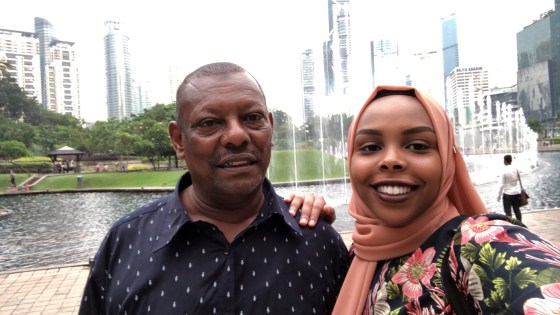
Afnan Salem’s father, a Somali citizen living in Malaysia, has been waiting three years for United States immigration authorities to allow him to come to Ohio to live with his family. But Trump’s severe travel restrictions on many visas for those with citizenship from more than a dozen predominantly African and Muslim-majority countries, including Somalia, means he is, at least temporarily, barred from entry.

Under previous Administrations, Salem’s father would likely have been able to come to the U.S. without complications: Salem’s brother is a U.S. citizen and has filed for a visa on their father’s behalf. Trump’s travel ban—often referred to as the Muslim and African ban—changed that calculus, making it much more difficult, and often impossible, for family members from certain predominately Muslim and African countries to gain entry to the U.S.

Salem, a Somali-American 22-year-old student at Ohio State University, says the stringent restrictions send a message to her and those like her that Africans and Muslims are not welcome in the U.S, that “you don’t have the right to be reunited with your family because of your faith or where you come from.”

President-elect Joe Biden, who is expected to be inaugurated on Jan. 20, 2021, has promised to revoke the Trump-era travel ban on his first day in office—a commitment that families like Salem’s are desperately hoping he follows through on.

Read more: Biden Has Promised to Undo Trump’s Immigration Policies. How Much Is He Really Likely to Reform?

Even before President Donald Trump issued his first executive order attempting to establish a ban just about a week after his inauguration, he had called on the campaign trail for a “total and complete shutdown of Muslims entering the United States,” and falsely declared that “Islam hates us.” It was in this context that Trump began issuing executive orders to keep many Muslims from entering the U.S. (The first was introduced January 2017.) The first few early iterations of a travel ban were struck down by lower courts, but the Supreme Court upheld a recent version in 2018.

The impact of the travel restrictions has been far-reaching. Between Oct. 1, 2015 and Sept. 30, 2019 there was a decrease of 79% in visa issued to Iranians, 74% for Somalians and 66% for Yemenis, according to The Bridge Initiative, a research project based in Georgetown University that focuses on Islamophobia. In Jan. 2019, the libertarian Cato Institute reported that the new restrictions had already prevented more than 15,000 spouses and adopted children of U.S. citizens from joining their spouses or parents in the U.S. In Michigan, a Yemeni-American father and U.S. citizen Mahmood Salem committed suicide after his wife and two of his five children in Djibouti were denied visas under Trump’s travel ban to join him in the U.S., NBC reported.

“Each time the Muslim ban was reintroduced, it carried the same discriminatory intent, but changed its language and process in hopes that the courts would allow it to stand,” says Max Wolson, a staff attorney at the National Immigration Law Center.

The most recent version of Trump’s ban includes more countries than the original version—and places varying degrees of restrictions on the types of U.S. visas citizens from these countries can apply for. The citizens of 13 countries are impacted: Iran, Libya, Somalia, Syria, Yemen, Venezuela, North Korea, Nigeria, Myanmar, Eritrea, Kyrgyzstan, Sudan and Tanzania.

Activists fighting to overturn the restrictions have stressed the importance of recognizing that the measure is not just a Muslim ban but also specifically targets African citizens. Six of the countries included in the ban are in Africa, and the greater weight given to the continent is intentional and fits in with Trump’s derogatory rhetoric (like “sh-t hole countries”) towards Africans, says Asha Noor, a racial justice and immigration advocate. “It’s the perfect storm of Islamophobia and anti-Blackness.”


muslim-trump-travel-ban
Courtesy of Afnan SalemAfnan Salem visiting her father in Malaysia on July 2019. Salem’s father has been unable to reunite with his family in the US because of Trump’s Muslim and African ban.

A restrictive waiver process

In May 2018, the U.S. embassy in Malaysia, where Salem’s father currently lives, told him after an interview that he would be “ineligible for a visa” but that they would review his eligibility for a waiver and that it could be a “lengthy process.” He applied for a waiver and has been waiting since.

To be approved for a waiver, immigration officials must determine that he satisfies three criteria: that his entry would not pose a national security or public safety threat, his arrival would be in the interest of the U.S. and that denying him entry would cause “undue hardship.” It’s an opaque process and a high barrier to reach.

The waiver provision is supposed to provide pathways for some immigrants from the affected countries to make it to the U.S. in attempts to dispel the notion the measure is a blanket ban targeting any particular religious or ethnic group. But the waiver program is a “farce,” says Wolson, with the National Immigration Law Center, which has sued over the specific provision and previously filed a lawsuit over the ban’s alleged unconstitutionality as a whole.

Immigration authorities declined almost three-quarters of all visa waivers between Dec. 2017 and April 2020 for all countries included in the travel restriction, according to The Bridge Initiative. Many of those trying to get a waiver have been denied on the basis of not facing sufficient hardship—even if they live in a conflict zone like Yemen, where a civil war continues. There are also supposed to be exceptions made for children to be reunited with parents but the definition of children is so narrow that it only applies to minors and excludes adult children, like Salem.

“The addition of the waiver program was…an attempt to setup a defense by claiming that it was not a ban because it could be waived,” Wolson says. “The reality is that the waiver program is designed to deny people waivers and the statistics have borne that out.”

The waiver provision was at least partly why the Supreme Court in 2018 allowed the measure to stand in a 5-4 ruling. The majority said in its opinion that there were “significant exceptions” for many foreign nationals, particularly for nonimmigrant visas and through the waiver process. They felt that the new restrictions had a “sufficient national security justification” even as more than 55 former officials who served under both political parties, including former secretaries of state, CIA directors, and other top intelligence officials, told the court that it would be counterproductive for national security.

The fight continues

Even with Biden’s victory, for activists like Linda Sarsour, the threat of discrimination does not disappear. “Our community is always on edge,” says Sarsour, the Palestinian-American activist executive director of MPower Change, a Muslim grassroots movement that has been advocating to overturn the travel restrictions for years. “We’re never going to be able to relax—even under a Biden administration,” she says. Sarsour is aware that because of the Supreme Court’s ruling, there’s nothing stopping any presidential administration after Biden from imposing the same sweeping restrictions in the name of national security. So she’s working to ensure Congress passes the No Ban Act, which would limit the scope of the current restrictions, so that they only apply to cases in which the Secretary of State has identified particular circumstances and credible facts that justify exclusion. (The measure has passed the Democrat-led House but not the Republican-led Senate.)

There’s also work to be done for families who have already tried but failed to reunite in the U.S. Subha Varadarajan, legal and outreach fellow for the No Muslim Ban Ever Campaign, says that under a Biden administration, they will be pushing to ensure that those denied entry due to the ban have an opportunity to be reconsidered for admission under pre-existing vetting processes. “A lot of these families have been waiting for years, so there needs to be a process to expedite those admissions,” Varadarajan says.

For those who have already been able to permanently reunite and live with their family members in the U.S., it’s often because they have access to key support, which can be difficult to find. “We have seen that—disproportionately—having the media or a congressperson take an interest in your case makes your likelihood of getting through significantly higher,” Wolson says.

Rooting out Islamophobia

Syrian-American Ramez Alghazzouli believes public pressure from a Huffington Post article about the hardship he faced because of being unable to have his wife join him in the U.S. for three years was instrumental in her attaining a successful visa. (The story was published less than a month before his wife received a visa, he says.)

Although the couple live together in Arizona now and just celebrated the birth of the first child, the travel restrictions will always be a part of their relationship and their time in the U.S., Alghazzouli says. “This can destroy a human being,” he says. ”I’m not an emotional guy but it distracted and destroyed me.”

For many Muslims, the real issue behind the travel restrictions is Islamophobia. Khaled Beydoun, a law professor at Wayne State University, warns against “only understanding Islamophobia through the Muslim ban” and remains skeptical about just how much Biden will do to root out systemic Islamophobia. “The Biden administration won’t engage in the same kind of Islamophobia as Trump does” but we may see a continuance of bombing countries like Yemen, Afghanistan and Pakistan, as well as sweeping domestic surveillance programs that target Muslims.

After all, it was under the Obama and Biden administration, that the US Department of Homeland Security launched a surveillance program that many Muslims and civil rights advocates say targets Muslims. The Biden campaign has said it would end a similar counter-terrorism program, as well as “conduct a thorough review of past programs and regularly consult with leaders from historically targeted communities, including Arab Americans, to ensure that civil rights are protected.”

It remains to be seen how Biden will address issues of foreign policy and surveillance but there’s no doubt that lifting the restrictions on mostly Muslim and African travelers would bring thousands of separated families relief. “If Biden wins and doesn’t actually get rid of the ban, I’m willing to go knock on the White House door and say ‘you promised us,’” says Alghazzouli, the Syrian-American who was separated from his wife for three years.

As for Salem, she is in her senior year of university, studying international relations, and has been thinking about becoming an immigration lawyer so she can help reunite families. With Biden’s victory, she hopes that her father can make it to the U.S. in time for her graduation in summer.

‘This Feels Like the Closest We’ve Ever Been.’ Why Growing Demands for Student Debt Forgiveness Could Be Joe Biden’s First Presidential Test


Roughly two months out from Inauguration Day, Joe Biden is already facing a brewing political storm among his ideologically-diverse base of supporters, who disagree over the issue of student loan forgiveness.

As COVID-19 cases continue to surge—while federal economic protections for student loans, evictions, and expanded unemployment expire in December—a powerful coalition of Democrats, led by Sen. Elizabeth Warren and Senate Majority Leader Chuck Schumer, is pushing Biden to use executive action to cancel $50,000 of student loan debt per person as a form of economic stimulus. Meanwhile, some Democratic voters, joined by moderate Republicans who helped Biden win in key swing states, are looking on in horror. They argue that offering significant relief to people with existing student debt relief is deeply regressive: it excludes a population of blue-collar workers who never earned a college degree but are bearing the brunt of this economic downturn.

Fresh off a successful campaign in which he promised to bridge partisan divides and heal America, Biden is stuck in the middle of this contentious debate. Whether he can navigate it, successfully keeping all contingents happy, may set the tone for the rest of his presidency.

Progressives: Now is the time to fight

The Democrats’ progressive base has been organizing for student loan forgiveness for more than a decade and see early next year as ripe for action. “Executive action on student debt cancellation feels like one of the most accessible executive actions to stimulate the economy at the moment,” says Suzanne Kahn, the director of Education, Jobs, and Worker Power and the Great Democracy Initiative at the liberal Roosevelt Institute. “This feels like the closest we’ve ever been.”

Roughly 45 million Americans currently hold $1.6 trillion in student debt, with the average student loan recipient paying off between $20,000 and $25,000 in loans, according to the Federal Reserve. Among those actively making payments on that debt, the average installment is between $200 and $300 monthly. With 5.3 million more people still unemployed than there were in February 2020—and with consumer spending still depressed—progressives say that sweeping student debt forgiveness could act as a targeted economic stimulus, according to supporters, including Reps. Alexandria Ocasio-Cortez and Ayanna Pressley.

What’s more, progressives say, Biden could forgive billions in debt using executive action, rather than attempting to wrangle with a potentially Republican-controlled Congress. They argue that the 1965 Higher Education Act (HEA) gives the Department of Education the power to create and cancel debt owed under federal student loan programs: Biden could simply direct a new Secretary of Education to wipe out tens of thousands of dollars of debt per student overnight.

“It’s a stimulative executive action that would reach a lot of people that Joe Biden could do in his first week in office without Congress,” says Khan. “There just aren’t that many ways for him to put that $300 or $400 back in the pockets of 45 million Americans with that speed.”

Khan and others say that move would also help close the wealth gap between white Americans and people of color. Some 90% of African American students and 72% of Latino students take out loans for college, versus just 66% of white students who do so, according to a 2016 analysis from the Consumer Financial Protection Bureau. Further, while the median debt for white borrowers is reduced by 94% within 20 years of them starting college, Black borrowers at the median still owe 95% of their original balance after the same period, according to a 2019 report out of Brandeis University.

A potential legal battle

More fiscally conservative Democrats, and many moderate Republicans who supported Biden this election, argue that sweeping student loan forgiveness is precisely the wrong path forward, in part because Americans with a college degree have been, as a whole, less devastated by the economic effects of COVID-19 than their non-college-educated counterparts. While many white-collar office jobs were able to adapt to the pandemic world, by encouraging remote work or moving once in-person activities online, many traditional blue-collar jobs, like waitressing, bartending, and hospitality work, have been warped, down-sized or eliminated.

A late September report from Pew Research Center found that only 12% of people with college degrees were having trouble paying the bills amid the COVID-induced recession, versus 27% of Americans with some college education and 34% of Americans with a high school diploma or less.

There’s also the trillion dollar question of how the government pays for mass debt forgiveness, says Neal McCluskey, the director of the Center For Educational Freedom at Cato, a libertarian think tank. He says the burden of debt relief would likely have to be passed off to other parts of society in some form. “The idea of stimulus sort of goes out the window if we’re just sort of moving under a shell where the money is and where it’s coming from,” says McCluskey. (Some economists argue that concern doesn’t make economic sense, since the federal government issued the debt in a currency it also prints at a time when inflation is low.)

Then there’s the matter of whether Biden even has the power to use the Higher Education Act in the way that progressives suggest. “It looks like it would be a pretty interesting debate about whether [Biden] would even have the authority in law to do what Senator Schumer is asking him to do,” McCluskey says. “And that could be a really big legal battle.”

Eileen Connor, Legal Director at the Project on Predatory Student Lending out of Harvard Law School, which has supported Warren in advocating for the policy fix, says the power to cancel debt is clear. “The language in the HEA is broad, has been there from the beginning, and has not been narrowed,” she says, “even as Congress has put other cancellation authority into the HEA and limited the compromise authority of other agencies in different ways.”

Still, some critics raise concerns about other unintended consequences. If there’s precedent that the government can wipe out student loans moving forward, future college students may have an incentive to take on more debt, believing there are good odds it will be forgiven. Colleges may then be inclined to raise their prices even further as students continue to be willing to pay higher prices, McCluskey says.

A middle path?

In recent weeks, Biden has walked a fine line on the issue. He has said that a bill from House Democrats calling for $10,000 worth of forgiveness of student loans “should be done immediately.” But he has stopped well short of endorsing anything close to Warren and Schumer’s plan of issuing $50,000 per person in forgiveness through executive action.

Biden’s pared-down “compromise” might be part of its own political shell game, analysts say. Schumer and Warren’s plan may be a bargaining chip: it represents, perhaps, a more extreme option, giving cover to Biden’s comparatively more cautious approach, McCluskey says. “Then the Biden administration can focus on getting $10,000 of debt forgiveness for everybody through Congress, or maybe even through executive action, which will seem much less extreme and people will be kind of okay with it,” he says.

What’s clear, according to economists on both sides of the aisle, is that economic recessions, like the one we’re in now, tend to exacerbate the problem of student debt. The last time the U.S. dipped into a recession—in the late 2000s—the unemployment rate hit 10.6% and banks foreclosed on an estimated 3.8 million homes. Amidst that collapse, federal and state governments invested less in colleges and universities, which, in turn, raised their tuition prices and forced students to take on ever-larger loans. Between 2006 and 2012, inflation-adjusted tuition at public four-year institutions rose 19%, according to the Hechinger Report. Since 2006, America’s collective student loan debts have more than tripled, as students have struggled to find jobs with big enough salaries to cover their sky-high debts.

That’s not sustainable in the long run. But it remains to be seen if the President-elect can arrive at a political solution that is.