Tuesday, 30 June 2020

Government Report Says Boeing Fell Short in Disclosing Key Changes to 737 Max Jet


A government report says Boeing did not give regulators documents about changes it made in a key system blamed in two deadly crashes of its 737 Max jet, and that officials responsible for approving the plane did not know how powerfully the system could push the plane’s nose down.

Government personnel involved in flight tests knew about changes Boeing made to the flight-control system, but engineers responsible for certifying the plane did not, according to the report, which is expected to be released Wednesday.

Engineers for the Federal Aviation Administration didn’t perform a detailed examination of the flight-control system, called MCAS, until after the first crash, in October 2018 off the coast of Indonesia.

In that crash and another less than five months later in Ethiopia, MCAS pushed the nose of each plane down and pilots were unable to regain control. The crashes killed 346 people and led regulators around the world to ground every Boeing 737 Max — nearly 400 of them.

This week, Boeing and the FAA began certification flights using FAA test pilots. If the FAA deems the flights satisfactory, it could let airlines resume using the plane later this year, which would be a massive victory for Boeing even as the company contends with dozens of wrongful-death lawsuits filed by families of passengers.

Many of the findings in the report by the Transportation Department’s acting inspector general have previously been published in news accounts. But the report provides more evidence for lawmakers who want to overhaul FAA’s process for approving new aircraft.

The report was requested by Transportation Secretary Elaine Chao and congressional leaders, including Rep. Peter DeFazio, D-Ore., and Sen. Roger Wicker, R-Miss., whose committees are investigating the FAA’s approval of the Max.

In a comment attached to the report, FAA said the inspector general’s view “will help FAA to better understand some of the factors that may have contributed to the crashes and ensure these types of accidents never occur again.” The agency said it was working on improvements to the aircraft-certification process.

In a statement, Boeing spokesman Bernard Choi said the company is making sure that improvements to Max “are comprehensive and thoroughly tested.” When the plane returns, he said, “it will be one of the most thoroughly scrutinized aircraft in history, and we have full confidence in its safety.”

The inspector general’s report is a timeline of the plane’s history from design work in 2012 until 2019, when the plane was grounded.

In early development of the Max, Boeing indicated MCAS would not activate often, and so the system didn’t receive a detailed review by FAA. In 2016, as the plane was going through test flights, Boeing changed MCAS to increase its power to turn the nose down under some conditions. But the company did not submit documents to the FAA detailing this change, the inspector general found.

FAA flight-test personnel knew, “but key FAA certification engineers and personnel responsible for approving the level of airline pilot training told us they were unaware of the revision to MCAS,” the inspector general said.

The FAA began reviewing its certification of MCAS more than two months after the Indonesian crash. It was the first time agency engineers had taken a detailed look at the system, according to the report.

As disclosed during a House Transportation Committee hearing last year, an FAA analysis estimated that Max planes might crash 15 more times if MCAS were not fixed. However, the agency let the plane continue to fly while Boeing began fixing the system, a job Boeing expected to complete by July 2019.

The second Max crash occurred in March 2019.

The Associated Press obtained a copy of the report ahead of its publication. The findings were previously reported by Reuters.

The Hamilton Movie Is a Mesmerizing, Exuberant Delight


The moment Lin-Manuel Miranda conceived the idea of telling the story of Alexander Hamilton almost exclusively with a cast of brown and Black actors was its own kind of big bang. People have tried before to jazz up the story of the founding fathers, with often miserable results (Exhibit A, from 1972: the lackluster film musical 1776). And theater companies have mounted productions of Shakespearean plays and other works from the white, English-speaking canon with casts made up wholly of people of color. But by focusing specifically on the early days of our nation’s fraught history, Miranda affirmed something few people had overtly recognized: That the history of the United States—a country founded by white men who first took land from native people, then built further riches from the labor of enslaved people—belongs to us all, regardless of color. It is ours both to own and to own up to, depending on who we are and who our forebears were, whether we benefited greatly from the status quo or were harmed by it. With Hamilton, Miranda added a swooping tag to the great Woody Guthrie line: This land was made for you and me, because it was made by you and me.

The main problem with Hamilton’s expansive vision—the show was first performed at the Public Theater in New York in 2015, before becoming a nearly impossible-to-see Broadway hit—was that so few people could experience it. But a filmed version of Hamilton now changes all that: Miranda, who also plays the title role, and the show’s director, Thomas Kail, had recorded some 2016 performances at the Richard Rodgers Theater, with the intention of eventually turning it into a theatrically released film. Although that plan has been sidelined by COVID, the “movie” version of Hamilton will be available to stream beginning July 3 on Disney+, and it’s a pleasure—both a delight to watch and a great piece of pop scholarship, an entertainment informed by a sense of history and of curiosity.

Miranda was inspired to write the show after reading Ron Chernow’s 2004 biography Alexander Hamilton, and he hews fairly close to fact: The show opens with an exuberant number that tells us, in shorthand, who Alexander Hamilton was—as if to say, There’s no shame in not knowing, but wouldn’t you like to know? The major figures in the life of this brash and extraordinary figure come forward one by one, singing just a snippet of their role in his story, weaving around one another like links in a human chain. They include his sweet but also surprisingly shrewd and resilient wife, Eliza (Phillipa Soo); Philip (Anthony Ramos), the son who met a tragic end; and Angelica (Renée Elise Goldsberry), Eliza’s sister, who loves her brother-in-law in a way that causes her great suffering. We meet Hamilton’s friends, like the suave Marquis de Lafayette (the fabulous Daveed Diggs, who also plays Thomas Jefferson), and the leader who made Hamilton a trusted advisor, George Washington (Christopher Jackson). And finally, there’s the man who introduces himself as “the damn fool that shot him,” Aaron Burr (Leslie Odom Jr.), a haunted narrator whose competitiveness and rancor leads him to a moment that essentially ends two lives, even though it results in only one immediate death.

At the center of it all is Miranda’s Hamilton, a man who, as he tells us, wants the world to know his name. Born out of wedlock in the British West Indies, he’s orphaned at age 12; as a young man, he’s so bright that he’s sent to New York to study. From there, he’ll become a soldier, a trusted member of then-General Washington’s staff, a lawyer and eventually the first Secretary of the Treasury. But he’s also one of the architects of the United States as both a nation and an ideal, an immigrant who, in Miranda’s words, “got the job done.”

Miranda, as both writer and actor, approaches Hamilton’s story with stars in his eyes, and his sense of joy and discovery rings through the material. There’s enough drama here for three lives, let alone one. Hamilton, presented by Miranda as a charismatic, impetuous, sometimes maddening figure, is a magnet for everything life has to offer, and he grabs some of it unwisely.

As a performer, Miranda is exuberant almost to the point of overkill; at close range, his broad, open-hearted facial expressions sometimes register as mugging, an issue that might not be as apparent in live performance. Even so, his energy carries the day, and the performers around him feed off it; they’re bolstered, it seems, by the rapture of doing something new—the whole show is like one big cymbal-crash, an announcement of “I am here!” The musical numbers, all penned by Miranda, slide easily from the braggadocio of ‘90s rap to the lilt of Harlem jazz and beyond. Miraculously, nothing sounds excessively show-tuney: This is music mostly meant to be sung, not belted. There are ballads that resonate with somber maturity (“It’s Quiet Uptown”), and teasing, bluesy numbers that beckon like a neon nightclub sign (“The Room Where It Happens”). King George III’s big moment, “You’ll Be Back”—the monarch who lost his grip on the colonies is played by a comically exaggerated Jonathan Groff—has the swervey salaciousness of an Anthony Newley cabaret tune from the early ‘70s.

There are more than 20 songs in all—almost too many! But the variety is so vast that they don’t grow tiresome. The staging is inventive and graceful: At one point a revolving segment of the stage allows the players in Hamilton’s life to circle in mesmerizing slow motion, like history’s ghosts coming round to remind us that they, too, were once flesh and blood. If you’ve already seen the show—I hadn’t—these delights won’t be new to you. But even though nothing matches the thrill of live performance, the filmed Hamilton does offer its advantages: Kail, the director of this film as well as the play, chooses his close-ups carefully, and there’s no busy, distracting camera work. The effect is that of watching the show not from the best seat in the house, but from the best ten seats. Best of all is the exultation of watching so many marvelous performers, ablaze with the elation of making something truly new. The history of this cracked mess of a country, bold and dramatic but also streaked with blood, is for all of us to remember, but also to build upon. As Hamilton reminds us, we’re the sum of our founding fathers’ good ideas as well as their misdeeds. The framers put the frame around the future—but they left the job of filling it to us.

First COVID-19 Case Confirmed in Asylum Seeker Camp at U.S.-Mexico Border


(CIUDAD VICTORIA, Mexico) — An international disaster relief organization reported Tuesday the first confirmed case of COVID-19 among migrants living in a tent encampment of asylum seekers at the U.S.-Mexico border.

Global Response Management said that one person in the Matamoros, Tamaulipas camp across the Rio Grande from Brownsville, Texas had tested positive.

“Aggressive isolation and tracing measures have been enacted,” the U.S.-based relief organization said via Twitter.

There are some 2,000 asylum seekers living in tents along the border. The migrants from Central America and other parts of the world have been stranded by the United States’ suspension of asylum hearings due to the pandemic through at least mid-July.

Last week, Andrea Leiner, a spokeswoman for GRM, said they had implemented measures to try to reduce the risk of the virus’ spread, but conceded it was a challenge with confirmed infections cropping up among U.S. and Mexican immigration officials and in residents on both sides of the border.

They had placed tents a meter (3 feet) apart, leaving them open for ventilation and having everyone sleep head to toe to curtail the chances of transmission while people sleep.

Two Tamaulipas state immigration officials, who requested anonymity because they were not authorized to discuss the case, said the infected person was a Mexican citizen who was deported earlier in June from the United States to Reynosa and who arrived at the camp over the weekend.

Four other people the young woman had contact with tested negative, the officials said.

Asylum seekers began pooling in border cities like Matamoros under the U.S. policy commonly known as “Remain in Mexico,” in which asylum seekers can make their initial request for U.S. asylum, but have to wait in Mexico for the lengthy process to play out.

More than 60,000 asylum-seekers have been returned to Mexico to wait for hearings in U.S. court since January 2019, when the U.S. introduced its “Migrant Protection Protocols” policy.

There had been concern since the arrival of the pandemic that the crowded tents and lack of proper sanitation could lead to infections in the Matamoros camp.

GRM started working in the camp last September. The organization provides medical treatment with a team of medical volunteers.

Dr. Michele Heisler, medical director at Physicians for Human Rights and professor of internal medicine and public health at University of Michigan, in a statement characterized GRM’s work in the camp as “Herculean.” She criticized the U.S. policy for creating the situation and said asylum seekers should be paroled to stay with relatives in the U.S. while their cases are processed.

“Local and national health authorities in Mexico must act immediately to improve access to COVID-19 testing and care in Matamoros,” Heisler said. “The families living in the Matamoros tent city are among the most vulnerable in the hemisphere to the spread of COVID-19.”

Mexico’s own national case load continues to rise steadily, with 5,432 confirmed cases reported Tuesday, to bring the nationwide total to more than 226,000. Confirmed COVID-19 deaths rose by 648 Tuesday, to bring the total to 27,769 deaths.

__

AP writer Julie Watson in San Diego contributed to this report.

Politicians Call For U.N. Probe Into China Forcing Birth Control on Uighurs


Politicians around the world have called for a United Nations probe into a Chinese government birth control campaign targeting largely Muslim minorities in the far western region of Xinjiang, even as Beijing said it treats all ethnicities equally under the law.

They were referring to an Associated Press investigation published this week that found the Chinese government is taking draconian measures to slash birth rates among Uighurs and other minorities, while encouraging some of the country’s Han majority to have more children. The Inter-Parliamentary Alliance on China, a group of European, Australian, North American, and Japanese politicians from across the political spectrum, demanded an independent U.N. investigation.

“The world cannot remain silent in the face of unfolding atrocities,” the group said in a statement.

The AP found that the Chinese government regularly subjects minority women in Xinjiang to pregnancy checks and forces intrauterine devices, sterilization and even abortion on hundreds of thousands. New research obtained by The Associated Press in advance of publication by China scholar Adrian Zenz also showed that the hundreds of millions of dollars the government pours into birth control has transformed Xinjiang from one of China’s fastest-growing regions to among its slowest in just a few years.

The AP found that the population control measures are backed by mass detention both as a threat and as a punishment for failure to comply. Having too many children is a major reason people are sent to detention camps, documents and interviews show, with the parents of three or more ripped away from their families unless they can pay huge fines.

The U.S. Commission on International Religious Freedom called for a U.N. and State Department investigation, saying the Chinese government’s birth control campaign “might meet the legal criteria for genocide.” According to a U.N. convention, “imposing measures intended to prevent births” with “intent to destroy, in whole or in part, a national, ethnical, racial or religious group” is considered evidence of genocide. The last colonial governor of Hong Kong, Chris Patten, told Bloomberg Television that the birth control campaign was “arguably something that comes within the terms of the UN views on sorts of genocide.”

The U.S. Senate Foreign Relations Committee called the forced birth control “beyond deplorable,” and said that “a nation that treats its own people this way should never be considered a great power.” U.S. senators Kirsten Gillibrand and Kamala Harris wrote a letter urging the Trump administration to respond to an “alarming” AP investigation, and U.S. Senator Marco Rubio and Representative Ro Khanna also called for action.

U.S. President Donald Trump told China President Xi Jinping he was right to build detention camps to house hundreds of thousands of ethnic minorities, according to a new book by former national security adviser John Bolton. However, Secretary of State Mike Pompeo said the reports of forced birth control for minorities were “shocking” and “disturbing” in a statement Monday.

“We call on the Chinese Communist Party to immediately end these horrific practices,” he said.

Chinese foreign ministry spokesman Zhao Lijian fired back on Tuesday by calling Pompeo “a brazen liar,” saying the Uighur population had more than doubled since 1978 in response to criticism of Xinjiang’s birth control policies.

“If Mr. Pompeo is telling the truth, how can he explain the big increase in the Uighur population?” Zhao asked.

For decades, Xinjiang’s population grew quickly, as minorities enjoyed laxer birth control restrictions than Han Chinese. But in just three years, new measures have caused the birth rate in Xinjiang’s Uighur-majority areas to plunge, and it is now well under the national average.

Zhao also said the American government had been responsible for “genocide, racial segregation and assimilation policies” on Native Americans. on them.” University of Colorado researcher Darren Byler said the Chinese state-orchestrated assault on Xinjiang’s minorities does echo past birth control programs.

“It recalls the American eugenics movement which targeted Native and African Americans up until the 1970s,” he said. “China’s public health authorities are conducting a mass experiment in targeted genetic engineering on Turkic Muslim populations.”

In response to the AP story, which he called “fake news,” Zhao said the government treats all ethnicities equally and protects their legal rights. Chinese officials have said in the past that the new measures are merely meant to be fair, with the law now allowing minorities and China’s Han majority the same number of children.

However, the AP’s reporting found that while equal on paper, in practice Han Chinese are largely spared the abortions, sterilizations, IUD insertions and detentions for having too many children that are forced on Xinjiang’s other ethnicities, interviews and data show. Some rural minorities are punished even for having the three children allowed by the law.

British members of Parliament debated Xinjiang in the House of Commons on Monday, with both Labor and Conservative politicians urging the U.K. Foreign Ministry to adopt a stronger stance against the Chinese government. Nigel Adams, the British Minister of State for Asia, said the reports added to the U.K.’s “concern about the human rights situation in Xinjiang” and that it will be “considering this report very carefully.” Australian Foreign Minister Marise Payne also told Australian broadcaster SBS that the reports “further compounded” their concerns.

Bill Browder, CEO of investment fund Hermitage Capital Management and brainchild of the Magnitsky Act, asked the U.S. government to level sanctions against Chinese officials, calling the birth control campaign part of a broader assault he called “vile persecution.”

Senate Temporarily Extends Small Business Coronavirus Relief Program


(WASHINGTON) — Democrats drove a temporary extension of a popular subsidy program for small businesses through the GOP-controlled Senate late Tuesday, an unexpected development that came as spikes in coronavirus cases in many states are causing renewed shutdowns of bars and other businesses.

The move by Maryland Sen. Ben Cardin came hours before a deadline for applying for the program, which was created in March and modified twice since. Cardin, the top Democrat on the Small Business Committee, asked for unanimous approval of the extension of the Paycheck Protection Program through Aug. 8.

Minority lawmakers are hardly ever successful in such attempts, but the pressure swayed Republicans controlling the Senate, who have delayed consideration of a fifth coronavirus relief bill and are preparing to go home for a two-week recess.

About $130 billion remains of $660 billion approved so far for the subsidy program, which provides direct subsidies to businesses harmed by the coronavirus pandemic, which slammed the economy as consumers and workers were forced to stay at home through much of spring.

The subsidies come in the form of federal loans that can be forgiven if businesses follow rules such as utilizing 60% of the loan for payroll costs. The loans have been a lifeline to more than 4 million businesses.

Top Senate Democrat Chuck Schumer of New York took a victory lap after the unexpectedly successful maneuver, saying renewed economic troubles are reviving interest in the program.

“There are large numbers of businesses who are going to need to apply now. Had this program run out today, they would have been out of luck,” Schumer said. “Now with this renewal, short time, August 8, they at least get the chance to reapply.”

How the Entertainment Industry Is Reckoning With Racism, From Changing Band Names to Canceling TV Shows


When protesters began flooding the streets of Minneapolis last month after the police killing of George Floyd, they were decrying police brutality and systemic racism. There’s little doubt that something as far-removed from that grave situation as The Golden Girls was anywhere near top of mind.

But that 1980s sitcom, unrelated as it may seem, is one of the cultural institutions that has been affected by the reverberations of protests as they spread across the country and the globe. Statues are coming down; leaders are resigning after being accused of perpetrating racist structures; cultural works from the present and past alike are being scrutinized through new lenses. And when, on June 27, Hulu pulled an episode of The Golden Girls in which Blanche and Rose wear mud masks resembling blackface, it was just one of many concrete actions taken in recent weeks as platforms, gatekeepers and creators reconsider both past output and the future of their organizations.

Here are the many ways in which the cultural world is changing in response to the protests.

TV shows are being canceled or reconsidered

COPS, '800th Episode Milestone', (Season 23, ep. 2301, aired Sept. 11, 2010), 1989-. photo: © Fox Br
20thCentFox/Everett CollectionA still from the 23rd season of the TV series ‘Cops.’ The show was canceled by Paramount Network in early June.

As calls to defund the police have intensified, networks have canceled two reality shows that some say glorify police violence: Cops, which was about to air its 33rd season on the Paramount Network, and Live PD, which was A&E’s top-rated series.

Another cop show, the comedy Brooklyn Nine-Nine, is changing its new season to reflect the protests. “We have to start over. Right now we don’t know which direction it’s going to go in,” cast member Terry Crews told Deadline.

Jenna Marbles, one of YouTube’s early stars, announced she would discontinue her main YouTube channel, which included scenes in which she wore blackface and used slurs to mock an Asian man. “I’m sorry if any of that holds any nostalgia for you, but I’m literally not trying to put out negative things into the world,” she said.

TV episodes are being removed from streaming services

In addition to The Golden Girls, dozens of other shows or episodes that have featured blackface are being scrubbed from streaming services. Tina Fey requested that four episodes of 30 Rock containing blackface be removed from streaming, digital rental and TV syndication; Greg Daniels, the creator of The Office, edited out a scene of the episode “Dwight Christmas” that features a character briefly in blackface.

Episodes of Community, It’s Always Sunny in Philadelphia and Scrubs were pulled for the same reason. And Netflix removed both Little Britain and several of comedian Chris Lilley’s shows, including Summer Heights High and Jonah From Tonga, for their extensive use of blackface.

While many creators apologized for their usage of blackface, some defended their work, saying they deployed it in a critical and self-conscious manner. After an episode of the sketch show W/ Bob & David was pulled from Netflix, for example, co-creator David Cross wrote on Twitter that “the point of this was to underscore the absurdity” of a “ridiculous, foolish character.”

Disclaimers have been added to outdated works

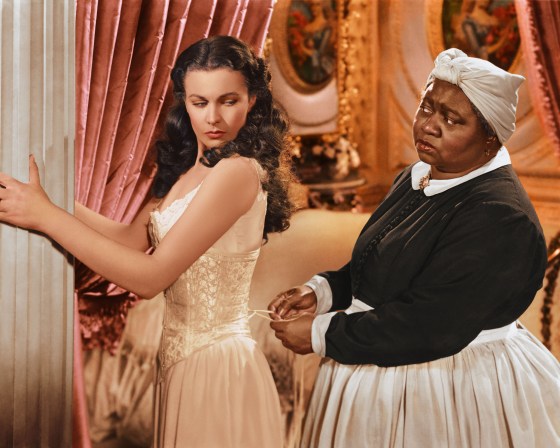
Gone With The Wind
Getty Images—2011 Silver Screen CollectionVivien Leigh, left, with Hattie McDaniel in 1939’s “Gone With the Wind.”

In mid-June, HBO Max pulled Gone With the Wind from their catalog before reinstating it with a pre-movie note that reads, “the film’s treatment of this world through a lens of nostalgia denies the horrors of slavery, as well as its legacy of racial inequality.” They also tacked on a spoken prologue, which can be viewed on YouTube, from film professor and Turner Classic Movies host Jacqueline Stewart.

A 1975 episode of the John Cleese sitcom Fawlty Towers underwent a similar process. Initially, The BBC removed the episode from their streaming service, as it contained a number of racial epithets. But Cleese and others lobbied to keep it up, saying it was a critique and not a glorification.


The network then announced it would put the episode back up with “extra guidance and warnings … to highlight potentially offensive content.”

Shane Dawson, who has been called the “king of YouTube,” came under fire for videos in which he wore blackface, mocked those with disabilities, sexualized minors and made anti-Semitic comments. While YouTube did not remove his channel, they did take away his advertising revenue for an indefinite period of time.

White actors are stepping down from voicing Black characters

It has not been uncommon for Black characters on animated shows to be voiced by white actorsbut that’s beginning to change. Jenny Slate announced that she would no longer voice the biracial character Missy on Netflix’s Big Mouth, writing, “Black characters on an animated show should be played by Black people.” Kristen Bell followed suit, ceding the role of Molly on the new Apple TV+ show Central Park, and so did Mike Henry, who has voiced Cleveland on Family Guy and The Cleveland Show for two decades. (Following his announcement, Wendell Pierce threw his hat in the ring to play the character.)

The Simpsons announced that longtime Springfield residents of color like Dr. Hibbert and Carl Carlson would no longer be voiced by white actors. (In February, Hank Azaria stepped down from the role of Apu.)

Bands are changing their names

Two ultra-famous bands with names tied to the Confederacy have rebranded. Lady Antebellum shortened their name to Lady A, writing in a statement that “blindspots we didn’t even know existed have been revealed.⁣⁣⁣” (Unfortunately, they missed the fact that a Black singer has gone by Lady A for two decades.) The Dixie Chicks dropped the “Dixie” from their name to become The Chicks in advance of a new album, Gaslighter.

Meanwhile, Splash Mountain, which is not a band but a water ride at Disney World, is shaking its connection to the antebellum south: it will replace its Song of the South-based plotline with one derived from The Princess and the Frog.

Leaders of arts organizations are stepping down

The CEO and co-owner Second City stepped down from his post after being called out by many former Black members. In his resignation note, he wrote that he “failed to create an anti-racist environment wherein artists of color might thrive.”

The executive director of the Victory Gardens Theater in Chicago resigned; so did the president of the Poetry Foundation, after a scathing open letter was signed by more than 1,800 poets. And the artistic director and co-founder of the Signature Theater in Arlington, Va., stepped down after accusations of sexual misconduct.

Other performers and creatives have been fired

Writer-producer Craig Gore was fired from an SVU spinoff after posting a message online threatening protesters. The actor Hartley Sawyer was fired from The Flash after old racist and misogynistic tweets resurfaced.

On Vanderpump Rules, four cast members were fired: two for sending racist tweets, and two for reporting a Black co-star to the police.

Gatekeeper organizations are making internal changes

The Academy of Motion Picture Arts and Sciences announced it would be amending its rules to help make Oscar eligibility more inclusive. Netflix said it would give 2 percent of its cash going forward to financial institutions and organizations that directly support Black communities.

The Flea, in downtown Manhattan, was called out for “racism, sexism, gaslighting, disrespect and abuse,” and responded by announcing that it will pay all of its artists. And the Walker Art Center in Minneapolis announced it would cut ties with the police.

Lawmakers and Advocates Demand Removal of USAID Official as Biden Calls Trump Appointees ‘Islamophobic’


Presidential candidate Joe Biden has criticized two of President Donald Trump’s appointees at U.S. agencies for being Islamophobic, pointing out that they have “both published offensive, anti-Muslim tirades on social media.”

Biden’s statement on Sunday followed a request to speak on-the-record from Muslim advocacy group Emgage Action, which was exclusively obtained by TIME. It takes aim at Mark Kevin Lloyd, who President Donald Trump appointed as Religious Freedom Adviser at the U.S. Agency for International Development (USAID), and Brig. General Anthony Tata (Ret.), who was nominated to be Under Secretary of Defense for Policy in the Department of Defense.

Biden’s statement pointed to a number of older Islamophobic social media posts from the two nominees. Lloyd had said in now-deleted Facebook posts from 2016, cited by the Associated Press, Emgage Action and Biden, that Islam was a “barbaric cult” and that people should be forced to eat bacon before buying a gun. Biden’s statement also noted Lloyd had previously referred to the religion as “violent in its doctrine and practice.” A screenshot of that post is linked to by national civil rights organization Muslim Advocates.

Tata had posted in now-deleted Tweets that “Islam was the most oppressive violent religion I know of” and that President Barack Obama was a “terrorist leader,” per CNN and Biden’s statement. The former Vice President’s statement also referenced a comment by Tata that Obama “did more harm to US vital interests and help Islamic countries than any president in history.”

“Islamophobia is a pernicious disease. It does not belong in the halls of government,” Biden said in a statement provided to TIME, promising that under his presidency he would “appoint individuals who represent the values of our nation and respect all racial, ethnic and religious communities.”

House Democrats, including Reps. Ilhan Omar and Joaquin Castro, have called for Lloyd’s nomination to be rescinded in a statement on Monday, saying he has a “proven track record of prejudice towards those of the Islamic faith and Muslim majority countries, discrimination that is antithetical to USAID’s mission of global development and religious freedom.” The two representatives also sent a letter to USAID’s acting administrator on Monday.

“Someone who doesn’t recognize the importance of religious diversity in our country cannot credibly promote religious freedom internationally,” Omar said. “This appointment will severely weaken USAID’s ability to assist the world’s poorest countries including many predominately Muslim nations.”

“USAID works with countries that are 32% majority Muslim and all of those countries need our help,” Castro said. “I fear with Mr. Floyd at the helm those countries will face further discrimination.”

“USAID always works closely and cooperatively with Congress,” acting USAID spokesperson Pooja Jhunjhunwala said in a statement responding to issues raised in Omar and Castro’s letter. “As a general matter, we don’t comment publicly on oversight matters.”

The new nominees have caused an uproar among some current and former USAID employees. Members of USAID staff, including those from minority backgrounds, expressed their frustration with the agency in a letter to its acting administrator last week, Axios reported. And Steven Radelet, who was chief economist at USAID from 2011-2012, tells TIME it’s “horrifying” that Lloyd is working in this position, because of the message it sends to the international partners and agency employees. Radelet says it’s “impossible” to look at the hiring of Lloyd as a “one-off thing.”

“You have to see this as part of a systemic attempt to bring more people in with these kinds of views. It fits right in as part of the broader pattern,” Radelet says. “It’s part of the broader pattern of racist comments and other biased comments that come from this administration.”

Acting USAID administrator John Barsa had previously defended Lloyd and two other USAID officials who were criticized for making anti-LGBTQ remarks. He said the trio had been the target of “unwarranted and malicious attacks,” in a public statement on June 8, and that he has “full confidence that each political appointee at USAID has and will continue to implement the President’s policies and agenda to the best of his or her ability.”

Asked about Tata and Lloyd’s comments about Islam, the Department of Defense directed TIME to the White House for comment. The White House did not immediately offer a comment on Biden’s statement.

Wa’el Alzayat, CEO of Emgage Action, called for Lloyd’s nomination to be rescinded and said his Islamophobic comments should have been considered during the nomination process.

“How could one properly serve as USAID’s Religious Freedom Advisor while espousing a horrifyingly Islamophobic track record?” Alzayat said in a statement emailed to TIME. “We are calling for Lloyd’s resignation–because Islam cannot be the exception when assessing one’s ability to advise on religious freedoms for a government agency.”

Dr. Anthony Fauci Warns U.S. Coronavirus Cases Could Swell to 100,000 a Day


(WASHINGTON) — Dr. Anthony Fauci said coronavirus cases could grow to 100,000 a day in the U.S. if Americans don’t start following public health recommendations.

The nation’s leading infectious disease expert made the remark at a Senate hearing on reopening schools and workplaces.

Asked to forecast the outcome of recent surges in some states, Fauci said he can’t make an accurate prediction but believes it will be “very disturbing.”

“We are now having 40-plus-thousand new cases a day. I would not be surprised if we go up to to 100,000 a day if this does not turn around, and so I am very concerned,” said Fauci, infectious disease chief at the National Institutes of Health.

Fauci said areas seeing recent outbreaks are putting the entire nation at risk, including areas that have made progress in reducing COVID-19 cases. He cited recent video footage of people socializing in crowds, often without masks, and otherwise ignoring safety guidelines.

How Palestinians Can Reunite Under a New Agenda to Counter Israel’s Annexation


In January, President Donald Trump rolled out his much-touted vision for Middle East peace. It sought to formalize Israel’s longstanding colonial settlement enterprise into what it considered a blueprint for a conflict-ending agreement, and was, therefore, met with absolute rejection by the Palestinians.

Nevertheless, the Israeli prime minister announced his intention to pursue what he considered to be an immediate deliverable of Trump’s vision: the annexation of 30% of the landmass of the West Bank, including the Jordan Valley, territory essential to the sovereignty of a future Palestinian state. The international community warned against the adverse consequences that maneuver might entail for regional peace, security, and normalization.

It does not seem, however, that the Israeli government is about to heed such warnings. It believes that, at the end of the day, the rest of the world will fall quiet — just as it did after the U.S. recognized Jerusalem as Israel’s capital two-and-a-half years ago, and the more recent declaration that Israeli settlements were not illegitimate under international law.

The Israeli government gave itself a deadline of July 1 to announce exactly how it will go about the annexation of these lands. However, even if it defers action altogether, that still should leave the Palestinian leadership with important decisions to make. I believe a credible response is urgently needed, and long overdue. That means rethinking our past commitments in order to build a new future together.

The leadership has not been quiet. On May 19, President Mahmoud Abbas declared that the Palestine Liberation Organization (PLO) was thereafter absolved of all agreements and understandings with the U.S. and Israeli governments. That was a significant declaration, even though it came after many years of repetitive threats of abandoning the Oslo framework — leading some to wrongly dismiss it as yet another hollow threat.

To me, however, the issue is not whether this declaration is significant but whether it goes far enough. Specifically, is it likely to stop the annexation train? More importantly, will it fundamentally alter the situation that made it possible for Israel to board that train in the first place? The answer to the first question is, at best, a maybe. To the second, it is an unequivocal no.

All is not lost, however. To restore full agency in our quest for freedom and dignity, it is time for the Palestinian leadership to absolve itself of an earlier declaration. The PLO must with haste rethink its 1988 peace initiative —specifically, the willingness to accept a Palestinian state on 22 percent of historic Palestine, under a so-called “two state solution.”

What has this bet the PLO made in 1988 won us? Over three decades of a “peace process” that ended the first intifada and deflated the can-do spirit it inspired, while making it possible for Israel to progressively deepen its occupation. It made it impossible for Palestinians to get anything but self-rule in areas under Israel’s dominion, and gave Israel an important counterargument against charges of apartheid. Is it unreasonable for the Palestinian people to expect their sole legitimate representative to reconsider this gamble?

Instead, the PLO must propose an alternative way forward that could garner broad-based Palestinian support. What the Palestinian people desperately need is a clear statement — a definition upon which we can legitimately pursue our national aspirations. I believe a broad Palestinian national consensus can be built upon a platform committing to either of two options.

The first is anchored on the model of a single state, whose constitution provides for full equality for all of its citizens, and without any discrimination on any basis whatsoever. The second is an agreed two-state solution — but only with an independent and fully sovereign Palestinian state on the entire territory occupied by Israel in 1967, including East Jerusalem, and with any engagement in a peace process that is to lead to that outcome preceded by international recognition, including by Israel, of the Palestinians’ right to such state, as well as our other rights provided for under international law—namely, the right of return in accordance with UN resolution 194 and the right to self-determination.

Obviously these two options are mutually exclusive. But, they have to both be included in the new platform to ensure that the PLO—as it begins to take concrete steps to include non-PLO factions and forces opposed to the Oslo framework or the 1988 compromise—is instantaneously empowered to convey, on behalf of all Palestinians, what we are prepared to accept. At some point, Palestinians will have to choose between the two possible options outlined above. That, however, will not happen unless Israel recognizes our national rights.

In the meantime, we should spare no effort to begin the process of reunifying our polity and rebuilding and strengthening our institutions—an especially demanding undertaking after thirteen years of fracture and separation. We need an agenda that empowers us to become the masters of our own destiny. Once we converge on a policy statement built on the options above, we can begin piecing together that agenda.

That is all imminently possible if our leadership signals its willingness to lead on the strength of such a vision. The choice at this moment is ours to make. Once we decide to act, all—near and afar—will begin to realize that our will has not been broken, and that it will never be.

Republican Sen. Lamar Alexander Says President Trump Should Wear a Mask, Urges Protecting Americans Over Politics


WASHINGTON — A leading Republican senator says President Donald Trump should start wearing a mask at least some of the time because politics is getting in the way of protecting the American people from COVID-19.

“The stakes are too high for the political debate about pro-Trump, anti-Trump masks to continue,” says Sen. Lamar Alexander of Tennessee.

Alexander is chairing a hearing of the Health, Education, Labor and Pensions committee that’s focused on ways to safely reopen schools and workplaces.

Alexander had to self-quarantine after he was exposed to a staff member who tested positive. But the senator says he was protected because the staffer was wearing a mask.

Here’s Everything New on Netflix in July 2020—And What’s Leaving


This month, Netflix will pay homage to one of the most beloved YA book series, Ann M. Martin’s The Baby-Sitters Club, with their new original Netflix Family series of the same name that debuts on July 3. Centering on the friendship and babysitting business venture of five middle school girls—Kristy, Mary Anne, Claudia, Stacey, and Dawn—this heartwarming and empowering series was exuberantly hailed as “the only pure thing left in this world” by TIME’s TV critic Judy Berman.

Sports fans will have plenty to watch this month with the debut of the fifth and final season of Last Chance U, the popular original docuseries that focuses on junior college football. This season will feature Oakland’s Laney College and drops on July 28. Also arriving as part of this month’s sports programming is The Last Dance, the acclaimed 10-part ESPN documentary series about Michael Jordan’s career and final season with the Chicago Bulls.

Those looking for fresh options for a summer movie night have many new titles to choose from this month, ranging from critically acclaimed picks like Million Dollar Baby and Schindler’s List to romantic films like The Notebook and A Walk to Remember.

Here’s everything new on Netflix this month—and everything set to leave the streaming platform.

Here are the Netflix originals coming to Netflix in July 2020

Available July 1

Chico Bon Bon: Monkey with a Tool Belt, season 2

Deadwind, season 2

Say I Do

Under the Riccione Sun

Unsolved Mysteries

Available July 2

Thiago Ventura: POKAS

Warrior Nun

Available July 3

The Baby-Sitters Club

Cable Girls: Final Season: Part 2

Desperados

JU-ON: Origins

Southern Survival

Available July 8

Mucho Mucho Amor: The Legend of Walter Mercado

Stateless

Was It Love?

Available July 9

Japan Sinks: 2020

The Protector: Season 4

Available July 10

The Claudia Kishi Club

Down to Earth with Zac Efron

The Epic Tales of Captain Underpants in Space

Hello Ninja: Season 3

O Crush Perfeito (Dating Around: Brazil)

The Old Guard

The Twelve

Available July 14

The Business of Drugs

On est ensemble (We Are One)

Urzila Carlson: Overqualified Loser

Available July 15

Dark Desire

Gli Infedeli (The Players)

Skin Decision: Before and After

Available July 16

Fatal Affair

Indian Matchmaking

MILF

Available July 17

Boca a Boca (Kissing Game)

Cursed

Available July 20

Ashley Garcia: Genius in Love

Available July 21

How to Sell Drugs Online (Fast), season 2

Jack Whitehall: I’m Only Joking

Street Food: Latin America

Available July 22

Fear City: New York vs The Mafia

Love on the Spectrum

Norsemen: Season 3

Signs

Available July 23

The Larva Island Movie

Available July 24

¡A cantar! (Sing On! Spain)

Animal Crackers

Dragons: Rescue Riders: Secrets of the Songwing

The Kissing Booth 2

Ofrenda a la tormenta

Available July 28

Last Chance U: Laney

Available July 29

The Hater

Inside the World’s Toughest Prisons, season 4

Available July 30

Transformers: War For Cybertron Trilogy

Available July 31

Get Even

Latte and the Magic Waterstone

Seriously Single

The Speed Cubers

Sugar Rush: Extra Sweet

The Umbrella Academy, season 2

Vis a vis: El Oasis (Locked Up)

Here are the TV shows and movies coming to Netflix in July 2020

Available July 1

#Anne Frank – Parallel Stories

A Bridge Too Far

A Thousand Words

A Touch of Green: Season 1

A Walk to Remember

Abby Hatcher: Season 1

Airplane!

Ali

Batman: Mask of the Phantasm

Charlotte’s Web

Clash of the Titans

Cleo & Cuquin, season 2

Cloud Atlas

David Foster: Off the Record

Definitely, Maybe

Delta Farce

Donnie Brasco

Double Jeopardy

Fiddler on the Roof

Frida

I Now Pronounce You Chuck and Larry

Killing Hasselhoff

Kingdom, season 1-3

Lemony Snicket’s A Series of Unfortunate Events

Mean Streets

Million Dollar Baby

Paranormal Activity

Patriots Day

Poltergeist

Quest for Camelot

Red Riding Hood

Schindler’s List

Sleepless in Seattle

Sleepy Hollow

Spaceballs

Splice

Stand and Deliver

Stardust

Starsky & Hutch

Sucker Punch

Swordfish

The Art of War

The Devil’s Advocate

The F**k-It List

The Firm

The Karate Kid

The Karate Kid Part II

The Karate Kid Part III

The Naked Gun: From the Files of Police Squad!

The Town

The Witches

This Christmas

Total Recall

Trotro

Winchester

Available July 5

ONLY

Available July 6

A Kid from Coney Island

Available July 7

Dr. Seuss’ The Lorax

Available July 8

The Long Dumb Road

Yu-Gi-Oh!, season 1

Available July 15

Sunny Bunnies, season 1-2

Available July 16

Pride & Prejudice

Available July 17

Funan

Available July 18

Gigantosaurus, season 1

The Notebook

Available July 19

The Last Dance

Available July 21

Ip Man 4: The Finale

Available July 22

61

The Remix: Hip Hop X Fashion

Spotlight

Available July 24

In the Dark, season 2

Available July 26

Banana Split

Shameless (U.S.), Season 10

Available July 28

Jeopardy!, collection 6

Available July 30

Pirates Who Don’t Do Anything: A VeggieTales Movie

Here’s what’s leaving Netflix in July 2020

Leaving July 4

Blue Valentine

Leaving July 5

The Fosters, season 1-5

The Iron Lady

Leaving July 8

Solo: A Star Wars Story

Leaving July 9

47 Metres Down

Leaving July 11

A Glimpse Inside the Mind of Charles Swan III

The Adderall Diaries

Enemy

Ginger & Rosa

Locke

The Spectacular Now

Under the Skin

Leaving July 12

Kevin Hart: Let Me Explain

Leaving July 15

Forks Over Knives

Leaving July 18

A Most Violent Year

Laggies

Life After Beth

Obvious Child

Room

Tusk

Leaving July 21

Bolt

Inglourious Basterds

Leaving July 25

Dark Places

Ex Machina

Mississippi Grind

Leaving July 26

Country Strong

Leaving July 28

Ant-Man and the Wasp

Her

Leaving July 29

The Incredibles 2

Leaving July 31

Back to the Future

Back to the Future Part II

Back to the Future Part III

Can’t Hardly Wait

Casper

Charlie and the Chocolate Factory

Chernobyl Diaries

E.T. the Extra-Terrestrial

Freedom Writers

Godzilla

Guess Who

Hancock

Hitch

Jarhead

Jarhead 2: Field of Fire

Jarhead 3: The Siege

Open Season

QB1: Beyond the Lights: Season 1

Resident Evil: Extinction

Romeo Must Die

Salt

Scary Movie 2

Searching for Sugar Man

Sex and the City 2

Stuart Little

The Edge of Seventeen

The Interview

The Pianist

The Pursuit of Happyness

Twister

Willy Wonka & the Chocolate Factory

Here’s What’s New on Amazon Prime in July 2020


If you’re looking for films to educate yourself about systemic racism or racial justice, Amazon Prime has curated a selection of movies to help put the current social movement in context, including the Michael B. Jordan-led drama Just Mercy, the James Baldwin documentary I Am Not Your Negro and Ava DuVernay’s Selma.

For original programming this month, Amazon Prime will debut Radioactive, a biopic about the life of groundbreaking scientist Marie Curie with Gone Girl actor Rosamund Pike in the lead role, on July 24. New seasons of original series Hanna and Absentia will also return this month.

There are plenty of new movie offerings available this month as well, ranging from Tim Burton’s darkly fantastical Big Fish to Judd Apatow’s raunchy comedy Pineapple Express.

Kelly Reichardt’s First Cow, a tender buddy comedy of a different sort about frontier settlers in the 1820s, will be available to rent on demand starting July 10.

Here are all the series and movies available on Amazon Prime Video this month.

Here are the new Amazon Prime Video originals in July 2020

Available July 3

Hanna, season 2

Available July 17

Absentia, season 3

Available July 24

Radioactive

If You Give a Mouse a Cookie

Jim Gaffigan: Pale Tourist

Here are the movies streaming on Amazon Prime Video in July 2020

Available July 1

52 Pick-Up

Ali

An Eye For An Eye

Anaconda

Big Fish

Bug

Buried

Cold War

Edge Of Darkness

Flashback

Hitch

Hollowman

Iron Eagle IV – On The Attack

Megamind

Midnight In Paris

Nick And Norah’s Infinite Playlist

Panic Room

Phase IV

Pineapple Express

Rabbit Hole

Sliver

Spanglish

Starting Out In The Evening

The Bounty

The Devil’s Rejects

The Eye

The Eye 2

The Forbidden Kingdom

The Inevitable Defeat Of Mister & Pete

Available July 7

The Tourist

Available July 11

Vivarium

Available July 15

Shakuntala Devi: The Human Computer

The Weekend

Available July 19

Marianne & Leonard: Words Of Love

Here are the TV shows streaming on Amazon Prime Video in July 2020

Available July 1

Antiques Roadshow, season 17

Arthur, season 1

Bates Around the World, season 1

Beyond the Pole, season 1

Frankie Drake Mysteries, season 1

Hidden, season 1

Instinto, season 1

Lego City Adventures, season 1

Lone Ranger, season 1

Modus,season 1

Public Enemy, season 1

Suits, season 9

The Adventures of Ozzie and Harriet, season 1

Available July 6

The Fosters, seasons 1-5

Available July 29

Animal Kingdom, Season 4

Here are the new movies available for rent or purchase on Amazon Prime Video in July 2020

Available July 10

First Cow

Republican Sen. Lamar Alexander Says President Trump Should Wear a Mask, Urges Protecting Americans Over Politics


WASHINGTON — A leading Republican senator says President Donald Trump should start wearing a mask at least some of the time because politics is getting in the way of protecting the American people from COVID-19.

“The stakes are too high for the political debate about pro-Trump, anti-Trump masks to continue,” says Sen. Lamar Alexander of Tennessee.

Alexander is chairing a hearing of the Health, Education, Labor and Pensions committee that’s focused on ways to safely reopen schools and workplaces.

Alexander had to self-quarantine after he was exposed to a staff member who tested positive. But the senator says he was protected because the staffer was wearing a mask.

Europe Restricts Travelers From the U.S. as America’s Coronavirus Cases Surge


The European continent on Tuesday reopened to visitors from 14 countries, but not the U.S., where some of the states that pushed hardest and earliest to reopen their economies are now in retreat because of an alarming surge in confirmed coronavirus infections.

The European Union’s travel decision came a day after Arizona Gov. Doug Ducey issued an order closing bars, gyms, movie theaters and water parks, and officials in Republican and Democratic strongholds alike mandated the wearing of masks.

The EU extended its ban on travelers not just from the U.S. but from other big countries, such as Russia, Brazil and India, all of which are seeing rapidly rising caseloads.

President Donald Trump suspended the entry of most Europeans in March.

More than 15 million Americans travel to Europe each year, while some 10 million Europeans head across the Atlantic.

In the U.S., places such as Texas, Florida and California are backtracking, closing beaches and bars in some cases amid a resurgence of the virus.

“Our expectation is that our numbers next week will be worse,” Ducey said in Arizona, where for seven times in 10 days, the number of new cases per day has surpassed the 3,000 mark.

Also Monday, Los Angeles announced it will close beaches and ban fireworks displays over the Fourth of July. And New Jersey’s governor announced he is postponing the restarting of indoor dining because people have not been wearing masks or complying with other social-distancing rules.

___

Associated Press reporters from around the world contributed to this report.

John Lewis: Good Trouble Is a Stirring, Joyous Documentary About a Tireless Freedom Fighter


When John Lewis was growing up in Troy, Ala., his ambition was to become a minister: He’d practice by preaching to the chicken populace of the family farm. Lewis, who is today the U.S. representative for Georgia’s 5th congressional district, has told that story so often that it’s become something of a joke. But it also says something about his spirit, his faith in the power of communication and his sense of humor, all of which are on display in Dawn Porter’s stirring, joyous documentary John Lewis: Good Trouble. Lewis is both a revered Civil Rights hero and a politician who knows that dialogue and compromise are sometimes key to achieving difficult goals. Those two identities don’t always dovetail neatly. Yet Good Trouble shows that Lewis has never lost sight of the principles that are essential to his country’s survival and well-being: “One of my greatest fears,” he says, “is one day we wake up and our democracy is gone.”

To that end, Lewis, now 80, advocates the importance of getting into “necessary trouble,” of speaking up even when those in power would prefer your silence. Good Trouble traces Lewis’ story from his youth in the rural South, to his key role in the Civil Rights movement, to his long career in the U.S. House of Representatives. And it shows how many of the freedoms Lewis and his colleagues fought for during the Civil Rights era—just clearing the way for African Americans to be able to register to vote was a Herculean task—are once again in danger. In 2013 the Supreme Court dismantled the landmark Voting Rights Act of 1965 by freeing nine states, most of them in the South, to change their election laws without federal approval. The resulting changes in many states—including the redrawing of districts, a reduced number of polling locations and restrictive voter-ID laws—have turned the clock back on some of the gains Lewis fought so hard to achieve.

And he has fought: Lewis was arrested 40 times in the 1960s, and he’s been arrested 5 times since he’s been in Congress. He has been, on numerous occasions, beaten by the police while participating in staunchly nonviolent protests: Good Trouble includes footage from the historic 1965 Selma to Montgomery marches, led by Martin Luther King Jr., that show Lewis with bandaged head wounds. He was one of the original Freedom Riders, a group of activists who rode interstate buses to protest segregation in public buses and bus terminals, and he led the Student Nonviolent Coordinating Committee from 1963 to 1966. In November 1986 he was elected to Congress, after defeating his close friend and fellow activist Julian Bond in the August primaries. That defeat strained the friendship, but it was also the beginning of an enduring career dedicated to changing the system from within: Lewis is currently serving his 17th term.

Porter’s documentary—which was executive-produced by TIME Studios, along with CNN Films and AGC Studios—also gives us a strong sense of Lewis the man, an individual whose mere presence can change the tenor of a room. There are accolades from his colleagues: “He challenges the conscience of the Congress every day that he is here,” says House Speaker Nancy Pelosi. The camera captures him spryly racing up the steps of the Capitol building, but moving very slowly through an airport: That’s because he can’t walk 10 steps without being approached by someone who wants to thank him for his service and hard work. We see Lewis getting his groove on to Pharrell Williams’ “Happy,” in a video shot by one of his aides during a birthday party his staff had thrown for him. (It ended up going viral.) And Lewis’ fondness for chickens has not abated: His office contains a beautiful wooden bird cage, which he’s filled with chicken figurines, and when he visits his sister’s farm, he eagerly asks if he can feed her flock. John Lewis: Good Trouble shows us an activist and an effective politician—as well as a powerful and passionate public speaker—who has devoted his life to public service, often putting himself at risk to defend basic human rights. It all began with attempts to get small creatures to gather and listen. Even then, he could hold an audience.